Chicalote Poppy Care (Argemone platyceras)

Chicalote Poppy

About Chicalote Poppy

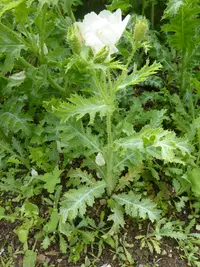
Chicalote poppy, Argemone platyceras, is a drought-tolerant annual or short-lived perennial from arid regions of northern Mexico and the southwestern United States. It forms a clumping habit with prickly, blue-green foliage and tall, branching stems.

Large, papery white flowers with contrasting yellow centers appear in succession, attracting bees and other pollinators. Spiny seed pods and milky sap are characteristic features and should be handled with care.

This species suits low-water landscapes and wildflower gardens, but self-seeding can make it spread where conditions are favorable. It prefers full sun, sharply drained soil, and minimal summer irrigation, which shapes how to care for Chicalote Poppy in cultivation.

Main Plant Requirements

Care Difficulty

Easy Care

Light Preference

Full Sun

Water Requirements

Low Water

Temperature Preference

Warm Climate

Hardiness Zone

7–10

Soil Texture

Sandy, Loamy, Rocky

Soil pH

Slightly acidic (6.5–7.0), Slightly alkaline (7.0–7.5)

Soil Drainage

Well-drained

Fertilization

Minimal (feed rarely)

Get Personalized Care Plan

Scan your plant to receive care tips personalized for your specific plant

Available on iOS and Android

How to Care for the Chicalote Poppy

Argemone platyceras thrives in bright, open sites with strong sun exposure.

  • Provide full sun for 6–10 hours daily; flowering and compact growth are best in unobstructed light.
  • The plant tolerates light afternoon shade in very hot climates, but too much shade reduces blooms and causes lanky stems.
  • In summer, intense reflected heat from walls or pavement can scorch foliage on young Chicalote Poppy plants, so leave some space and avoid enclosed heat traps.

This desert-adapted species prefers infrequent, deep watering in fast-draining soil.

  • Water only when the top 5–8 cm of soil are fully dry; in many garden soils this means several days to 2+ weeks between waterings depending on heat and wind.
  • Use gritty, sharply draining soil so water runs through quickly; persistent wetness or puddling leads to yellowing leaves and root rot.
  • In hot, dry weather, slight leaf droop that recovers overnight suggests mild drought stress, while limp, mushy stems indicate overwatering.

This species is adapted to hot, dry climates and tolerates a wide temperature range once established.

  • Active growth and flowering occur best around 70–85°F (21–29°C), with plants remaining comfortable from about 60–90°F (16–32°C).
  • Mature plants often survive brief drops to 20–25°F (-6 to -4°C), but hard freezes and repeated frost can damage young growth and buds.
  • The plant handles dry heat above 95°F (35°C) if soil is well drained, but combined heat and high humidity increase disease and stress risk.

This species prefers dry air and does not need humidity management indoors or outdoors.

  • Ideal relative humidity is 20–40%, similar to arid and semi-arid climates where Chicalote Poppy naturally occurs.
  • Plant stress from excess humidity appears as prolonged leaf wetness, fungal spotting, and rotting at the stem base.
  • In unusually humid regions, increase air movement around the plant and avoid overhead watering to limit moisture on foliage.

This plant thrives in lean, very well-drained, often sandy soil.

  • Use a gritty mix of roughly 50–60% coarse sand, 20–30% loam, and 10–20% small gravel to mimic its native desert-like conditions.
  • Maintain soil pH around 6.5–7.5, avoiding strongly acidic mixes that can increase nutrient solubility and root burn risk.
  • Avoid heavy clay or peat-heavy substrates that stay wet, as roots of Argemone platyceras are prone to rot in waterlogged conditions.
  • If existing soil is dense, incorporate coarse sand and fine gravel throughout the planting zone to improve aeration and drainage depth.

This species can be grown in containers if the potting setup prevents prolonged moisture around the roots.

  • Choose a deep container to accommodate the taproot and reduce tipping from tall stems in windy sites.
  • Select unglazed terracotta or other porous materials to speed evaporation and keep the root zone drier between waterings.
  • Elevate the pot on feet or bricks so drainage holes stay clear and excess water exits quickly after heavy rain or irrigation.

Argemone platyceras is a tough, low-nutrient desert species that rarely needs supplemental feeding.

  • In very poor soils, apply a light top-dressing of compost in early spring to support flowering without excessive foliage.
  • If using fertilizer, choose a low-rate, balanced slow-release NPK product and use at 25–50% of the label dose.
  • Feed only once per growing season; do not fertilize in fall or winter when growth is minimal.

Pruning Argemone platyceras focuses on safety, tidiness, and encouraging continued bloom.

  • Use gloves and long sleeves plus clean, sharp hand pruners due to spines and latex sap.
  • In late spring to summer, deadhead spent flowers by cutting just above a leaf to promote more blooms.
  • Remove dead, damaged, or crossing stems at the base to maintain an open, balanced shape.
  • At season’s end, cut back dry stems if self-seeding is not desired, leaving some for wildlife if preferred.

This deep-rooted poppy dislikes disturbance, so transplanting should be rare and carefully timed.

  • Transplant seedlings when very young, just as true leaves appear, before the taproot extends deeply.
  • If grown in containers, shift up only when roots circle the pot or growth slows, ideally in early spring.
  • Move to a slightly larger pot with very free-draining, gritty soil to limit waterlogging stress.
  • Handle the root ball gently, keep the crown at the same depth, and water once to settle soil, then allow to dry.

Propagation of Argemone platyceras is usually done from seed rather than vegetative methods.

  • Sow fresh seeds in late fall or early spring, outdoors or in a cold frame, to use natural chilling for germination.
  • Press seeds onto the soil surface or barely cover; they need light and well-draining sandy or gritty mix.
  • Keep soil just lightly moist until germination, then reduce watering to avoid damping off, a fungal seedling disease.
  • Allow some seedpods to mature and dry on the plant if self-sowing and natural reseeding are desired.

This species is cold hardy in many temperate regions and generally needs little structured winter care.

  • Plants tolerate light to moderate frost once established, especially in dry soils with good drainage.
  • In colder zones, a thin gravel or coarse mulch layer helps keep the crown drier over winter.
  • Container plants are more vulnerable; move pots to a sheltered, unheated spot to prevent repeated freeze–thaw stress.
  • For caring for Chicalote Poppy, avoid heavy, wet winter soils, which increase root rot risk more than low temperatures alone.

Care Tips

Self‑seeding management

Allow only the strongest 1–2 plants per clump to set seed and deadhead the rest, so you control spread while still renewing the population each year.

Armor‑aware handling

Use thick gloves and long sleeves when thinning, transplanting, or removing plants because the spines can cause skin irritation and make precise work difficult without protection.

Targeted wind exposure

Site plants where they receive some wind so stems toughen naturally, but avoid extreme, funnelled gusts that can snap young growth in exposed beds.

Low‑input weed control

Mulch lightly with coarse gravel around the base to suppress weeds without trapping moisture against the crown, which suits the plant’s preference for dry, open conditions when growing Chicalote Poppy.

Dry‑zone companioning

Combine it with other drought‑tolerant, low‑fertility species in the same bed so routine irrigation and feeding schedules match, reducing stress caused by overwatering or excess nutrients.

Common Pests and Diseases

Leaf-mining larvae

This pest tunnels inside the leaves, creating pale, winding trails that can cause affected tissue to dry and die. Symptoms include blotchy, translucent patches that follow the paths of the larvae.

Solution

Remove and destroy mined leaves to break the life cycle, and avoid overhead irrigation that keeps foliage wet and tender. Encourage or introduce beneficial parasitoid wasps where appropriate, and use a horticultural oil or spinosad spray directed at young larvae on infested plants if damage becomes extensive.

Aphids

These insects cluster on young stems and flower buds, sucking sap and excreting sticky honeydew that can attract sooty mold. Symptoms include distorted new growth and reduced vigor, especially on lush plants in richer soils than they prefer.

Solution

Dislodge colonies with a firm stream of water and pinch off heavily infested tips. Encourage natural predators such as lady beetles, avoid high-nitrogen fertilizer, and if needed apply insecticidal soap or a light horticultural oil to thoroughly coat affected stems and buds, repeating as label directions specify.

Powdery mildew

This disease causes white, dusty patches on leaves, especially when plants grow in still, humid air or partial shade. Symptoms include dull, gray-green foliage that can yellow and dry prematurely.

Solution

Improve air circulation by thinning crowded stands and avoid overhead watering, especially late in the day. Remove and discard heavily infected leaves, and use a sulfur-based or potassium bicarbonate fungicide labeled for ornamental plants if conditions favor ongoing infection.

Downy mildew

This disease appears as yellow or pale spots on the upper leaf surface with gray to purplish fuzz underneath, especially in cool, moist conditions. Symptoms include rapid leaf blight and premature defoliation in prolonged damp weather.

Solution

Increase sun exposure and drainage where possible, water at the base in the morning, and avoid prolonged leaf wetness. Remove and destroy infected plant debris, and in severe, recurrent cases use a phosphonate or copper-based fungicide according to label instructions, rotating products to reduce resistance risk.

Seedling damping off

This disease affects young seedlings, causing stems to collapse at the soil line and seedlings to wilt and die quickly. Symptoms include water-soaked, constricted stems and failure of new seedlings to establish in propagation trays or overly moist beds.

Solution

Use well-drained, low-organic soil for starting seeds, avoid overwatering, and provide strong light and good airflow. Discard severely affected batches, use clean containers and tools, and if problems persist, drench new seedling media with a biological fungicide containing Trichoderma or Bacillus species suitable for Argemone platyceras plant care.

Interesting Facts

Blue-gray leaf armor

The leaves are coated in a bluish-gray waxy layer and covered in sharp spines, an adaptation that reduces water loss and deters herbivores in its arid native habitats of northern Mexico and the southwestern United States.

Spiny seed capsules

Its seed pods are heavily armed with stiff spines and dry to a hard, capsule-like structure that splits open to release many small seeds, a strategy that both protects the developing seeds and promotes efficient wind and gravity dispersal.

Late-spring desert bloomer

This species typically flowers in late spring to early summer, producing large white blooms with a pale yellow center that attract bees and other pollinators even in hot, dry landscapes.

Botan icon

Did you know?

In disturbed or overgrazed areas of its native range, this species can rapidly colonize open, poor soils, functioning as a pioneer plant that stabilizes loose ground and begins the process of ecological succession toward a more complex plant community.

FAQs about Chicalote Poppy

This species self-seeds freely and can spread noticeably in open, dry ground. In light, disturbed soils it may form patches. Deadhead spent flowers before seed pods mature if you want to limit natural reseeding and spread.

Grow Healthy Plants with Botan Care

Keep your plants happy and healthy with plant identification, disease detection, and easy care guidance.

Botan plant care app — identify plants on mobile

Explore More Plants