Manage Spreading Clumps
Install a shallow root barrier or sink bottomless nursery pots into the ground to keep this rhizomatous plant from spreading into nearby beds while still allowing normal moisture flow.

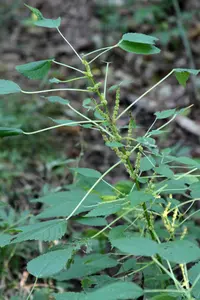
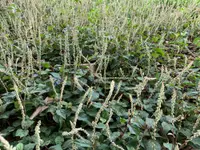
Smallspike false nettle (Boehmeria cylindrica) is a moisture-loving perennial herb commonly found along streams, wetlands, and shaded lowlands in North America. It belongs to the nettle family but lacks stinging hairs. Plants form clumps of upright, slender stems with simple, serrated green leaves and small, inconspicuous flower spikes that appear along the stems. The overall look is soft and green rather than showy. In the wild it thrives in damp, partly shaded sites with rich, organic soils, which makes it useful for naturalized or rain garden plantings. These traits make it relatively undemanding if you match its need for consistent moisture, an important point when learning how to care for smallspike false nettle.

Care Difficulty
Easy Care

Light Preference
Partial Shade

Water Requirements
Aquatic

Temperature Preference
Cold Hardy

Hardiness Zone
4–11

Soil Texture
Loamy, Silty, Organic-rich

Soil pH
Acidic (5.5–6.5), Slightly acidic (6.5–7.0)

Soil Drainage
Waterlogged tolerant

Fertilization
Minimal (feed rarely)
Scan your plant to receive care tips personalized for your specific plant
Available on iOS and Android
This moisture-loving native prefers bright, gentle light rather than intense, all-day sun.
This species naturally grows in wet habitats and benefits from consistently moist conditions.
This plant is a hardy perennial adapted to temperate climates with cold winters and warm summers.
This species handles a wide humidity range but grows best in consistently moist air.
Boehmeria cylindrica prefers moist, airy, organic-rich substrates that do not stay stagnant or compacted.
This species can grow in containers if moisture and stability are carefully managed.
This native perennial usually needs minimal feeding, especially in rich or naturally moist soils.
Boehmeria cylindrica benefits from light, targeted pruning to keep clumps tidy and healthy.
This species is more often transplanted in the garden than grown long term in containers.
Boehmeria cylindrica is commonly propagated by division and seed for restoring or expanding patches.
This cold-hardy perennial usually needs little winter care in its native range, as top growth dies back naturally.

Plant Health Check
Not sure what's wrong with your plant? Check your plant's health inside the app.
This species naturally occurs in saturated soils along streams, swamps, and marsh edges across much of eastern North America, where it tolerates periodic flooding that would kill many other herbaceous plants.
The plant is functionally dioecious in many populations, with male and female flowers often borne on different individuals, which encourages cross‑pollination and maintains genetic diversity in wild stands.
Its foliage and stems are eaten by the larvae of several moth species, and dense patches provide cover and microhabitats for small invertebrates in wetland ecosystems.

Fibers from this species and closely related hemp nettles have historically been investigated as potential sources of bast fiber, since their stem tissues contain long, tough cells similar to those of true hemp, although they have never become a major commercial crop.
This species spreads moderately by seed and short rhizomes where soil stays moist. It can form loose colonies but is usually manageable with edging, hand-pulling stray seedlings, and avoiding overly rich, constantly wet conditions that favor rapid expansion.
Keep your plants happy and healthy with plant identification, disease detection, and easy care guidance.