Brazilian pennywort Care (Hydrocotyle leucocephala)

Brazilian pennywort

About Brazilian pennywort

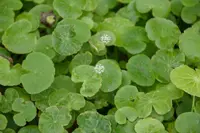
Brazilian pennywort (Hydrocotyle leucocephala) is an aquatic or semi-aquatic plant often used in aquariums and paludariums. It forms long, trailing stems with round, coin-like leaves.

In nature it grows in slow-moving rivers, wetlands, and along muddy banks in South America. The plant adapts to both fully submerged and emersed conditions.

It is generally fast-growing and forgiving, which makes it suitable for beginners who want to care for Brazilian pennywort. However, its quick growth means it may need regular trimming to prevent shading other plants.

It prefers stable moisture, moderate light, and nutrient-rich water or substrate, which supports dense foliage and healthy, compact growth.

Main Plant Requirements

Care Difficulty

Easy Care

Light Preference

Partial Shade

Water Requirements

Aquatic

Temperature Preference

Tropical / Frost Sensitive

Hardiness Zone

10–12

Soil Texture

Loamy, Silty, Organic-rich

Soil pH

Slightly acidic (6.5–7.0), Neutral (7.0)

Soil Drainage

Waterlogged tolerant

Fertilization

Light (every 4–6 weeks)

Get Personalized Care Plan

Scan your plant to receive care tips personalized for your specific plant

Available on iOS and Android

How to Care for the Brazilian pennywort

Hydrocotyle leucocephala grows best in bright, gentle light that mimics dappled sun over water.

  • Provide 4–6 hours of bright, indirect light or morning sun; protect from harsh midday and afternoon sun to prevent leaf scorch.
  • Tolerates partial shade with 2–4 hours of filtered light, though stems may elongate and leaves may space out in lower light.
  • Outdoors, give more filtered light in summer and slightly more direct morning sun in spring and fall for balanced growth of Brazilian pennywort.

This semi-aquatic plant prefers consistently moist conditions without long dry periods.

  • In soil, water when the top 1–2 cm feels just moist, not dry or soggy; aim for evenly damp, never fully drying out.
  • Use rich, fine-textured soil that holds moisture but still drains; yellowing, mushy stems suggest waterlogging, while crisp edges and drooping indicate underwatering.
  • In warm seasons, expect faster drying and check moisture daily; in cooler months, let the surface start to lose gloss before adding more water to Hydrocotyle leucocephala.

Stable warmth supports continuous growth and prevents stress.

  • Ideal growth occurs at 72–82°F (22–28°C), where leaves stay firm and green and runners spread steadily.
  • Tolerates 64–90°F (18–32°C) but slows below 68°F (20°C); avoid frost entirely, as tissue damage starts near 32°F (0°C).
  • Protect from rapid swings near doors or vents and from prolonged exposure above 90°F (32°C), which can cause wilting unless humidity and water are very high.

This species prefers consistently moist air but adapts to a wide humidity range.

  • Aim for 50–80% humidity for lush, fast growth of Brazilian pennywort leaves and runners.
  • Tolerates brief dips to 30–40%, but leaf edges may brown and growth may slow in very dry rooms.
  • Increase humidity with an open-top water tray near the plant, grouped aquatic plants, or a small room humidifier rather than misting.

This species prefers constantly moist, organic-rich, fine-textured substrate rather than standard houseplant potting mixes.

  • Use a mix of 50–70% peat or coco coir with fine compost and 30–50% inert material such as sand or fine gravel to keep roots anchored and oxygenated.
  • Hydrocotyle leucocephala grows best in slightly acidic to neutral conditions, around pH 6.0–7.2.
  • For potted or emergent setups, choose soil that stays saturated but does not form anaerobic, foul-smelling sludge.
  • Avoid dense clay, chunky bark-based mixes, and any substrate that dries out fully between waterings, as this stresses the shallow roots.

This species is very suitable for container culture, including aquatic and semi-aquatic setups.

  • Select a wide, shallow container to allow horizontal runner spread and easier management of rapid growth.
  • Use heavier ceramic or weighted plastic pots in aquariums or ponds to prevent the plant from floating or tipping.
  • If using solid pots in water gardens, drill side holes near the base so water can circulate through the root zone without trapping gas pockets.

This fast-growing aquatic species benefits from light, consistent nutrition but is sensitive to excess salts.

  • Use a balanced liquid NPK fertilizer for aquatics, diluted to 1/4–1/2 strength, to avoid burning roots and leaves.
  • Feed every 2–4 weeks during active growth, adjusting based on leaf color and stem vigor.
  • Reduce or stop fertilizing in winter when growth slows, especially in cooler tanks.
  • For caring for Brazilian pennywort in nutrient-poor setups, supplement with root tabs or a small amount of organic compost in the substrate.

Hydrocotyle leucocephala responds well to thoughtful trimming that keeps growth dense and manageable.

  • Trim during active growth, often spring through early fall, to shape runners and prevent excessive shading of other plants.
  • Remove yellowing, damaged, or tangled stems to maintain water quality and reduce decay in aquariums or ponds.
  • Cut just above a leaf node using clean scissors to encourage branching and fuller mats or bunches.
  • Thin crowded areas to improve light penetration and circulation, which supports healthier, more balanced growth.

This plant spreads quickly, so transplanting and thinning matter more than traditional repotting.

  • Look for dense root mats, roots circling baskets, or slowed growth as signs it needs division or more space.
  • Shift or divide plants in spring or early summer, when water temperatures are stable and growth is strong.
  • Repot container-grown clumps every 1–2 years into shallow baskets or pots with fine aquatic soil or inert media.
  • Handle roots gently, keep them submerged during moves, and trim only the longest runners to limit transplant shock.

Hydrocotyle leucocephala is commonly multiplied through vegetative methods that use its natural creeping habit.

  • Take stem cuttings with at least 2–3 leaf nodes in spring or summer for best rooting response.
  • Pin or weight cuttings so at least one node contacts substrate or stays still in the water column.
  • Provide bright, indirect light and stable, warm water to support rapid root initiation and new shoot growth.
  • Division of dense mats also works; gently separate rooted sections and replant with good water circulation.

This tropical species is frost-sensitive and needs protection in climates colder than USDA zone 10.

  • Move container or aquarium-grown plants indoors before nights drop near 50°F, maintaining stable warm water.
  • For outdoor ponds in mild climates, keep plants in deeper, unfrozen zones or bring a portion inside as insurance.
  • Avoid exposing foliage and stems to freezing air, since tissue damage is usually irreversible for this plant.

Care Tips

Substrate Anchoring

Pin or gently tuck the creeping stems into the substrate or between hardscape pieces so new nodes root quickly and form a dense, stable mat rather than floating loosely.

Regular Thinning

Every 2–3 weeks, remove the oldest, shaded stems from the base instead of just trimming the tips, which reduces rot risk and keeps new growth well-lit and compact.

Flow-Aware Placement

Position the plant in gentle to moderate water flow so leaves sway slightly, which improves gas exchange and nutrient delivery without tearing the delicate petioles.

Emersed Transitioning

When moving stems between submerged and emersed setups, transition gradually over 1–2 weeks by adjusting water level or humidity stepwise to limit melt and tissue stress while growing Brazilian pennywort.

Quarantine New Batches

Keep new plants in a separate container for 1–2 weeks, manually removing snails and inspecting for pests or algae, before introducing them to an established aquarium or paludarium.

Common Pests and Diseases

Aquarium snails

This pest feeds on tender leaves, leaving holes, ragged edges, and sometimes completely eaten young growth. Symptoms include slow decline of foliage in heavily stocked tanks.

Solution

Reduce overfeeding to limit snail population, manually remove visible snails, and use snail traps or snail-safe biological controls if needed. Protect prized stems by relocating them temporarily to a snail-free tank or using fine mesh barriers around the plant base.

Spider mites

These insects may appear when Hydrocotyle leucocephala is grown emersed or in high-dry heat near the waterline, causing stippled leaves, fine webbing, and distortion. This pest weakens growth and can cause yellowing and leaf drop in emergent stems.

Solution

Increase humidity around emersed foliage, rinse leaves under lukewarm water, and wipe both sides with a soft cloth. For persistent infestations, apply a targeted miticide or insecticidal soap to emersed parts only, keeping chemicals out of the aquarium water.

Leaf spot (bacterial)

This disease causes small, water-soaked or translucent spots that may enlarge, turn brown, and develop yellow halos on floating or emergent leaves. Severely affected leaves often decay and break down in the water, clouding it slightly.

Solution

Promptly remove and discard affected leaves and reduce crowding to improve water circulation around foliage. Maintain stable water parameters, avoid overhead splashing from filters on emergent leaves, and disinfect tools between trims to limit spread, which are key aspects of Hydrocotyle leucocephala care.

Nutrient deficiency chlorosis

Symptoms include pale, yellowing foliage, especially on newer leaves, with thin, weak stems and reduced leaf size. This problem is common in fast-growing Brazilian pennywort under strong light without adequate macro- and micronutrients.

Solution

Increase complete aquarium fertilization, including iron and other trace elements, and ensure moderate to high CO₂ and circulation so nutrients reach all leaves. Trim back older, weak growth and allow new, well-fed shoots to replace it for more robust, green coverage.

Algal overgrowth on leaves

This issue appears as green film, hair, or spot algae coating leaf surfaces, reducing light penetration and slowing photosynthesis. Symptoms include dull, dirty-looking leaves and stalled growth despite adequate fertilization and light.

Solution

Lower organic waste by reducing overfeeding and improving filtration, maintain stable CO₂, and adjust light intensity or duration downward. Gently wipe or rub algae from leaves by hand, introduce appropriate algae grazers, and increase partial water changes to keep nutrients balanced for growing Brazilian pennywort.

Interesting Facts

Floating or climbing habit

This species can root in the substrate and grow upright, send runners that trail along the surface, or form floating mats when detached from the bottom in aquariums and slow-moving waters.

High nutrient uptake

Its fast growth rate allows it to absorb dissolved nitrogen compounds efficiently, so aquarists often use it to help control nitrate levels and improve water quality.

Native to warm Americas

The plant is naturally distributed from Mexico through Central America into parts of South America, where it colonizes calm freshwater habitats like ponds, ditches, and slow rivers.

FAQs about Brazilian pennywort

Growth is typically quick under warm, bright, stable conditions. In aquariums or moist setups, stems can extend several centimeters per week. Regular trimming, adequate nutrients, and consistent CO₂ levels help maintain dense, manageable growth rather than long, sparse runners.

Grow Healthy Plants with Botan Care

Keep your plants happy and healthy with plant identification, disease detection, and easy care guidance.

Botan plant care app — identify plants on mobile

Explore More Plants