Use Tall Water Trays
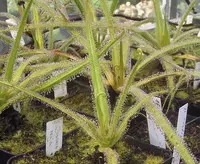
Place pots in tall trays or tubs that allow 2–5 cm of standing distilled or rainwater so the fine roots never dry, and top up the tray rather than watering from above to avoid washing away mucilage and insects.

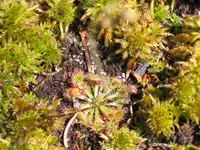
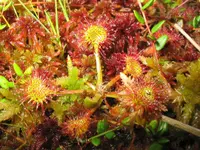
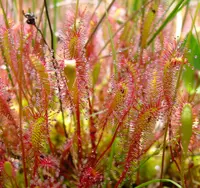
Pink sundew, Drosera capillaris, is a small carnivorous plant that traps insects using sticky, glistening hairs on its leaves. It stays low to the ground, forming flat rosettes that often show red or pink tones in good light.
This species is native to nutrient-poor bogs and wetlands in the southeastern United States and parts of the Caribbean. It relies on captured insects for nutrients, which influences how to care for pink sundew in cultivation.
It is generally considered manageable for beginners who can keep conditions consistently moist and bright. The plant prefers very damp, acidic, low-nutrient growing media and clean, mineral-poor water.

Care Difficulty
Hard Care

Light Preference
Full Sun

Water Requirements
Aquatic

Temperature Preference
Warm Climate

Hardiness Zone
8–11

Soil Texture
Sandy, Peaty, Organic-rich

Soil pH
Strongly acidic (4.5–5.5)

Soil Drainage
Waterlogged tolerant

Fertilization
Minimal (feed rarely)
Scan your plant to receive care tips personalized for your specific plant
Available on iOS and Android
This small carnivorous species needs high light to keep traps compact and colorful.
This bog-dwelling carnivore requires consistently wet, low-mineral conditions.
This species prefers mild to warm conditions and does poorly in frost or extreme heat.
This species prefers moderately humid air but adapts to many household conditions if watering is consistent.
Use a nutrient-poor, wet yet airy mix that mimics acidic bog conditions for Drosera capillaris.
This small rosette-forming carnivorous plant is well suited to container culture.
Drosera capillaris grows in nutrient-poor habitats and is highly sensitive to fertilizer, so routine feeding is unnecessary and often harmful.
Pruning needs for Drosera capillaris are minimal and focus on sanitation rather than shaping.
Repotting Drosera capillaris is infrequent and mainly needed when the medium breaks down or growth stalls.
Propagation of Drosera capillaris is common in cultivation using seeds and leaf cuttings.
Winter care for Drosera capillaris depends on climate, as many populations are only mildly frost tolerant.

Plant Health Check
Not sure what's wrong with your plant? Check your plant's health inside the app.
This species is naturally restricted to the southeastern United States, where it grows in nutrient-poor, open, wet habitats such as coastal plain bogs, savannas, and roadside seepage areas.
Northern and inland populations often behave as annuals or short-lived perennials with small rosettes, while plants in frost-free coastal areas can form longer-lived clumps that slowly expand over time.
The leaves can range from greenish to intense pink-red depending on light, as higher sunlight drives production of protective red pigments called anthocyanins that also make the sticky glands more visually attractive to insects.

Drosera capillaris frequently grows intermingled with other carnivorous plants such as Sarracenia pitcher plants and Dionaea muscipula, forming mixed carnivorous plant communities where different species capture different sizes and types of prey in the same nutrient-poor wetlands.
Brown leaves usually result from low humidity, strong direct sun without adaptation, mineral buildup from hard tap water, or old leaves naturally aging. Check water quality, maintain tray moisture, and trim dead foliage to prevent mold.
Keep your plants happy and healthy with plant identification, disease detection, and easy care guidance.