Use Tall Pots
Grow plants in deep, narrow pots (at least 15–20 cm tall) with drainage holes to encourage strong root systems and keep the crown safely above any temporary waterlogging during heavy rains or tray refills.


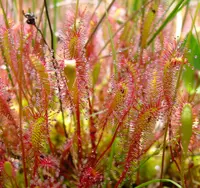
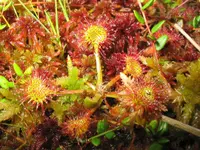
Sprawling sundew, Drosera hilaris, is a carnivorous plant that forms low, spreading rosettes covered in sticky, glistening hairs. These hairs trap small insects, which the plant slowly digests for nutrients.
It is native to nutrient-poor, seasonally damp habitats in South Africa, often growing in open, sunny sites with sandy, acidic soils. The plant shows a seasonal growth rhythm, which can make it slightly more challenging than beginner sundews, but still manageable with stable conditions.
A grower who learns how to care for Sprawling Sundew will focus on bright light, consistently moist roots, and low-mineral, airy soil to mimic its natural environment.

Care Difficulty
Hard Care

Light Preference
Full Sun

Water Requirements
Keep Soil Moist

Temperature Preference
Cool Climate

Hardiness Zone
9–11

Soil Texture
Sandy, Peaty, Organic-rich

Soil pH
Strongly acidic (4.5–5.5)

Soil Drainage
Waterlogged tolerant

Fertilization
Minimal (feed rarely)
Scan your plant to receive care tips personalized for your specific plant
Available on iOS and Android
Drosera hilaris needs bright, direct light to produce strong growth and dense dew.
This species prefers consistently moist, low-mineral conditions rather than alternating wet and dry soil.
This sundew prefers mild, frost-free conditions with only moderate seasonal shifts.
This species prefers moderate to high humidity to keep dew production consistent.
Use a very poor, acidic, open mix that stays moist yet never stagnant.
This species is well suited to container culture when moisture and depth are managed carefully.
Drosera hilaris gains most nutrients from captured insects, so it needs only very light supplemental feeding in cultivation.
Pruning needs for Drosera hilaris are minimal and focus on hygiene rather than shaping.
This species prefers infrequent repotting to avoid disturbing its sensitive roots and growth rhythm.
Propagation of Drosera hilaris is possible but slower than many compact sundews, so patience is important.
This sundew dislikes hard frost, so winter care focuses on keeping roots cool but not freezing.

Plant Health Check
Not sure what's wrong with your plant? Check your plant's health inside the app.
This species is a winter-growing sundew from the Western Cape of South Africa, producing most of its leaves during the cool, wet season and slowing or dying back to a resting state in the hot, dry summer.
In nature it typically grows on mossy, nutrient-poor sandstone ledges and cliff faces where seepage water keeps the substrate damp but very low in minerals.
Mature plants form a tight, upright rosette with relatively broad, reddish leaves that can persist for many years in the same spot when moisture and seasonal rhythms remain stable.

Drosera hilaris is considered one of the more localized and habitat-restricted carnivorous plants of the Cape flora, known from a limited number of sandstone mountain sites, which makes it vulnerable to any changes in its seepage cliff microhabitats.
Brown leaves usually result from low humidity, mineral-rich tap water, or strong midday sun. Use rain, distilled, or reverse-osmosis water, increase humidity slightly, and provide bright but filtered light. Old outer leaves naturally brown and die back over time.
Keep your plants happy and healthy with plant identification, disease detection, and easy care guidance.