


Seasonal Rosette Shift
Mark your calendar to reduce water and feeding as soon as winter rosettes form, since these small, tight leaves are non-carnivorous and rot easily if kept as wet as in summer.

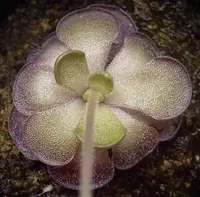
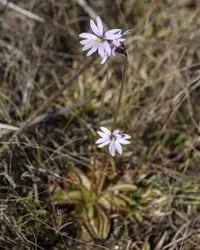
Pinguicula cyclosecta is a small carnivorous plant from limestone hills in northeastern Mexico. It forms a flat rosette of fleshy, sticky leaves that trap tiny insects. In good conditions it produces delicate purple flowers on slender stalks, often several times a year. This species shifts seasonally between larger carnivorous leaves and a tighter, succulent-like rosette in drier periods. The plant stays compact, which makes it suitable for windowsills and small indoor setups. It generally prefers bright indirect light, high humidity, and an airy, low-nutrient substrate. Once its seasonal rhythm is understood, it is relatively straightforward to care for Pinguicula cyclosecta.

Care Difficulty
Moderate Care

Light Preference
Partial Shade

Water Requirements
Keep Soil Moist

Temperature Preference
Tropical / Frost Sensitive

Hardiness Zone
Unknown

Soil Texture
Sandy, Peaty, Organic-rich

Soil pH
Acidic (5.5–6.5)

Soil Drainage
Moist but well-drained

Fertilization
Minimal (feed rarely)
Scan your plant to receive care tips personalized for your specific plant
Available on iOS and Android
This Mexican butterwort prefers bright, indirect light with some gentle direct sun.
This carnivorous species needs evenly moist but not waterlogged conditions.
This species prefers mild, stable temperatures with protection from frost and extreme heat.
This species prefers moderately humid air but adapts to many household conditions if not extremely dry.
Use a very open, mineral-based mix that stays slightly damp but never waterlogged.
This species grows very well in containers when moisture and drainage are tightly controlled.
This carnivorous species gains most nutrients from insects, so chemical fertilization must stay very light and infrequent.
Pinguicula cyclosecta needs only minimal grooming to stay healthy and attractive.
This butterwort prefers infrequent repotting in a very airy, low-nutrient mix.
Propagation of this species is commonly done through leaf pullings and division rather than seed.
This Mexican butterwort is not frost hardy and needs mild, protected winter conditions.

Plant Health Check
Not sure what's wrong with your plant? Check your plant's health inside the app.
This species forms a flat, sticky carnivorous rosette in the growing season, then switches to a compact, succulent-like winter rosette with non-carnivorous leaves adapted to drier, cooler conditions in its native Mexican habitat.
Under strong light, the leaves often develop an intense violet to purplish tone caused by high concentrations of protective pigments called anthocyanins, which help shield the photosynthetic tissues from excess light.
In the wild, it typically grows on gypsum-rich limestone outcrops and cliff faces in northeastern Mexico, occupying thin soils and rock crevices where few other plants can persist.
Lack of blooming often comes from insufficient light, no cool winter rest, or nutrient buildup from tap water or fertilizer. Provide bright light, a cooler, drier winter period, and use mineral-free water to encourage flowers.
Keep your plants happy and healthy with plant identification, disease detection, and easy care guidance.

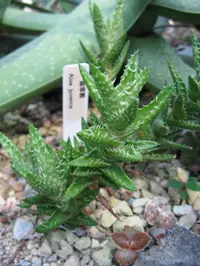
Tiger tooth aloe
Aloe juvenna
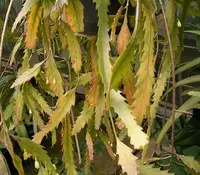
Snowdrop Cactus
Lepismium houlletianum
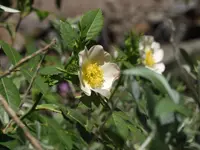
Glandular dog-rose
Rosa squarrosa
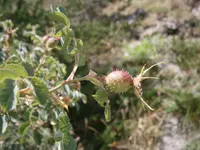
Pine Rose
Rosa abietina
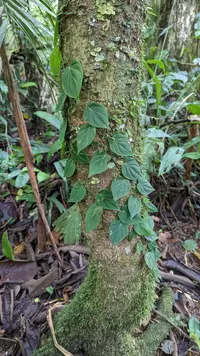
Heartleaf philodendron
Philodendron hederaceum var. oxycardium
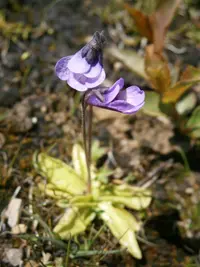
Southern Butterwort
Pinguicula leptoceras
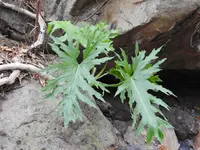
Philodendron warszewiczii
Philodendron warszewiczii
Chapman's butterwort
Pinguicula planifolia