Use grafted stock
Choose plants grafted onto hardy, disease-resistant rootstock and plant with the graft union 3–5 cm above the soil line to improve long-term vigor and reduce root disease risk.

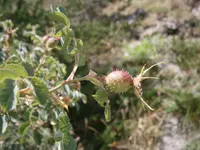
Pine rose, Rosa abietina, is a compact wild rose species known for its fine, needle-like foliage and small, simple flowers. It often forms low, bushy clumps that blend well into naturalistic plantings.
In nature it is associated with mountain and subalpine regions of Europe, where it grows in sunny, well-drained, often rocky soils. Its hardiness and tolerance of poorer soils make it relatively straightforward for gardeners who want to care for Pine Rose, although it still benefits from good light, moderate moisture, and free-draining soil.
This species suits informal borders, rock gardens, and habitat plantings where a natural look is desired.

Care Difficulty
Moderate Care

Light Preference
Full Sun

Water Requirements
Moderate Water

Temperature Preference
Cold Hardy

Hardiness Zone
5–8

Soil Texture
Loamy, Sandy, Organic-rich

Soil pH
Acidic (5.5–6.5), Slightly acidic (6.5–7.0)

Soil Drainage
Moist but well-drained

Fertilization
Minimal (feed rarely)
Scan your plant to receive care tips personalized for your specific plant
Available on iOS and Android
Rosa abietina prefers bright, direct light similar to other sun-loving shrub roses.
Rosa abietina benefits from consistent soil moisture without staying saturated.
This species prefers cool to mild conditions and tolerates significant winter cold.
Rosa abietina handles a wide humidity range but grows best in moderately humid air.
Rosa abietina prefers structured, well-aerated mineral soil that drains steadily but does not dry out too fast.
This species can adapt to container growing when the pot size and stability are managed carefully.
Rosa abietina generally needs modest feeding, especially when grown in poor or heavily drained soils.
Rosa abietina responds well to light, structured pruning that maintains airflow and flowering wood.
This rose is more often planted in the ground than kept in containers, so focus on careful transplanting.
Rosa abietina is usually propagated from cuttings or seed when maintaining specific forms or selecting wild types.
This species is broadly cold hardy but benefits from basic winter preparation in colder regions.

Plant Health Check
Not sure what's wrong with your plant? Check your plant's health inside the app.
This wild rose is naturally restricted to subalpine and montane zones of the European Alps, where it often grows near coniferous forests dominated by spruce and fir, reflecting its adaptation to cool, short growing seasons.
The plant has unusually narrow, elongated leaflets compared with many other wild roses, which gives its foliage a somewhat conifer-like appearance and is the reason for its common name pine rose.
Rosa abietina typically occurs on rocky, well-drained slopes and calcareous substrates at higher elevations, indicating a strong preference for mineral-rich but shallow mountain soils and high light levels.
Lack of flowers usually comes from insufficient light, nutrient-poor or very high-nitrogen soil, or pruning at the wrong time, which removes flower buds. Mature age, good sun exposure, and balanced feeding are essential for reliable blooming.
Keep your plants happy and healthy with plant identification, disease detection, and easy care guidance.