Southern Butterwort Care (Pinguicula leptoceras)

Southern Butterwort

About Southern Butterwort

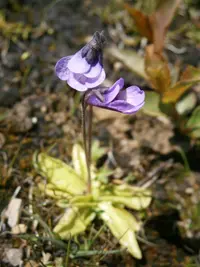
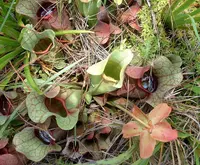
Southern butterwort, Pinguicula leptoceras, is a small carnivorous plant that forms flat rosettes of soft, sticky leaves. These leaves trap tiny insects that supplement the plant’s nutrient intake.

In nature it grows in cool, wet, nutrient-poor habitats such as bogs and wet rock faces, mainly in parts of Europe. It stays compact and low to the ground, which makes it suitable for containers or specialized carnivorous plant setups.

Its need for constant moisture, pure water, and low-nutrient substrate makes it more demanding than typical houseplants. Understanding how to care for Southern Butterwort before purchase helps prevent common losses.


Main Plant Requirements

Care Difficulty

Hard Care

Light Preference

Partial Sun

Water Requirements

Keep Soil Moist

Temperature Preference

Cool Climate

Hardiness Zone

Unknown

Soil Texture

Sandy, Peaty, Organic-rich

Soil pH

Strongly acidic (4.5–5.5), Acidic (5.5–6.5)

Soil Drainage

Waterlogged tolerant

Fertilization

Minimal (feed rarely)

Get Personalized Care Plan

Scan your plant to receive care tips personalized for your specific plant

Available on iOS and Android

How to Care for the Southern Butterwort

This small carnivorous rosette prefers bright, gentle light rather than intense midday sun.

  • Provide 3–5 hours of soft morning sun with bright, filtered light the rest of the day to support healthy leaf color and insect-trapping surfaces.
  • Allow light partial shade, especially in summer; dappled light under taller plants mimics natural conditions for Southern Butterwort.
  • Protect from harsh midday and late-afternoon sun, which can scorch leaves; in darker seasons, move to a brighter, unobstructed position to avoid weak, pale growth.

This species prefers evenly moist, low-mineral conditions without prolonged flooding or drying out.

  • Use rainwater, distilled, or reverse-osmosis water; avoid tap water with high mineral content, which can damage the fine roots of Pinguicula leptoceras.
  • Keep the substrate consistently damp but not waterlogged; let only the surface 1–2 cm lose gloss before watering again, and avoid standing water above the crown.
  • In cooler months, slightly reduce watering so the soil stays lightly moist; watch for leaf yellowing and mushiness as overwatering signs, and curling, brittle leaves as underwatering signs.

This cool-temperate butterwort grows best in mild conditions without strong heat or deep freezes.

  • Aim for 60–75°F (16–24°C) during active growth, which supports steady leaf and root development without stress.
  • Tolerate brief dips to about 40°F (4°C), but protect from hard frost; repeated freezing can damage the crown and reduce long-term vigor.
  • In hot weather above 82–86°F (28–30°C), provide shade and good air movement; avoid placing plants near heat-reflective surfaces that can cause sudden temperature spikes.

This species prefers moderately moist air but adapts to typical indoor humidity if other conditions are stable.

  • Target 50–70% humidity to keep leaves sticky and functional for catching prey.
  • It tolerates short periods down to 35–40%, but prolonged very dry air can shrink leaves and reduce mucilage.
  • If air is dry, group pots on a shallow water tray with pebbles or use a small nearby humidifier, avoiding direct misting of leaves.

This carnivorous plant requires a very low-nutrient, airy mix that stays evenly moist but not waterlogged.

  • Use a mix of 1:1 fine silica sand and milled sphagnum or peat moss to mimic natural, mineral-poor habitats.
  • Ensure fast drainage with a shallow pot and avoid any added fertilizer, worm castings, or rich compost that can burn roots.
  • Aim for slightly acidic conditions around pH 5–6, which supports nutrient uptake without encouraging harmful microbes.
  • For Pinguicula leptoceras, lightly top-dress with fine grit or sand so leaves stay clean and avoid contact with decomposing organic particles.

This species is well suited to container culture when moisture and drainage are carefully balanced.

  • Choose a shallow, wide pot to match the shallow root system and keep the leaf rosette away from standing water.
  • Select plastic or glazed ceramic containers, which slow evaporation and maintain a more stable moisture level than porous terracotta.
  • Position the pot in a stable saucer with a thin water layer so the medium stays evenly damp without submerging the entire base.

This carnivorous species evolved for nutrient-poor habitats, so Southern Butterwort needs only very light, infrequent feeding in cultivation.

  • Use a very dilute (1/8–1/4 strength) balanced NPK orchid or carnivorous-plant fertilizer, applied to the soil only, never on leaves.
  • Feed sparingly during active growth in spring–summer, about every 4–6 weeks at most.
  • Avoid slow-release pellets or compost, which can burn roots and disrupt the low-mineral substrate.
  • Stop feeding in winter dormancy and resume only when new growth clearly restarts.

Pinguicula leptoceras needs minimal pruning, mainly to keep the rosette clean and healthy.

  • Best time for cleanup is late winter to early spring, before strong new growth starts.
  • Gently remove dead, blackened, or moldy leaves with fine tweezers or small scissors.
  • Clear away overcrowded, decaying foliage to improve air movement and reduce rot risk.
  • Careful grooming maintains an open rosette, supports light penetration, and can encourage stronger flowering.

This small carnivorous rosette prefers infrequent disturbance, so repot only when clearly necessary.

  • Repot every 2–3 years or when growth slows, roots circle the pot, or the medium compacts or discolors strongly.
  • Best timing is early spring, just as new growth begins and before flowering.
  • Prepare a fresh, low-mineral mix such as 2:1 sphagnum peat:perlite or similar carnivorous-plant substrate.
  • Lift the plant gently, keep roots intact, set at the same depth, water with pure water, and shade lightly for a few days to reduce stress.

Pinguicula leptoceras plant care commonly includes leaf-pulling propagation, which is reliable under stable conditions.

  • Take healthy outer leaves in late winter–early spring, pulling them away with a small piece of the white basal tissue attached.
  • Lay leaves flat on moist, low-mineral medium, keeping them bright but out of direct midday sun.
  • Maintain high humidity and cool to mild temperatures, around 55–70°F, until plantlets appear at the leaf base.
  • Seed propagation is possible but slower; provide cool stratification if needed, then bright, cool conditions for germination.

This species forms a tighter, often non-carnivorous winter rosette and benefits from cool, stable conditions in winter.

  • Hardiness is limited; outdoor plants in cold climates need a sheltered, cool, frost-free position.
  • For containers, move plants indoors to a bright, cool room around 40–55°F.
  • Keep the winter rosette drier, with just lightly moist substrate to reduce rot risk.
  • Avoid cold drafts and sudden temperature swings, which can stress or kill the small rosette.

Care Tips

Removable media trays

Grow plants in small, shallow pots stood in a removable tray, so you can easily flush the mineral-free substrate from above with distilled water every few weeks without disturbing the rosette or risking overfilling a permanent display container.

Seasonal leaf inspection

Check leaf type changes in spring and autumn, as this species often shifts between carnivorous and succulent leaves, and use that cue to gradually adjust watering frequency and air movement rather than relying only on a calendar.

Gentle prey management

If many gnats or other small insects accumulate, gently remove older, overstuffed leaves with clean tweezers to reduce rot risk, and favor fine mesh screens on nearby windows instead of using chemical sprays near the plant.

Controlled air movement

Provide a very light, indirect airflow from a small fan set several feet away to keep leaves dry at the surface while avoiding strong drafts that can desiccate the thin foliage.

Modular propagation setup

Place a few healthy leaves on a separate shallow tray of the same mineral-free mix used for the main plant, covered with a clear vented lid, so you can propagate offsets under slightly higher humidity without changing the primary conditions used for growing Southern Butterwort.

Common Pests and Diseases

Fungus gnats

These insects are attracted to constantly damp, organic media and can breed in the loose, wet substrates often used for Pinguicula. Adults are mostly a nuisance, but larvae can damage fine roots and the plant’s crown if populations grow large.

Solution

Allow the surface of the medium to dry slightly between waterings, use a more mineral, low-organic mix, and bottom-water so the surface stays less wet. Trap adults with yellow sticky cards, and control larvae by drenching with a Bacillus thuringiensis israelensis (BTI) product according to label directions.

Botrytis (gray mold)

This disease thrives in cool, stagnant, humid conditions and can attack older leaves and dead insects stuck on the leaf surface. Symptoms include soft, water-soaked spots that develop into fuzzy gray mold, especially around the crown.

Solution

Improve air movement, avoid overhead watering, and remove any dead or heavily damaged leaves promptly. In severe cases, reduce humidity slightly and apply a sulfur-based or other low-toxicity fungicide suited to carnivorous plants, keeping chemicals off the active leaf surfaces as much as possible.

Crown rot

This disease develops in the tightly packed leaf rosette when water and organic debris remain trapped at the center. Symptoms include a soft, brown, collapsing crown while outer leaves may still look relatively healthy at first.

Solution

Keep water levels lower so the rosette center does not stay submerged or constantly wet, and use an open, mostly mineral substrate to reduce decay. Remove all soft, rotted tissue with sterile tools, improve airflow, and, if some healthy leaves remain, take leaf pullings to propagate a new plant as part of long-term Pinguicula leptoceras plant care.

Aphids

These insects may cluster on young leaves and flower stalks, sucking sap and causing distortion, reduced flowering, and sticky honeydew deposits. On small rosettes they can build up quickly and stress the plant.

Solution

Rinse the plant gently with room-temperature water to dislodge colonies, protecting the delicate leaves from strong pressure. For persistent infestations, use a dilute insecticidal soap or horticultural oil spray applied carefully around, rather than directly on, the most active sticky leaf surfaces, and repeat as needed.

Interesting Facts

Alpine lime specialist

This species naturally grows on calcareous, lime-rich substrates in alpine and subalpine zones of central Europe, often on moist limestone cliffs and rock faces where many carnivorous plants could not tolerate the high pH. Its presence can indicate stable seepage of mineral-rich water in these habitats.

Distinct horned flower spurs

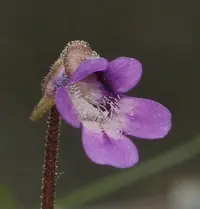
The purple to violet flowers carry two slender, curved nectar spurs, which inspired the name leptoceras, meaning slender-horned. These spurs help guide specific pollinators such as small bees and flies to the nectar while keeping them away from the sticky leaf surfaces.

Seasonal carnivory shift

In its native mountain climate, this species forms flat, sticky carnivorous leaves in the growing season, then switches to small, non-carnivorous winter rosettes called hibernacula. This seasonal change reduces water loss and damage from freezing while the plant waits for favorable conditions to return.

Botan icon

Did you know?

In parts of the Alps where it occurs, this species sometimes grows side by side with other Pinguicula species and can form natural hybrids, which has made precise identification and mapping of its native distribution a long-standing challenge for botanists.

FAQs about Southern Butterwort

Lack of flowering often comes from light that is too low, insufficient winter cool period, or nutrient buildup from using fertilizer. Provide bright conditions, a cool rest in winter, and pure water to restore normal blooming.

Grow Healthy Plants with Botan Care

Keep your plants happy and healthy with plant identification, disease detection, and easy care guidance.

Botan plant care app — identify plants on mobile

Explore More Plants