Self‑seeding management
Leave some spent flower stems to ripen and drop seed where you want a colony, but deadhead promptly in unwanted areas to prevent random self‑sown seedlings crowding other perennials.

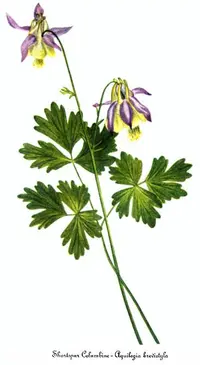
Aquilegia brevistyla, commonly called smallflower columbine, is a compact, clump-forming perennial from the buttercup family. It typically has delicate nodding blue to violet flowers above soft, divided foliage.
This species is native to cooler regions of North America, often found in open woods, moist meadows, and rocky slopes. It tends to stay low and tidy, which suits smaller gardens or naturalistic plantings.
Smallflower columbine is generally moderate in difficulty, as it prefers consistent moisture, cooler conditions, and well-drained, humus-rich soil. Gardeners who understand how to care for smallflower columbine usually find it long-lived and dependable in the right climate.

Care Difficulty
Moderate Care

Light Preference
Partial Shade

Water Requirements
Moderate Water

Temperature Preference
Cold Hardy

Hardiness Zone
2–7

Soil Texture
Loamy, Sandy, Organic-rich

Soil pH
Acidic (5.5–6.5), Slightly acidic (6.5–7.0)

Soil Drainage
Moist but well-drained

Fertilization
Minimal (feed rarely)
Scan your plant to receive care tips personalized for your specific plant
Available on iOS and Android
This cool-climate woodland perennial prefers bright, gentle light rather than intense heat.
This species prefers consistently moist, cool soil that never stays waterlogged.
This hardy perennial thrives in cool to mild climates with distinct winters.
Aquilegia brevistyla handles typical outdoor humidity well and rarely needs special humidity management.
Aquilegia brevistyla prefers cool, moist, well-aerated soil that drains reliably.
This species can be grown in containers outdoors if the pot supports its deep, fibrous roots and stable moisture.
This native perennial prefers lean soil and usually needs only light feeding for healthy growth.
Thoughtful pruning keeps Aquilegia brevistyla compact, healthy, and flowering well.
This columbine is usually grown in the ground and dislikes frequent disturbance of its taproot.
New Aquilegia brevistyla plants are most often raised from seed, with some care needed for good germination.
This species is cold hardy in most temperate climates and usually needs minimal winter care in the ground.

Plant Health Check
Not sure what's wrong with your plant? Check your plant's health inside the app.
This species has a naturally patchy distribution, occurring in cool, moist woodlands and rocky slopes from Alaska and western Canada into the northern United States, where it is often associated with boreal and sub-boreal forest edges.
The flowers have noticeably shorter nectar spurs than most other columbines, a trait reflected in the name brevistyla, which means short-styled, and this floral shape influences which native bees can effectively reach the nectar.
Wild populations often show a mix of bluish-purple and paler, sometimes almost white, flowers on different plants, illustrating natural genetic variability within the species even in relatively small areas.

Genetic and morphological studies indicate that this species is closely related to several other North American columbines yet maintains clear differences in floral form and habitat preference, making it a useful model for studying recent speciation and pollinator-driven evolution in the genus Aquilegia.
Poor flowering often comes from too much shade, excess nitrogen fertilizer, or overcrowded, aging clumps. Divide older plants every few years, avoid heavy feeding, keep soil moderately fertile, and ensure plants receive cool conditions with some direct light in spring.
Keep your plants happy and healthy with plant identification, disease detection, and easy care guidance.