Seasonal Tray Adjustment
In winter, keep the water tray just barely filled so the potting mix stays moist but not flooded, then slowly raise the water level as new spring growth starts to support active feeding and growing Pinguicula corsica.


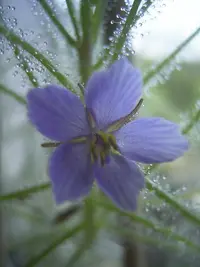
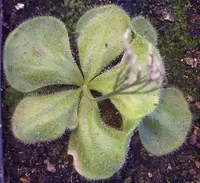
Pinguicula corsica is a small carnivorous rosette plant that captures tiny insects on its sticky leaves. It typically forms low, compact clumps with delicate, star-shaped flowers.
This species is native to mountainous, limestone-rich areas of Corsica, where it grows in moist, cool, and often rocky habitats. Its insect-catching habit helps it cope with nutrient-poor conditions.
In cultivation, it stays relatively small and prefers stable moisture, bright but gentle light, and a low-mineral substrate. These traits make it moderately challenging and better suited to growers who want to learn how to care for Pinguicula corsica with some attention to detail.

Care Difficulty
Hard Care

Light Preference
Partial Shade

Water Requirements
Keep Soil Moist

Temperature Preference
Cool Climate

Hardiness Zone
7–9

Soil Texture
Sandy, Peaty, Organic-rich

Soil pH
Strongly acidic (4.5–5.5)

Soil Drainage
Waterlogged tolerant

Fertilization
Minimal (feed rarely)
Scan your plant to receive care tips personalized for your specific plant
Available on iOS and Android
This mountain butterwort prefers bright, gentle light that mimics open but not exposed alpine sites.
Watering should keep the root zone lightly moist while avoiding prolonged saturation of the crown.
This species prefers mild, relatively cool conditions with protection from both hard frost and intense heat.
This species prefers moderately humid air but tolerates typical indoor levels if watering is consistent.
This carnivorous species needs a very open, low-nutrient, lime-free medium rather than standard potting mixes.
This small rosette-forming species is well suited to container culture.
This carnivorous species needs very little added nutrition, and overfeeding can damage its roots and digestive leaves.
This plant needs almost no structural pruning, only light cleanup to maintain healthy rosettes and active traps in Pinguicula corsica.
Gentle, infrequent repotting keeps Pinguicula corsica stable while preserving its sensitive roots and leaf rosette.
This species is commonly multiplied by leaf pullings and occasional division rather than by seed.
Cool winter conditions are important for dormancy, but the plant is sensitive to hard freezing and prolonged frost.

Plant Health Check
Not sure what's wrong with your plant? Check your plant's health inside the app.
This species is endemic to the mountains of Corsica, where it grows on wet, sunny rock faces and seeps, often at relatively high elevations compared with many other butterworts.
Pinguicula corsica forms broad, sticky summer leaves for insect capture, then switches to compact, non-carnivorous winter rosettes that help it survive colder, drier conditions in its native habitats.
Its roots mainly serve to anchor the plant in thin rock crevices, while the leaves absorb most nutrients directly from prey and rainwater, allowing it to thrive where soil is almost absent.

Pinguicula corsica was only described scientifically in the mid-20th century, after botanists recognized it as distinct from other European butterworts based on its combination of floral traits and its strict confinement to Corsica’s rocky mountain habitats.
Brown leaves often result from overly dry conditions, mineral-heavy water, or direct hot sun. Use low-mineral water, keep the soil just moist, and provide bright but gentle light to prevent further tissue damage.
Keep your plants happy and healthy with plant identification, disease detection, and easy care guidance.