Protect leaf rosettes
Place top-dressing materials like small lava rock, pumice, or coarse sand around but not over the rosette to keep leaves clean, prevent crown rot, and provide stable support for the shallow root system.

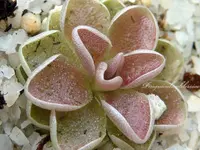
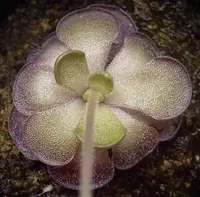
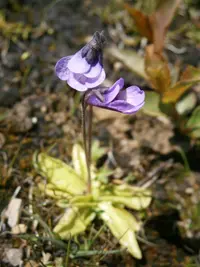
Pinguicula ehlersiae is a small Mexican butterwort, a carnivorous plant that traps tiny insects on its sticky, succulent-like leaves. It usually forms compact, flat rosettes that stay low and neat, making it suitable for small indoor displays and terrariums.
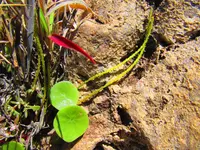
In nature, it grows on rocky limestone slopes and cliffs in Mexico, often in bright but filtered light and with good air movement. The plant shifts between a fleshy, insect-catching summer form and a tighter, drier winter rosette, which influences how to care for Pinguicula ehlersiae through the seasons.
This species is considered one of the easier butterworts if its need for airy, mineral-rich substrate and careful watering is respected.

Care Difficulty
Hard Care

Light Preference
Partial Shade

Water Requirements
Keep Soil Moist

Temperature Preference
Tropical / Frost Sensitive

Hardiness Zone
Unknown

Soil Texture
Sandy, Peaty, Organic-rich

Soil pH
Acidic (5.5–6.5)

Soil Drainage
Moist but well-drained

Fertilization
Minimal (feed rarely)
Scan your plant to receive care tips personalized for your specific plant
Available on iOS and Android
This compact Mexican butterwort prefers bright, gentle light that mimics highland conditions.
This species prefers consistently moist but airy conditions rather than saturated, stagnant media.
This highland carnivorous plant prefers cool to mild conditions with a noticeable day–night temperature drop.
This small Mexican butterwort prefers moderate humidity but adapts to typical indoor levels if air movement is gentle.
Pinguicula ehlersiae needs a very airy, low-nutrient, fast-draining mix to protect its sensitive roots.
This species is well suited to container culture due to its compact rosette and shallow root system.
This small Mexican butterwort gains most nutrients from captured insects, so Pinguicula ehlersiae needs only very light supplemental feeding.
This species needs minimal pruning, focused on hygiene rather than shaping.
Repotting for this compact carnivorous rosette is infrequent and mainly done to refresh the mineral substrate.
Propagation of this species is commonly done from leaf pullings and offsets rather than seed.
This plant is not frost hardy and needs sheltered winter conditions, especially in cold climates.

Plant Health Check
Not sure what's wrong with your plant? Check your plant's health inside the app.
This species forms very small, tight leaf rosettes, often only a few centimeters across, making it one of the more compact Mexican butterworts and well suited to close-up observation and cultivation in small containers.
It shows strong leaf dimorphism, producing flat, sticky, carnivorous leaves in the wet season and shifting to a compact, succulent-like winter rosette with non-carnivorous leaves adapted to drier conditions.
Under strong light, its fleshy leaves often develop pronounced pink to reddish tones while retaining visible glands on the surface, a visual cue that helps distinguish it from many other Mexican Pinguicula species.

This species is endemic to limestone-rich habitats in northeastern Mexico, where it often grows in very thin soil on vertical or steeply inclined rock faces, anchoring in crevices that stay slightly moist from seeping water while surrounding surfaces can dry quickly.
Lack of flowers usually comes from insufficient light, overly warm winter conditions, or too much fertilizer. This species needs a cooler, drier winter rest and bright light to trigger buds. Older, mature rosettes bloom more reliably.
Keep your plants happy and healthy with plant identification, disease detection, and easy care guidance.