Drosera barbigera Care

Drosera barbigera

About Drosera barbigera

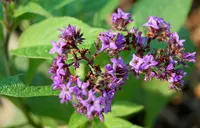
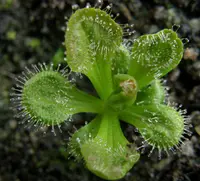
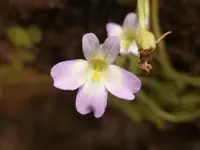
Drosera barbigera is a miniature carnivorous sundew native to southwestern Australia. It forms a compact rosette with narrow leaves covered in sticky, glistening droplets that trap small insects. Mature plants often produce a tall, slender flower stalk with delicate, usually white or pink blooms held well above the leaves.

This species prefers very bright light, cool to mild temperatures, and constantly moist, nutrient-poor sandy or peaty substrates. It can be demanding, as it resents root disturbance and is sensitive to mineral-rich water. Beginners can care for Drosera barbigera successfully by keeping conditions stable and avoiding overfeeding or fertilizing the soil.

Main Plant Requirements

Care Difficulty

Hard Care

Light Preference

Full Sun

Water Requirements

Keep Soil Moist

Temperature Preference

Tropical / Frost Sensitive

Hardiness Zone

11–12

Soil Texture

Sandy, Peaty, Organic-rich

Soil pH

Strongly acidic (4.5–5.5)

Soil Drainage

Waterlogged tolerant

Fertilization

Minimal (feed rarely)

Get Personalized Care Plan

Scan your plant to receive care tips personalized for your specific plant

Available on iOS and Android

How to Care for the Drosera barbigera

This compact sundew needs bright light to maintain strong color and sticky traps.

  • Provide 4–6 hours of direct morning sun plus bright filtered light for the rest of the day; in very hot regions, shield from intense sun after 2–3 p.m.
  • Tolerates light, shifting shade, but long periods under 3–4 hours of sun lead to pale leaves and weak dew production in Drosera barbigera.
  • In summer, increase airflow and consider light shade cloth to prevent leaf scorch; in winter, move to the brightest, sunniest spot available.

This carnivorous plant needs consistently moist, low-mineral conditions to stay healthy.

  • Use rainwater, distilled, or RO water; mineral-rich tap water often causes leaf tip burn and gradual decline of roots and traps.
  • Keep the substrate evenly moist, never fully dry; top 0.5–1 cm may just start to feel less wet before adding water to a shallow tray under the pot.
  • Reduce water depth and frequency in cooler months so the soil stays damp, not waterlogged; signs of overwatering include blackening bases, while crisp leaves indicate underwatering.

Stable, mild temperatures support compact growth and healthy traps in this pygmy sundew.

  • Aim for 65–80°F (18–27°C) during active growth; short spikes to 85°F (29°C) are tolerated if humidity and airflow are good.
  • Avoid frost entirely; growth slows below 50°F (10°C), and sustained exposure under 40°F (4°C) can damage or kill Drosera barbigera.
  • In hot summers above 85–90°F (29–32°C), provide light shade and increased ventilation; in cooler seasons, protect from cold drafts and rapid temperature swings.

This species prefers moderate to high, stable humidity for reliable dew production.

  • Aim for 50–70% humidity; brief drops to 40% are usually tolerated if light and watering are correct.
  • Low humidity shows as reduced or dry glue droplets and browning tentacle tips despite moist soil.
  • Increase humidity by grouping pots in trays of water with pebbles, or by using a small, well‑ventilated terrarium.
  • Avoid strong indoor drafts or direct airflow from heaters, which rapidly strips moisture from Drosera barbigera leaves.

This carnivorous species needs very low‑nutrient, open, and consistently moist soil.

  • Use a mix of 1:1 sphagnum peat moss and horticultural sand or fine perlite to create a light, open texture.
  • Keep drainage free but not fast‑drying; soil should stay damp, never waterlogged or allowed to fully dry out.
  • Target a slightly acidic pH around 4.5–5.5, which supports nutrient‑poor conditions similar to natural habitats.
  • Avoid compost, fertilizer, manures, or standard potting mixes, which burn roots and disrupt Drosera barbigera care.

This sundew is well suited to growing in small to medium containers.

  • Choose a pot at least 7–10 cm deep so roots stay cool and evenly moist without water stagnating at the base.
  • Select plastic or glazed ceramic pots to slow evaporation, especially in bright light or warm, dry homes.
  • Stand the pot in a shallow water tray to keep soil evenly damp, but let the tray nearly empty before refilling to prevent stagnation.

This carnivorous species gains most nutrients from prey, so Drosera barbigera needs little or no conventional fertilizer.

Pruning is minimal and focuses on hygiene rather than shaping Drosera barbigera.

  • Remove spent leaves and dead flower stalks at any time using fine scissors or small snips.
  • Cut only fully brown, dry tissue to avoid stressing the small rosette.
  • Discard trimmed material away from the pot to reduce mold and fungus gnat habitat.
  • Gentle, infrequent tidying keeps light reaching all leaves and supports healthy growth.

This species prefers stable conditions, so repotting Drosera barbigera should be infrequent and gentle.

  • Check for slow growth, crowded rosettes, or roots circling through drainage holes as signs it needs attention.
  • Plan repotting in late winter or early spring, before strong new growth begins.
  • Repot every 2–3 years into fresh acidic, nutrient-poor mix, disturbing roots as little as possible.
  • Water with pure rain, distilled, or RO water after moving to settle the medium and limit shock.

Propagation is possible but delicate, especially for beginners.

  • Use fresh seed in late winter–spring, sowing on the surface of moist, nutrient-poor medium without covering.
  • Provide bright light, high humidity, and 60–75°F for consistent germination.
  • Keep the medium constantly damp with pure water and avoid sudden temperature swings.
  • Do not disturb seedlings until they form sturdy rosettes, then pot on carefully in small groups.

Cool, frost-free winter conditions suit Drosera barbigera best.

  • Avoid frost and freezing; target indoor winter temperatures around 45–60°F with good light.
  • Move outdoor containers indoors or into an unheated but frost-free greenhouse before night temperatures drop near freezing.
  • Reduce watering slightly in cooler months but never allow the potting medium to dry out completely.
  • Maintain good air movement to limit fungal problems in cool, damp conditions.

Care Tips

Cool-night adjustment

Provide a marked night temperature drop by placing pots near a cool window or in an unheated room at night during autumn–winter, which encourages stronger coloration and more compact rosettes.

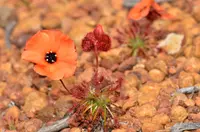
Top-dressing with live moss

Establish a thin layer of live sphagnum on the soil surface to stabilize moisture around the small root system, buffer against minor watering mistakes, and reduce algal crust that can smother seedlings or small plants.

Timed feeding routine

Offer very small insects to only a few leaves at a time every 2–3 weeks during active growth, then skip feeding for several weeks in cooler, darker periods to prevent mold and metabolic stress.

Seed germination strategy

For seed production, allow flowers to self-pollinate, collect ripe seed, then sow it on the same peat–sand mix and expose to strong light with wide day–night temperature swings to improve germination rates when growing Drosera barbigera from seed.

Pot choice and spacing

Use multiple small, deep pots placed close together in a tray rather than one large container, which helps maintain cooler, evenly moist root zones and makes it easier to isolate any plant that develops pests or fungus.

Common Pests and Diseases

Aphids

These insects sometimes colonize young leaves and flower stalks, sucking sap and stressing the plant, especially in low-airflow indoor setups. Symptoms include distorted growth, sticky residue, and clusters of soft-bodied insects on non-sticky parts.

Solution

Rinse the plant gently with distilled or rainwater to dislodge aphids, avoiding hard jets that damage the delicate leaves. For persistent infestations, use a low-dose insecticidal soap or neem-based spray applied carefully to non-carnivorous tissue, and improve air circulation while avoiding hot, direct midday sun after treatment.

Fungus gnats

These insects are attracted to the constantly moist, nutrient-poor media and lay eggs in the substrate, producing small black adults that fly around and larvae that can stress weak roots. This pest is often more noticeable in compact indoor setups or propagators with stale, humid air.

Solution

Allow the surface of the medium to dry very slightly between waterings while still keeping the pot evenly moist, and increase airflow around the plant. Use yellow sticky traps to catch adults and consider a biological control such as Bacillus thuringiensis israelensis (BTI) in the water tray to reduce larvae without harming the sundew, which is an effective approach for growing Drosera barbigera in small collections.

Botrytis (gray mold)

This disease develops in cool, stagnant, very humid conditions and attacks old leaves, flower stalks, or any damaged tissue. Symptoms include soft brown patches that quickly develop fuzzy gray mold, often starting on dead or dying parts.

Solution

Remove and discard all affected and dead material promptly, cutting back to healthy tissue with sterile scissors. Improve air movement, avoid overhead watering on the foliage, keep the plant slightly warmer and drier at the surface, and if needed use a sulfur-based or other carnivorous-safe fungicide applied sparingly with good ventilation.

Powdery mildew

This disease can appear as fine white or gray powdery patches on leaves and tentacles, especially where air is stagnant and humidity fluctuates. Symptoms include reduced dew production, dull leaf color, and in severe cases leaf distortion or dieback.

Solution

Increase light and gentle airflow, and thin out overcrowded rosettes to reduce humidity pockets. Remove heavily affected leaves and apply a mild, carnivorous-safe fungicide such as potassium bicarbonate or sulfur at low concentration, testing on a small area first and avoiding treatment during the hottest part of the day.

Spider mites

These pests occasionally attack plants kept too dry or too hot, feeding on leaf surfaces and causing fine stippling, reduced dew, and eventually bronzing or webbing between leaves. This pest is more common in indoor or greenhouse conditions with low humidity and poor ventilation.

Solution

Increase humidity and lower heat stress while gently rinsing the foliage with distilled or rainwater to remove mites and webs. If needed, apply an insecticidal soap or horticultural oil formulated for sensitive plants, targeting the undersides of leaves and repeating after 5–7 days, while improving air circulation to prevent re-infestation.

Interesting Facts

Hairy tentacle adaptation

This species has unusually dense, beard-like marginal tentacles that inspired the epithet barbigera, meaning beard-bearing, and increase the sticky surface area to hold very small flying insects firmly.

Tiny rosette growth

It forms compact rosettes only about 1–2 cm across, an extreme dwarf habit that distinguishes it from many other tuberous Drosera and suits its life in shallow, nutrient-poor sandy soils.

Tuber survival strategy

The plant survives hot, dry Western Australian summers as an underground storage tuber and only produces leaves and traps during the cool, wet winter growing season.

Botan icon

Did you know?

In its native Western Australia, this species is mostly restricted to localized quartz sand and lateritic habitats, so many natural populations can be very small and patchy, making accurate field documentation important for long-term conservation assessments.

FAQs about Drosera barbigera

Lack of flowering usually comes from insufficient light, cool-season dormancy needs not being met, or nutrient contamination from regular potting soil or fertilizers. Provide strong light, lean mineral-free media, and a slight cooler winter period to support flower formation.

Grow Healthy Plants with Botan Care

Keep your plants happy and healthy with plant identification, disease detection, and easy care guidance.

Botan plant care app — identify plants on mobile

Explore More Plants