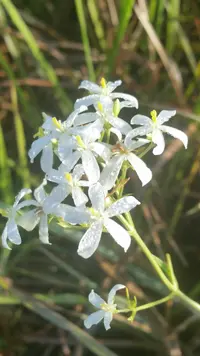
Bridal Rainbow Care (Drosera macrantha)

Bridal Rainbow

About Bridal Rainbow

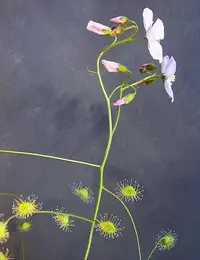
Bridal Rainbow (Drosera macrantha) is a climbing, tuberous sundew, a type of carnivorous plant that traps insects on sticky leaf tendrils. It produces slender, twining stems with delicate round leaves and often shows soft pink or white blooms that add a subtle ornamental effect.

This species is native to southern Australia, where it grows in seasonally moist, nutrient-poor soils. It relies on insect capture for nutrients, which makes watering and feeding needs different from typical houseplants.

In cultivation, it prefers bright light, cool to mild temperatures, and a consistently damp, low-mineral substrate, so learning how to care for Bridal Rainbow involves mimicking its natural winter-growing cycle.

Main Plant Requirements

Care Difficulty

Hard Care

Light Preference

Full Sun

Water Requirements

Aquatic

Temperature Preference

Cool Climate

Hardiness Zone

9–10

Soil Texture

Sandy, Peaty, Organic-rich

Soil pH

Strongly acidic (4.5–5.5)

Soil Drainage

Waterlogged tolerant

Fertilization

Minimal (feed rarely)

Get Personalized Care Plan

Scan your plant to receive care tips personalized for your specific plant

Available on iOS and Android

How to Care for the Bridal Rainbow

This climbing sundew prefers bright, direct conditions that mimic open, sunny habitats.

  • Provide 4–6 hours of direct morning sun plus bright light the rest of the day; light afternoon shade protects delicate leaves from scorching.
  • In mild climates, full sun is tolerated if soil stays moist; in hotter areas, use filtered midday light to prevent leaf burn and dried mucilage droplets.
  • Reduce exposure to harsh low-angle winter sun combined with cold winds, but avoid deep shade, which causes weak, pale growth in Bridal Rainbow.

Watering should keep the root zone consistently moist without turning the soil into stagnant mud.

  • Use low-mineral water and maintain evenly damp, sharply drained sandy or peaty soil so excess water can run off rather than pool around roots.
  • Allow only the top 1–2 cm of soil to feel just damp, never crisp dry; curling leaves and reduced dew indicate underwatering, while blackened roots or sour smell suggest overwatering.
  • In active growing season, check moisture every 1–2 days; during summer dormancy, reduce watering so soil is barely moist, not saturated, until Drosera macrantha resumes growth.

This species grows best in mild, temperate conditions with a cool, defined dormant period.

  • Aim for 60–75°F (16–24°C) during active growth; short peaks to 80°F (27°C) are tolerated if soil stays moist and roots shaded.
  • Dormant tubers handle brief drops near 32°F (0°C) if soil is not waterlogged, but repeated hard frosts below 28°F (-2°C) risk damage.
  • Provide airflow and light shade during hot spells above 86°F (30°C), as prolonged heat with dry soil can desiccate foliage and weaken the tubers.

This species prefers moderately humid air but copes with typical indoor levels if roots stay evenly moist.

  • Aim for 40–60% humidity to support active dew production on leaves.
  • Tolerates brief dips to 30% if the soil is not allowed to dry completely.
  • Crisping tentacles and reduced sticky droplets signal low humidity stress; group pots or use a nearby pebble tray to boost levels for Bridal Rainbow.

This carnivorous plant needs low-nutrient, fast-draining yet moisture-retentive soil.

  • Use a mix of roughly 1:1 milled sphagnum peat and coarse silica sand for Drosera macrantha.
  • Ensure a loose, airy texture so fine roots can penetrate without compaction.
  • Keep pH slightly acidic, around 4.5–5.5, by avoiding lime, compost, and regular potting mixes.
  • Avoid fertilizers, manures, bark-based blends, and any soil that stays waterlogged or forms a crust when dry.

This species is suitable for container growing when given a tall, well-drained pot that matches its root depth.

  • Choose a deep container so the plant’s long, tuberous roots can extend downward without curling densely at the base.
  • Use a light-colored or insulating pot material outdoors to limit overheating and rapid evaporation of the peat-sand mix.
  • Stand the pot in a shallow tray of low-mineral water, allowing only the bottom layer of the mix to stay consistently moist.

Drosera macrantha is a carnivorous species that gains most nutrients from captured prey and is very sensitive to added fertilizer.

Drosera macrantha needs only light pruning to keep the plant tidy and healthy.

  • Best time is late dormancy or early spring, before strong new growth begins.
  • Use fine scissors or small snips to remove dead, blackened, or damaged stems and old tendrils.
  • Limit pruning to spent material; heavy cutting can weaken growth and reduce flowering.
  • Work gently around the sticky leaves to avoid tearing active traps and climbing shoots.

Container-grown plants are transplanted infrequently, mainly to refresh the poor, sandy medium or relieve root crowding.

  • Check for roots circling the pot, compacted mix, or unexplained slow growth as signs to transplant.
  • Aim for every 2–3 years in late winter to early spring, just before strong new shoots appear.
  • Use a deep pot with low-nutrient mix (such as sphagnum peat and sand), and pre-moisten with rainwater or distilled water.
  • Slide the plant out carefully, keep the root system intact, and firm the new medium gently to limit transplant shock.

This species is usually propagated from seed, which maintains genetic diversity and natural vigor.

  • Sow fresh seed in late winter to early spring on the surface of a low-nutrient peat and sand mix.
  • Do not cover seed; provide bright light, high humidity, and mild temperatures around 60–70°F.
  • Keep the medium consistently damp with rainwater or distilled water, avoiding waterlogging.
  • Seed-grown plants take time to reach flowering size, so label trays and avoid disturbing seedlings.

This temperate species forms an underground tuber and survives cool winters if the root zone stays relatively dry and unfrozen.

  • In cold climates, mulch the tuber area lightly with coarse sand or fine gravel to buffer temperature swings.
  • Ensure winter soil stays only slightly moist; overly wet, cold substrate increases rot risk.
  • For containers in regions below about 25°F, move pots to a cold, frost-free garage or frame until spring.

Care Tips

Seasonal Dormancy Rest

Allow the plant to fully die back in late summer, then keep the pot just barely moist and cool through autumn–winter to respect its natural dormancy cycle and improve vigor the following growing season.

Vertical Support Training

Provide a thin, rough stake, mesh, or shrub branch for the twining stems to climb, placing it at planting time so the delicate roots and tuber are not disturbed later in the season.

Mineral-Free Watering Setup

Use a dedicated tray and labeled watering can filled only with rainwater, distilled, or reverse-osmosis water to avoid accidental exposure to tap water, which can damage this mineral-sensitive species over time.

Feeding Access Management

Position the plant where small flying insects naturally pass, such as near a sunny window or open vent, so the sticky leaves can catch prey without the need for manual feeding.

Tuber Protection Strategy

Grow in a deep, tall pot and avoid repotting more than every 2–3 years, handling the growing medium gently to protect the underground tuber from mechanical damage that can set the plant back or kill it; this is a key part of caring for Bridal Rainbow.

Common Pests and Diseases

Aphids

These insects cluster on young flower stalks and leaf bases, sucking sap and weakening the plant, especially in sheltered or greenhouse conditions. Symptoms include distorted new growth and sticky honeydew on nearby surfaces.

Solution

Rinse stems and foliage with a firm stream of rain or distilled water to dislodge colonies, then repeat every few days until numbers drop. In outdoor trays or pots, encourage natural predators such as ladybird beetles and avoid nitrogen‑rich fertilizers that promote soft, aphid‑prone growth when growing Bridal Rainbow.

Fungus gnats

These insects are attracted to constantly wet, peaty media and may lay eggs in pots or trays, with larvae feeding on organic debris and delicate roots. Symptoms include tiny black flies hovering near the pot and reduced vigor in seedlings or small plants.

Solution

Allow the surface of the medium to drain briefly between waterings while keeping the lower portion moist, and use top watering occasionally to flush larvae. Yellow sticky traps help reduce adults, and a biological control such as Bacillus thuringiensis israelensis (Bti) can be applied to the water to target larvae without harming the plant.

Botrytis (grey mold)

This disease develops in cool, humid, poorly ventilated conditions and colonizes old leaves or insect remains on the traps. Symptoms include grey, fuzzy mold on dead tissue that can spread to nearby live stems and leaves.

Solution

Promptly remove any dead leaves, spent traps, and insect remains, and improve airflow around the plant by spacing pots and avoiding overcrowded terrariums. Reduce overhead misting, water early in the day so foliage dries, and if needed apply a sulfur‑based fungicide carefully, keeping chemicals off the active trap surfaces as much as possible.

Powdery mildew

This disease occasionally appears on stems and leaves grown in warm conditions with stagnant air, forming white, powdery patches. Symptoms include dull, pale patches that may cause leaf yellowing and reduced photosynthesis if not addressed.

Solution

Increase air movement around the plant and avoid placing it in closed, stagnant enclosures. Remove heavily affected leaves and, if necessary, use a mild sulfur or potassium bicarbonate fungicide labeled for ornamentals, applied lightly and only when the plant is in active, healthy growth.

Interesting Facts

Climbing sundew habit

This species is one of the few sundews with long, twining stems that can climb through surrounding vegetation, reaching over 1 m in height in suitable conditions.

Winter tuber dormancy

Drosera macrantha survives the hot, dry Mediterranean-type summers of southwestern Australia by retreating into an underground storage tuber, then resprouting with the return of cool, wet winter weather.

Large sticky traps

Compared with many other sundews, this species develops relatively large, round leaf laminae with dense mucilage glands, allowing it to capture larger, more mobile insects along its climbing stems.

Botan icon

Did you know?

Unlike many carnivorous plants that occur in nutrient-poor peat bogs, Drosera macrantha is often found in lateritic and sandy soils over granite or sandstone in southwestern Australia, where it can form striking, seasonally abundant populations in open woodland and heathland.

FAQs about Bridal Rainbow

This species is a twining climber. Long, thin stems spiral around nearby grasses, twigs, or supports, reaching up rather than forming ground-hugging mats. In cultivation, a slim stake or brushwood gives the tendrils something to wrap around.

Grow Healthy Plants with Botan Care

Keep your plants happy and healthy with plant identification, disease detection, and easy care guidance.

Botan plant care app — identify plants on mobile

Explore More Plants