Anchor With Mesh
Spread thin moss portions between 2 layers of fine plastic mesh or fishing line on hardscape so the fronds can root in place and form a dense, even mat instead of drifting away.

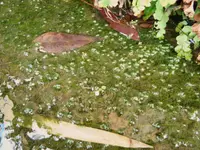
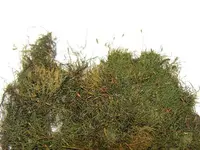
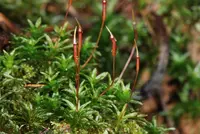
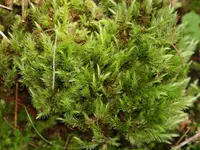
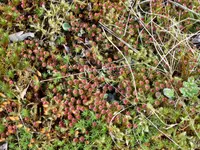
Streamside leptodictyum moss (Leptodictyum riparium) is an aquatic or semi-aquatic moss that forms fine, branching mats of bright to medium green fronds. Its stems are slender and flexible, creating a soft, flowing look under water or along damp surfaces.
In nature it grows on stones, wood, and soil along streams, rivers, and ponds, often in gently moving water. The plant tolerates a wide range of water conditions and is relatively forgiving, which makes it popular for aquariums and paludariums.
Growth is generally fast when moisture is constant and light is moderate, so it can spread quickly and needs occasional trimming. These traits make it straightforward to learn how to care for streamside leptodictyum moss, even for beginners.

Care Difficulty
Easy Care

Light Preference
Partial Shade

Water Requirements
Aquatic

Temperature Preference
Cold Hardy

Hardiness Zone
5–9

Soil Texture
Silty, Peaty, Organic-rich

Soil pH
Acidic (5.5–6.5), Slightly acidic (6.5–7.0)

Soil Drainage
Waterlogged tolerant

Fertilization
Minimal (feed rarely)
Scan your plant to receive care tips personalized for your specific plant
Available on iOS and Android
Leptodictyum riparium prefers low to moderate light resembling shaded stream banks.
Leptodictyum riparium thrives in constantly moist to submerged conditions.
This moss prefers cool to mild temperatures but tolerates a fairly wide range.
This moss prefers constantly moist, high-humidity conditions close to its natural streamside habitat.
Leptodictyum riparium anchors best on moist, fine-textured, organic-rich substrates rather than traditional potting soil.
This species is well suited to container culture in aquariums, paludariums, and terrariums.
Leptodictyum riparium is a low-nutrient moss that needs only light, diluted feeding in managed aquaria or paludariums.
Leptodictyum riparium benefits from light trimming to keep growth dense, clean, and controlled.
This moss is usually attached to hardscape rather than potted, so transplanting focuses on relocating or thinning attached mats.
Leptodictyum riparium is commonly propagated by simple division of existing mats.
In outdoor settings this moss is quite cold tolerant, but container or aquarium cultures may need basic winter management.

Plant Health Check
Not sure what's wrong with your plant? Check your plant's health inside the app.
This moss can grow fully submerged in water, on wet mud, or on periodically flooded rocks and wood, shifting its form from delicate, elongated fronds underwater to denser shoots in more exposed, marginal habitats.
It often colonizes slow, nutrient-enriched streams, ponds, and drainage channels, where it can take advantage of elevated nitrate and phosphate levels that many other aquatic mosses tolerate less well.
The species is naturally widespread across temperate regions of Europe, Asia, Africa, and the Americas, often appearing as a pioneer moss that quickly occupies disturbed or artificial waterways.
Growth is moderate under stable moisture and cool conditions. In aquariums or very damp setups, new shoots and fronds may extend several centimeters per month, forming a dense mat or curtain over one growing season.
Keep your plants happy and healthy with plant identification, disease detection, and easy care guidance.