Guided dune coverage
Pin lightly rooted runners into bare sand using biodegradable U-shaped pins to encourage rapid lateral spread and stabilize soil on exposed dunes.

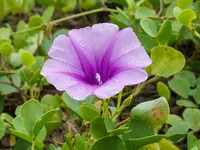
Bayhops (Ipomoea pes-caprae) is a fast-growing, trailing beach vine native to tropical and subtropical coasts around the world. It naturally forms dense mats that stabilize sand dunes and protect shorelines from erosion. Its thick, leathery, split leaves and pink to purple funnel-shaped flowers are adapted to salty spray, strong sun, and sandy, nutrient-poor soils. These adaptations make it tough and relatively easy to grow in warm coastal gardens. Gardeners who want to care for bayhops should provide strong light, good drainage, and low to moderate watering, similar to natural seaside conditions.

Care Difficulty
Easy Care

Light Preference
Full Sun

Water Requirements
Low Water

Temperature Preference
Tropical / Frost Sensitive

Hardiness Zone
10–12

Soil Texture
Sandy, Loamy, Rocky

Soil pH
Slightly acidic (6.5–7.0), Neutral (7.0)

Soil Drainage
Well-drained

Fertilization
Minimal (feed rarely)
Scan your plant to receive care tips personalized for your specific plant
Available on iOS and Android
This coastal groundcover thrives in strong sun typical of open beaches.
This dune-adapted vine is highly drought-tolerant and prefers infrequent, deep watering.
This species is adapted to warm, frost-free coastal climates.
This coastal vine tolerates a wide humidity range and usually does not need extra moisture in the air.
This species thrives in very sandy, fast-draining substrates that mimic coastal dune conditions.
This species can be grown in containers if the pot and setup mimic its naturally sprawling, sand-dune habitat.
This coastal groundcover needs only light feeding in typical sandy, low-nutrient soils, so fertilization should stay modest even when caring for bayhops.
Pruning Ipomoea pes-caprae focuses on controlling spread and maintaining healthy, dense groundcover growth.
This species is usually grown in the ground, so care centers on transplanting young plants rather than frequent repotting.
Ipomoea pes-caprae is commonly propagated to establish erosion control groundcover and restore coastal areas.
This tropical beach species is frost-sensitive and needs protection or replacement in colder climates.

Plant Health Check
Not sure what's wrong with your plant? Check your plant's health inside the app.
This creeping beach plant is a key pioneer species on tropical and subtropical coasts, where its dense, prostrate stems trap wind-blown sand and help stabilize and build dune systems.
Its corky, buoyant seeds tolerate saltwater and can float long distances on ocean currents, which explains its naturally wide distribution across tropical shorelines around the world.
Thick, leathery leaves with a waxy cuticle and deep taproots allow this species to withstand intense sun, salt spray, and limited freshwater in the upper beach zone.

This species often forms nearly continuous mats along undisturbed beaches, creating a natural barrier that reduces coastal erosion and provides nursery habitat for invertebrates and juvenile reptiles such as sea turtles moving between nest and sea.
This species spreads quickly via long, rooting stems and can form dense mats on sandy soils. In coastal gardens it is often used for erosion control, but in small spaces growth may need regular edging or thinning.
Keep your plants happy and healthy with plant identification, disease detection, and easy care guidance.