Sturdy staking
Install low, broad stakes or a short cage early in the season to support the flexible stems against wind and heavy rain, tying loosely with soft ties so stems can still sway slightly without kinking or snapping.

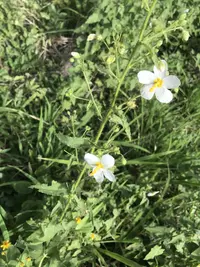
White fenrose (Kosteletzkya depressa) is a small, shrubby perennial from the mallow family, valued for its delicate, pale flowers and compact growth. It typically forms low, branching clumps with soft green foliage and hibiscus-like blooms.
This species occurs naturally in coastal and wetland habitats of the southeastern United States, especially in sandy or periodically moist soils. It is generally considered moderately easy to grow if its need for sun and well-drained, slightly moist soil is met.
Gardeners who want to learn how to care for white fenrose should note that it prefers warm conditions, regular moisture, and protection from prolonged freezing temperatures.

Care Difficulty
Moderate Care

Light Preference
Full Sun

Water Requirements
Regular Water

Temperature Preference
Warm Climate

Hardiness Zone
9–11

Soil Texture
Sandy, Loamy, Organic-rich

Soil pH
Slightly acidic (6.5–7.0), Neutral (7.0)

Soil Drainage
Waterlogged tolerant

Fertilization
Minimal (feed rarely)
Scan your plant to receive care tips personalized for your specific plant
Available on iOS and Android
This coastal hibiscus relative thrives in bright, open conditions with strong, direct sun.
This species prefers consistently moist conditions but suffers if soil stays saturated for long periods.
This warm-season perennial grows best in mild to hot conditions and is sensitive to hard frost.
This species prefers moderately humid air but copes with typical indoor levels if not kept too dry at the roots.
Kosteletzkya depressa prefers moist, airy, slightly acidic to neutral soil that drains well but never dries out completely.
This species grows reasonably well in containers when given stable moisture and enough root depth.
This coastal native shrub grows well in lean soils, so fertilizing Kosteletzkya depressa should stay light and targeted.
Pruning Kosteletzkya depressa is mainly about keeping the shrub healthy and encouraging strong flowering wood.
This species is usually grown in the ground, so focus on careful transplanting and only occasional container repotting.
Kosteletzkya depressa is most often propagated from seed but can also be started from softwood cuttings with suitable conditions.
Kosteletzkya depressa is moderately frost sensitive, so winter care matters in colder regions.

Plant Health Check
Not sure what's wrong with your plant? Check your plant's health inside the app.
This Gulf Coast wetland plant is a hibiscus relative native to brackish marshes and shorelines of the northwestern Gulf of Mexico, where it is now considered rare and threatened due to habitat loss and coastal development.
It grows in a narrow ecological niche, typically in low coastal swales, tidal flats, and brackish marsh edges that experience occasional saltwater flooding but also receive freshwater input.
The plant produces pale, often white to very light pink, hibiscus-like flowers with a contrasting darker center, which open during the day and attract a range of pollinating insects in coastal wetland communities.
Lack of flowering usually comes from insufficient light, nutrient-poor or very rich soil, or pruning at the wrong time. Check that the plant receives enough sun, moderate fertilizer, and avoid cutting stems heavily just before flowering season.
Keep your plants happy and healthy with plant identification, disease detection, and easy care guidance.