giant bamboo Care (Dendrocalamus asper)

giant bamboo

About giant bamboo

Giant bamboo, Dendrocalamus asper, is a large, clumping bamboo species valued for its thick, strong culms and fast growth. It is mainly grown in tropical and subtropical regions of Asia but can be cultivated in warm climates elsewhere.

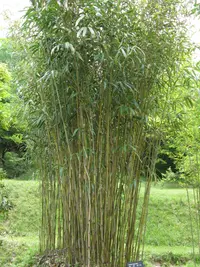
This species forms dense clumps with upright, towering canes and a tall, leafy canopy, so it needs space and thoughtful placement. Its vigorous growth and deep root system make it resilient but also demanding in terms of water and nutrients.

It generally prefers bright light, consistent moisture, and well-drained, fertile soil. Understanding how to care for giant bamboo helps keep plants healthy and prevents them from becoming stressed or invasive in suitable climates.

Main Plant Requirements

Care Difficulty

Moderate Care

Light Preference

Full Sun

Water Requirements

Regular Water

Temperature Preference

Tropical / Frost Sensitive

Hardiness Zone

10–11

Soil Texture

Loamy, Sandy, Organic-rich

Soil pH

Acidic (5.5–6.5), Slightly acidic (6.5–7.0)

Soil Drainage

Moist but well-drained

Fertilization

Moderate (every 2–4 weeks)

Get Personalized Care Plan

Scan your plant to receive care tips personalized for your specific plant

Available on iOS and Android

How to Care for the giant bamboo

This large bamboo species prefers bright, consistent light to fuel rapid growth.

  • Provide 4–6 hours of direct morning sun plus bright filtered light for the rest of the day; avoid harsh, all-day afternoon sun in hot climates.
  • Plant giant bamboo in a spot that receives light to moderate partial shade, especially from 1–4 p.m., to reduce leaf scorch and water stress.
  • In summer, monitor for yellowing or curling leaves as a sign of excess sun; in winter, ensure the site remains as open and unshaded as possible.

This species grows fastest in evenly moist, well-drained soil without prolonged drying or standing water.

  • Water when the top 3–5 cm of soil feel barely moist, aiming to keep the root zone consistently damp but never waterlogged.
  • Increase watering in hot, windy weather when leaves roll or hang limply, and reduce in cool or rainy seasons to prevent root rot and sour odors.
  • Ensure deep, infrequent soakings that penetrate 20–30 cm into the soil, and use mulch to slow evaporation and stabilize moisture for Dendrocalamus asper.

This bamboo prefers warm, frost-free conditions but tolerates short cool spells if protected.

  • Aim for optimal growth in 70–90°F (21–32°C); growth slows below 60°F (16°C) and heat stress can appear above 100°F (38°C) without extra water.
  • Protect plants from frost; culms and leaves are often damaged below 28–30°F (-2 to -1°C), though established clumps may reshoot from the base.
  • In hot summers, combine high temperatures with ample soil moisture and some afternoon shade; in cooler regions, choose the warmest, most sheltered microclimate available.

This species benefits from moderately high humidity but adapts to many outdoor conditions.

  • Aim for 50–70% humidity, which supports fast bamboo growth and reduces leaf edge browning.
  • It tolerates brief drier air, but prolonged humidity below 40% can cause curling, yellowing tips, and slower growth.
  • Increase humidity near giant bamboo with grouped plantings, windbreaks, or mulched, regularly watered soil around the root zone.

This bamboo prefers deep, moist, well‑drained soil with strong structure and aeration.

  • Use a loamy, organic‑rich base soil that holds moisture yet stays friable so roots can spread easily.
  • Target pH 6.0–7.0; add compost to buffer pH and improve nutrient availability for Dendrocalamus asper.
  • Blend 30–40% coarse sand or fine gravel to improve drainage on heavy sites and prevent waterlogging around rhizomes.
  • Avoid compacted clay, low‑lying flooded spots, or mixes heavy in fine peat that stay saturated after irrigation or rain.

This species can be grown in containers, but only with careful attention to stability and root space.

  • Choose a very large, deep container to accommodate vigorous rhizome and root expansion and reduce stress from crowding.
  • Select a heavy, thick‑walled pot that resists tipping and slows sudden drying of the root zone in hot, windy locations.
  • Elevate the container slightly on blocks so drainage holes stay clear and excess water escapes quickly after heavy watering or rain.

Dendrocalamus asper responds well to moderate, consistent nutrition during the warm growing season.

  • Use a balanced slow-release fertilizer (around 10-10-10) or well-rotted compost at the start of spring for caring for giant bamboo.
  • Feed every 6–8 weeks in the growing season, adjusting rates based on soil fertility and observed growth.
  • Apply at 1/2–3/4 label strength, watering deeply afterward to avoid root burn and concentrate nutrients in the root zone.
  • Reduce or stop feeding in late fall and winter, when growth slows and nutrient demand is low.

Pruning Dendrocalamus asper focuses on safety, airflow, and maintaining a manageable clump.

  • Carry out main pruning in late dry season or early spring, before strong new shoots emerge.
  • Remove dead, damaged, crossing, or leaning culms at ground level to reduce hazards and improve light penetration.
  • Thin the interior by taking out a few older culms; this encourages new shoot development and keeps the clump open.
  • Use clean, sharp loppers or a pruning saw, making smooth cuts and avoiding splintered stubs.

This large bamboo is usually grown in the ground, so management focuses on careful transplanting rather than frequent repotting.

  • Transplant in late spring or early summer when soil is warm and active root growth supports recovery.
  • Move plants when roots circle the container, growth slows, or the clump clearly exceeds its planting area.
  • Lift with as much root ball as possible, shade temporarily, and water thoroughly to limit transplant shock.
  • Space plants in well-drained, fertile soil, then mulch and keep evenly moist for several weeks after planting.

Dendrocalamus asper is most reliably propagated vegetatively, since seeds are rarely available.

  • Use culm cuttings or clump divisions taken in late spring or early summer for best survival.
  • For divisions, separate a portion with several culms and a solid root mass, then replant promptly in moist, well-drained soil.
  • For culm cuttings, select 2–3-node sections, keep one node just at or below soil level, and maintain high humidity.
  • Provide warmth (70–85°F), bright shade, and consistent moisture to encourage rooting or new shoot formation.

This tropical bamboo has low frost tolerance and needs protection in regions with cool winters.

  • In ground, apply a 5–10 cm mulch layer over the root zone to buffer soil temperature and conserve moisture.
  • In areas with light frost, allow top growth to die back while keeping roots insulated to encourage regrowth from the base.
  • Move container plants indoors or into a greenhouse before temperatures drop near 32°F, giving bright, indirect light.
  • Reduce watering in cool conditions, keeping soil just slightly moist to prevent root rot while growth is slowed.

Care Tips

Windbreak planning

In open or windy sites, install a mesh windbreak or plant a sacrificial row of hardy shrubs on the windward side to reduce culm snapping and leaf desiccation as the clump matures.


Culm thinning schedule

Each dry season, remove the oldest, weakest, and most congested culms at ground level, leaving 10–20 cm of stump if necessary, to improve air flow, reduce disease risk, and direct energy to younger, stronger shoots.

Harvest-height control

When harvesting culms for timber or construction, cut no lower than 30–50 cm above the ground to avoid damaging buds and rhizomes that produce future shoots.

Mulch corridor management

Maintain a wide mulch corridor, 60–120 cm around the clump, using chipped bamboo or other woody mulch so new shoots emerge into a soft, cool, and weed-suppressed zone that is easy to manage.

Shoot protection method

During the main shooting season, mark and loosely cage new shoots in high-traffic or livestock areas to prevent trampling or grazing damage, which is a common issue when growing giant bamboo in mixed-use landscapes.

Common Pests and Diseases

Bamboo shoot borer

This pest tunnels into young shoots and culms, causing distorted growth, dead tops, and reduced culm quality. Symptoms include small entry holes, frass (sawdust-like material), and hollow or weakened internodes.

Solution

Cut and destroy infested shoots and culms as soon as boring damage is noticed to break the life cycle. Maintain good sanitation by removing old stumps and debris, encourage strong growth with balanced fertilization and irrigation, and, in larger plantings, use light traps or pheromone traps to monitor and reduce adult moth populations.

Bamboo aphids

These insects cluster on young culms and leaves and feed on sap, leading to yellowing, curling foliage, and slowed growth. Honeydew excreted by aphids often leads to black sooty mold on culms and leaves.

Solution

Spray colonies off with a strong stream of water and prune heavily infested shoots for smaller plantings or giant bamboo indoor care situations. For persistent problems, apply a horticultural soap or neem oil thoroughly to the undersides of leaves and new culms, and reduce excess nitrogen fertilization that promotes soft, aphid-prone growth.

Bamboo scale

This pest appears as small, immobile bumps on culms and leaf sheaths, often along nodes and ridges. Infestations weaken plants over time, causing yellowing foliage, poor new shoot production, and sticky honeydew with possible sooty mold.

Solution

Scrape off localized colonies with a soft brush and wipe culms using a cloth dipped in a mild soap solution or horticultural oil. For heavier infestations, apply horticultural oil thoroughly during mild weather, targeting the nodes and hidden areas, and thin dense clumps to improve airflow and light penetration.

Bamboo blight

This disease causes elongated dark lesions on culms and branches, sometimes with cracking and dieback of affected sections. Symptoms include browning of leaves on infected culms and gradual decline of entire poles.

Solution

Prune and remove infected culms and branches promptly, cutting well below visible lesions, and destroy removed material away from the planting. Reduce overhead irrigation, improve spacing and airflow within clumps, and consider preventive copper-based fungicide sprays during prolonged wet periods if the disease is recurrent.

Leaf rust

This disease produces yellow to orange-brown pustules on the undersides of leaves, leading to yellowing, premature leaf drop, and reduced vigor in heavily affected clumps. Symptoms include sparse foliage and lower photosynthetic capacity over time.

Solution

Remove and dispose of heavily infected leaves and thin crowded culms to improve air circulation and faster leaf drying. In areas with frequent outbreaks, apply a suitable foliar fungicide according to label directions during humid periods and avoid overhead watering that keeps foliage wet for long durations.

Interesting Facts

Edible bamboo shoots

The young shoots are widely eaten in Southeast Asia and are valued for their crisp texture and mild flavor once properly boiled to remove natural bitterness.

Preferred timber bamboo

Its thick-walled culms are strong and straight, so this species is commonly used for construction, scaffolding, engineered bamboo boards, and musical instruments in many tropical regions.

Sympodial clumping habit

This species grows as a tight clump through a sympodial rhizome system, meaning the underground stems spread slowly and form dense clumps rather than running aggressively over large distances.

Botan icon

Did you know?

In parts of Indonesia and other Southeast Asian countries, this species is a traditional material for building stilt houses and large-span roofs, because mature culms can reach exceptional diameters and lengths while remaining relatively lightweight for manual handling.

FAQs about giant bamboo

This species is one of the fastest-growing woody plants. In warm climates with deep, moist, fertile soil it can extend culms 30–60 cm per day during peak season, then slow once canes harden and mature.

Grow Healthy Plants with Botan Care

Keep your plants happy and healthy with plant identification, disease detection, and easy care guidance.


Botan plant care app — identify plants on mobile

Explore More Plants