Install sturdy supports
Use a simple trellis or 2–3 taut wires along a fence to support the long arching shoots, tying new growth loosely with soft ties so branches do not snap in wind or under fruit weight.

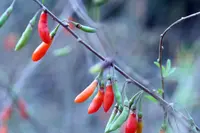
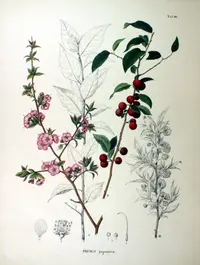
Chinese desert-thorn, Lycium chinense, is a deciduous shrub best known for its small red berries and fine, lance-shaped leaves. It typically forms a loose, rounded bush with arching, sometimes thorny branches.
The species is native to East Asia, including China and Korea, and is often grown in hedgerows, orchards, and gardens. In cultivation it is valued both as a medicinal and edible plant.
This shrub is generally robust and tolerates a range of conditions, which makes it fairly straightforward to care for Chinese desert-thorn in suitable climates. It prefers sunny, open sites, well-drained soil, and moderate moisture, and copes well with occasional drought once established.

Care Difficulty
Easy Care

Light Preference
Full Sun

Water Requirements
Low Water

Temperature Preference
Cold Hardy

Hardiness Zone
5–9

Soil Texture
Sandy, Loamy, Rocky

Soil pH
Slightly acidic (6.5–7.0), Slightly alkaline (7.0–7.5)

Soil Drainage
Well-drained

Fertilization
Minimal (feed rarely)
Scan your plant to receive care tips personalized for your specific plant
Available on iOS and Android
Lycium chinense prefers bright, open conditions to flower and fruit well.
Lycium chinense is drought-tolerant once established but benefits from thoughtful watering.
This shrub tolerates a wide temperature range but has clear preferences for active growth.
This shrub handles typical home and outdoor humidity well and rarely needs special humidity management.
Lycium chinense prefers mineral, well-drained soil that never stays waterlogged.
This species is suitable for container growing when the pot mimics deep, freely draining ground conditions.
Lycium chinense responds well to moderate, balanced feeding in active growth but does not need heavy fertilizer input.
Lycium chinense benefits from periodic structural pruning to maintain shape, health, and manageable size.
This shrub is more often transplanted in the ground than repotted, but container-grown plants need occasional size upgrades.
Lycium chinense is commonly propagated by semi-hardwood cuttings or seed under suitable conditions.
This species is generally cold hardy in many temperate regions and needs only modest winter care once established.

Plant Health Check
Not sure what's wrong with your plant? Check your plant's health inside the app.
Lycium chinense has been cultivated for centuries in China and neighboring regions, especially in wetter and cooler areas than its close relative Lycium barbarum. Historical records show its deliberate planting in hedgerows, field margins, and gardens for both fruit and young leafy shoots.
Compared with Lycium barbarum, this species tends to have broader leaves and slightly less elongated berries, which botanists use as key characters for identification. Its leaves are also harvested as a leafy vegetable in parts of East Asia, where they are cooked rather than eaten raw due to their strong flavor.
Lycium chinense can tolerate relatively high soil salinity and periodic drought, which helps it establish in marginal or disturbed habitats such as roadsides and embankments. This tolerance makes Lycium chinense plant care relatively flexible in regions with poorer soils and irregular rainfall.

In some traditional agroforestry systems in China, Lycium chinense has been used as a multifunctional shrub, forming living fences that provide erosion control, wildlife shelter, and a harvest of berries and leaves from the same planting over many years.
Poor flowering often comes from insufficient light, heavy pruning at the wrong time, or excess nitrogen fertilizer. Make sure the plant matures fully, receives strong sun, and is pruned after flowering, not in late winter or spring.
Keep your plants happy and healthy with plant identification, disease detection, and easy care guidance.