Orange Honeysuckle Care (Lonicera ciliosa)

Also known as: Western Trumpet Honeysuckle
Orange Honeysuckle

About Orange Honeysuckle

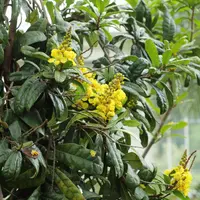
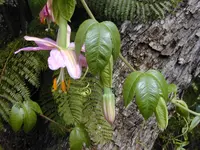
Orange honeysuckle (Lonicera ciliosa) is a deciduous climbing vine native to western North America, from British Columbia to California and the Rocky Mountains. It typically scrambles over shrubs, fences, or rocky slopes, using twining stems to reach light. The plant is known for its clusters of tubular, orange to reddish flowers that attract hummingbirds, followed by small red berries. It is generally considered a durable, low-maintenance species once established, which makes it approachable if you want to learn how to care for Orange Honeysuckle. In nature it favors open woods and edges, doing best in well-drained soil with moderate moisture and sun to light shade.

Main Plant Requirements

Care Difficulty

Easy Care

Light Preference

Full Sun

Water Requirements

Moderate Water

Temperature Preference

Cold Hardy

Hardiness Zone

5–9

Soil Texture

Sandy, Loamy, Rocky

Soil pH

Acidic (5.5–6.5), Slightly acidic (6.5–7.0)

Soil Drainage

Moist but well-drained

Fertilization

Minimal (feed rarely)

Get Personalized Care Plan

Scan your plant to receive care tips personalized for your specific plant

Available on iOS and Android

How to Care for the Orange Honeysuckle

This temperate vine performs best in bright outdoor conditions with several hours of direct sun daily.

  • Provide 4–6 hours of direct sun, ideally morning sun with light afternoon shade, to support flowering and healthy growth for Orange Honeysuckle.
  • Allow light or dappled shade in hot summer afternoons to prevent leaf scorch, especially in exposed or reflective sites.
  • In cooler climates, choose a spot with more direct sun, while in hotter regions prioritize some afternoon shade; sparse flowering often indicates insufficient light.

This species prefers evenly moist, well-drained soil that never stays soggy for long periods.

  • Water when the top 3–5 cm of soil feels dry, applying a deep soak so moisture reaches the root zone without leaving standing water.
  • During spring and early summer growth, expect to water more often, then reduce frequency in late summer and fall as temperatures and growth slow.
  • Signs of overwatering include yellowing leaves and soft stems, while drooping, crisp leaf edges, and very dry soil indicate Lonicera ciliosa is underwatered.

This hardy vine tolerates a wide temperature range but has preferred conditions for strong growth and flowering.

  • Optimal growing temperatures are around 60–75°F (16–24°C), which support steady shoot growth and flower production in the active season.
  • The plant is cold-hardy, surviving winter lows near 0°F (−18°C) once established, with top growth often dying back while roots remain viable.
  • In summer, it tolerates short heat waves to about 90°F (32°C) if soil moisture is maintained; prolonged extreme heat can cause wilting and leaf scorch.

This species tolerates a wide humidity range and usually does not need special humidity management outdoors.

  • Prefers 40–60% humidity but grows normally in drier air common in many US regions.
  • Shows humidity stress as browning leaf edges and faster drying of new growth during hot, windy periods.
  • Increase local humidity only in very arid sites by mulching the root zone and grouping Orange Honeysuckle with other shrubs.

Lonicera ciliosa prefers moist, well-drained, humus-rich soil that stays aerated around the roots.

  • Use a loamy soil with 30–50% organic matter such as compost or leaf mold mixed into existing garden soil.
  • Ensure drainage by avoiding compacted clay; if needed, amend with coarse sand or fine bark to improve pore space and water flow.
  • Aim for slightly acidic to neutral pH, around 6.0–7.0, which supports nutrient availability and root health.
  • Avoid waterlogged, heavy soils and very dry, stony sites, as both lead to weak growth and increased stress in this honeysuckle.

This species can be grown in containers if the pot is large, stable, and drains efficiently.

  • Choose a deep, heavy container to counterbalance the vine’s top growth and reduce tipping in wind.
  • Select a potting mix that drains quickly yet holds some moisture, such as a peat-free mix with added bark or perlite.
  • Position the container where a trellis or railing is close, so climbing stems can be tied and supported without stressing the root zone.

This native vine usually needs little feeding in garden soil but benefits from light support when growth is weak.

  • Use a balanced slow-release fertilizer or thin layer of compost in early spring as new growth starts.
  • Apply at low rates, about half the label strength, to avoid overly lush, weak stems on Orange Honeysuckle.
  • Feed once in spring and, if soil is poor, once again in midsummer during active growth.
  • Stop fertilizing in late summer so shoots harden before winter dormancy.

Pruning helps Lonicera ciliosa stay within bounds and maintain good flowering wood.

  • Schedule main pruning just after flowering, so next year’s flower buds are not removed.
  • Cut out dead, damaged, or crossing stems at the base using clean, sharp pruners or loppers.
  • Thin congested growth to improve air flow and light penetration through the vine framework.
  • Shorten overlong shoots to guide direction of growth and keep the plant on its support.

This honeysuckle is usually grown in the ground, so focus on thoughtful site transplanting rather than frequent repotting.

  • Plan transplanting for early spring or early fall when temperatures are mild and soil is moist.
  • Move plants when root growth seems constrained, top growth stalls, or roots circle inside a container.
  • Dig a wide planting hole, disturb circling roots gently, and replant at the same soil depth as before.
  • Water thoroughly after transplanting, then keep soil evenly moist and shade the base for 1–2 weeks to reduce stress.

Lonicera ciliosa is commonly propagated by softwood cuttings, seeds, and simple layering.

  • Take softwood cuttings in late spring to early summer, use rooting hormone, and keep in bright, humid, indirect light.
  • Layer flexible stems by pinning a section to moist soil until roots form, then sever and transplant.
  • Sow fresh seed in fall or cold-stratify stored seed for several weeks before spring sowing.
  • Use a free-draining, slightly moist medium and avoid waterlogging to reduce rot during rooting or germination.

This species is generally cold hardy in much of its range and needs only minimal winter care in the ground.

  • Apply a 5–8 cm layer of mulch around the root zone in late fall, keeping it slightly away from stems.
  • In very cold regions, tie stems loosely to supports to limit wind damage and breakage.
  • For container plants, move pots into a sheltered, unheated but frost-free or slightly protected spot.

Care Tips

Early vine training

Install a sturdy trellis or wire system before planting and loosely tie young shoots with soft ties so the vines learn the support structure early and need less corrective pruning later.

Encourage branching

Pinch or lightly tip-prune the ends of vigorous new shoots in late spring to stimulate side branching, which increases flowering wood and creates a fuller screen.

Wildlife-safe placement

Site the vine where the flowers are visible but away from high-traffic paths, since hummingbirds and pollinators concentrate around the blooms and benefit from reduced disturbance when growing Orange Honeysuckle.

Root-zone protection

Mulch the root zone with 5–8 cm of shredded bark or leaf mold, keeping it a few cm away from the stems, to keep roots cool, suppress weeds, and reduce competition for moisture and nutrients.

Rust and mildew monitoring

From late spring, inspect leaves every 1–2 weeks for orange pustules or white powdery patches and remove affected foliage early so fungal issues stay localized and do not weaken the vine over time.

Common Pests and Diseases

Aphids

This pest feeds on young shoots and flower clusters, causing distorted growth and sticky honeydew that can attract sooty mold. Symptoms include curled new leaves, stunted shoots, and clusters of soft-bodied insects on stems and buds.

Solution

Prune off heavily infested shoot tips, then dislodge remaining aphids with a firm stream of water, paying attention to shoot tips and leaf undersides. For persistent infestations, apply insecticidal soap or a light horticultural oil in the early morning, repeating as needed while monitoring beneficial insects such as lady beetles.

Powdery mildew

This disease causes a white to gray powdery coating on leaves, especially in warm, dry conditions with poor air movement. Symptoms include matte, dulled foliage, leaf curling, and premature leaf drop on stressed vines.

Solution

Improve air circulation by thinning crowded stems and avoiding overhead watering, especially late in the day. Remove and discard heavily infected leaves, and in recurring cases use a labeled fungicide such as sulfur or potassium bicarbonate, applying at the first sign of infection and following local Orange Honeysuckle care instructions.

Leaf spot

This disease produces tan to brown spots on leaves that may have darker borders and can coalesce, leading to partial defoliation in late summer. Symptoms include thinning foliage and leaves with multiple small lesions, often starting on older leaves.

Solution

Rake and dispose of fallen leaves to reduce overwintering spores and avoid wetting foliage when irrigating. If leaf spot occurs repeatedly, thin dense growth to improve airflow and consider a preventive fungicide labeled for ornamental shrubs in early spring, applied according to label directions.

Scale insects

These insects appear as small, immobile bumps on stems and sometimes leaves, sucking sap and weakening the vine over time. Symptoms include sticky honeydew, sooty mold on nearby surfaces, and declining vigor in older stems.

Solution

Prune out and discard heavily infested stems, then wipe remaining scale with a cotton pad dipped in dilute alcohol or horticultural oil. For larger plants, apply horticultural oil during the dormant season or at crawler stage, thoroughly coating stems while monitoring for reinfestation.

Leafroller caterpillars

These insects roll or tie leaves together with silk and feed inside, chewing foliage and sometimes damaging flower buds. Symptoms include distorted, rolled leaves that reveal small green or brown caterpillars when opened.

Solution

Inspect vines in spring and early summer, then handpick and destroy rolled leaves containing caterpillars before populations build. Where hand removal is impractical, use a biological control such as Bacillus thuringiensis (Bt) targeted at young caterpillars, applied in the evening and repeated as needed.

Interesting Facts

Pacific Northwest native

This species is naturally distributed from southern British Columbia through the Pacific Northwest into northern California and the northern Rocky Mountains, where it typically grows along forest edges, rocky slopes, and stream banks.

Specialized hummingbird flowers

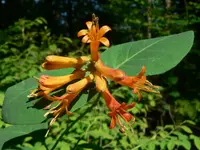
Its bright orange, tubular, non-fragrant flowers are morphologically adapted for pollination by hummingbirds, which can easily access the nectar with their long bills while transferring pollen between plants.

Distinctive paired berries

The plant produces clusters of translucent, bright orange berries that often appear in pairs atop the leaf axils, a visual cue that helps distinguish it from related honeysuckle species with red or differently arranged fruits.

Botan icon

Did you know?

Indigenous peoples of the Pacific Northwest have traditionally used the strong, flexible stems of this species for practical purposes such as basketry and binding materials, reflecting a long-standing relationship between local communities and the plant.

FAQs about Orange Honeysuckle

Lack of flowers usually comes from too much shade, heavy pruning at the wrong time, or low soil fertility. Ensure strong light, avoid cutting off last year’s growth in late winter, and apply a balanced, slow-release fertilizer.

Grow Healthy Plants with Botan Care

Keep your plants happy and healthy with plant identification, disease detection, and easy care guidance.

Botan plant care app — identify plants on mobile

Explore More Plants