black raspberry Care (Rubus occidentalis)

Also known as: Thimbleberry
black raspberry

About black raspberry

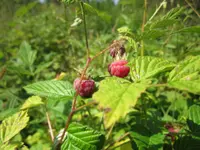
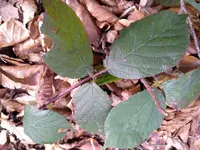
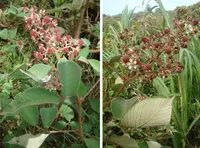
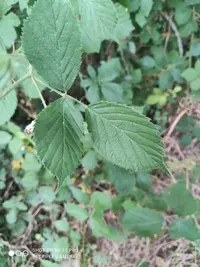
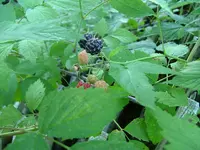
Black raspberry (Rubus occidentalis) is a deciduous fruiting shrub known for its arching canes and clusters of small, white spring flowers. It produces dark purple to nearly black berries with a hollow center, distinct from red raspberries.

The species is native to eastern and central North America, often found along forest edges, thickets, and open slopes. Plants spread by canes and suckers, forming dense, productive patches over time.

Rubus occidentalis is generally vigorous and cold-hardy, but its thorns, suckering habit, and need for support or space can add some management effort. It prefers full sun, well-drained soil, and consistent moisture, so understanding how to care for black raspberry helps maintain good harvests and plant health.

Main Plant Requirements

Care Difficulty

Moderate Care

Light Preference

Full Sun

Water Requirements

Regular Water

Temperature Preference

Cold Hardy

Hardiness Zone

4–8

Soil Texture

Loamy, Sandy, Organic-rich

Soil pH

Acidic (5.5–6.5), Slightly acidic (6.5–7.0)

Soil Drainage

Moist but well-drained

Fertilization

Minimal (feed rarely)

Get Personalized Care Plan

Scan your plant to receive care tips personalized for your specific plant

Available on iOS and Android

How to Care for the black raspberry

Rubus occidentalis fruits best with strong direct sun but tolerates some shade in hot climates.

  • Aim for 6–8 hours of direct sun daily, with morning sun and light afternoon shade ideal to protect canes and fruit from scorching.
  • Allow partial shade (4–5 hours sun) in regions with very hot summers; yields may drop slightly but foliage often looks healthier.
  • Avoid deep shade, which causes weak, leggy growth and poor flowering, and note that low winter sun is usually sufficient once plants are dormant.

This shrub prefers steadily moist, well-drained soil rather than frequent shallow watering.

  • Water when the top 3–5 cm of soil feels dry, giving a slow deep soak so moisture reaches the root zone without leaving the area soggy.
  • Use rich, well-drained loam or raised rows so excess water can drain; persistent puddling, yellowing leaves, and wilting tips suggest overwatering or poor drainage.
  • During flowering and fruiting, avoid letting the soil fully dry; in cool or rainy seasons, reduce frequency but monitor for limp, dull leaves as an underwatering sign.

This cold-hardy bramble handles a wide range of outdoor temperatures when established.

  • Active growth and flowering are strongest around 65–80°F (18–27°C), with consistent warmth promoting good cane growth and fruit set.
  • Dormant plants tolerate winter lows near -20°F (-29°C); mulch crowns in colder sites or windy exposures to protect roots and lower stems.
  • In summer, plants endure up to about 90–95°F (32–35°C) if soil stays moist, but extended hotter periods can reduce fruit quality and stress canes.

Rubus occidentalis handles a wide humidity range and rarely needs special humidity management outdoors.

Rubus occidentalis prefers slightly acidic, moisture-retentive but well-draining soil that supports deep, spreading roots.

  • Aim for a loamy soil rich in organic matter, with a pH of 5.5–6.5 for best nutrient availability.
  • Blend native soil with 30–40% compost and a small amount of sharp sand to improve both fertility and structure.
  • Ensure excess water drains freely; raised rows or mounded beds help prevent waterlogging and root disease.
  • Avoid heavy, compacted clay or constantly saturated spots, which limit aeration and can stunt cane and root growth.

This species can be grown in large outdoor containers if the pot is chosen and managed carefully.

  • Use a deep container at least 40–50 cm wide to provide enough root volume for vigorous cane production.
  • Select a heavy or weighted pot to stabilize the arching canes and reduce the risk of tipping in wind.
  • Choose a container material that does not heat excessively in full sun, such as thick plastic or glazed ceramic, to protect roots from temperature stress.

Rubus occidentalis grows well in reasonably fertile soil but benefits from light, targeted feeding for good fruiting.

  • Apply a thin layer of finished compost around the root zone in early spring to support steady growth.
  • During the growing season, use a balanced NPK granular or slow-release fertilizer at label rate once, just as new canes leaf out.
  • Avoid high-nitrogen products that cause lush, weak growth and fewer fruits on black raspberry canes.
  • Do not fertilize in late fall or winter to prevent tender growth that is vulnerable to cold damage.

Pruning Rubus occidentalis is important for controlling vigor, maintaining yield, and keeping canes healthy.

  • In late winter or very early spring, remove dead, diseased, and weak canes at ground level with clean bypass pruners.
  • After fruiting, cut spent floricanes to the base to make room for new primocanes and improve light penetration.
  • Thin crowded new canes to the strongest 4–6 per plant to improve air flow and reduce disease pressure.
  • Tip back excessively long primocanes in summer to encourage branching and a more compact, productive framework.

This species is usually grown in the ground, so focus on thoughtful transplanting rather than frequent repotting.

  • Transplant in early spring or fall when growth is slow and soils are moist but not waterlogged, reducing stress on roots.
  • Move plants if growth declines, canes are stunted, or roots are dense and circling in a container or small bed area.
  • Lift the plant with a wide root ball, keep roots shaded and moist, and replant at the same depth in well-drained soil.
  • Water thoroughly after transplanting, then maintain even moisture for several weeks to support root re-establishment.

Multiplying Rubus occidentalis plants is straightforward using vegetative methods that preserve cultivar traits.

  • Tip layering in late summer is reliable: bend a healthy cane tip to the soil, pin it down, and cover lightly until roots form.
  • Divide rooted suckers in early spring, replanting them immediately into prepared soil with good moisture.
  • Take semi-hardwood cuttings in midsummer, then root them in a sterile, moist medium under high humidity and bright, indirect light.
  • Seeds can be used but need cold stratification, and offspring may vary from the parent in vigor and fruit quality.

Rubus occidentalis is cold hardy in much of the US and usually needs only simple winter management outdoors.

  • In late fall, apply 5–8 cm of organic mulch around the root zone to buffer freeze–thaw cycles and conserve moisture.
  • Remove weak, damaged, or disease-infected canes before winter to reduce breakage and pest carryover.
  • In very cold or exposed sites, loosely tie canes together or to a trellis to limit wind damage and mechanical breakage.
  • Move container-grown plants into a sheltered, unheated area where roots stay cold but do not experience extreme freezes.

Care Tips

Two-wire trellis

Install a 1.8–2 m post-and-wire trellis with wires at about 90 cm and 150 cm, then tie in canes loosely with soft ties to keep fruit off the ground and improve air flow.

Summer cane thinning

In early summer, thin new first-year canes so only the strongest 10–15 per plant remain, which reduces disease pressure and produces larger, higher-quality berries.

Tip layering propagation

In late summer, bury the growing tip of a healthy first-year cane 5–8 cm deep and stake the rest upright; it will root and form a new plant that can be separated the following spring.

Targeted bird protection

Drape horticultural netting over a simple frame before berries color, making sure the net does not rest directly on clusters so birds cannot peck fruit through the mesh.

Mulch and row hygiene

Maintain a 5–8 cm layer of clean organic mulch in the row and remove fallen fruit and prunings promptly to limit overwintering pests and diseases when growing black raspberry.

Common Pests and Diseases

Raspberry cane borer

This insect pest tunnels inside young canes, causing wilted, drooping shoot tips and eventual cane dieback above the damage point.

Solution

Prune out wilted tips 15–20 cm below the lowest wilted leaves and destroy the infested canes before adults emerge. Maintain a regular pruning schedule and remove old floricanes after harvest to reduce overwintering sites and support long-term Rubus occidentalis care.

Raspberry cane blight

This disease causes sunken, dark lesions on canes, often starting at pruning wounds, which can girdle stems and reduce vigor and yield.

Solution

Cut out and destroy canes with extensive lesions, making pruning cuts into healthy tissue during dry weather. Improve airflow with correct spacing, avoid wounding canes during wet conditions, and apply a raspberry-labeled fungicide during high-risk periods if the problem recurs frequently.

Raspberry anthracnose

This disease produces small, purplish spots on young canes that develop into gray, sunken lesions, leading to weak, cracked stems and reduced fruiting.

Solution

Remove and destroy heavily infected canes during dormant pruning and avoid overhead watering to keep foliage and canes as dry as possible. Maintain good spacing, provide full sun, and, in severe cases, use a fungicide labeled for caneberries at bud break to protect new growth.

Raspberry fruitworm

These insects are small beetles whose larvae feed inside developing berries, causing misshapen fruit and contamination with tiny pale grubs.

Solution

Monitor flower clusters in spring and shake canes over a white surface to detect adults, then hand-remove where feasible. Encourage natural predators, remove nearby wild brambles that can host the pest, and, if needed, use a targeted insecticide labeled for cane fruit just before bloom while following pollinator-safe timing.

Orange rust

This systemic disease causes weak, spindly canes and bright orange, powdery pustules on the undersides of leaves, leading to long-term plant decline.

Solution

Dig out and destroy entire infected plants, including roots, since they remain infected for life and cannot be cured. Keep plantings at proper spacing for airflow, avoid planting near wild brambles, and choose resistant cultivars when replanting to reduce future outbreaks when growing black raspberry.

Interesting Facts

Unique purple-black color

The fruits of black raspberry develop a deep purple-black color due to especially high concentrations of anthocyanins, a group of pigments with strong antioxidant activity measured under controlled laboratory conditions.

Native woodland edge shrub

This species is native to eastern and central North America and is naturally found along woodland edges, thickets, and disturbed sites, where it forms dense colonies that provide shelter and food for wildlife.

Distinct from blackberries

When picked, black raspberry fruits leave behind a hollow core on the stem, unlike blackberries, because the receptacle (the white core) stays on the plant rather than coming away with the fruit.

Botan icon

Did you know?

Rubus occidentalis has been widely used in berry-breeding programs to introduce disease resistance and cold hardiness into red raspberry and hybrid cultivars, making it an important genetic resource in modern small-fruit agriculture.

FAQs about black raspberry

This species spreads by vigorous root suckers and tip-layering canes, so it can become thicket-forming. Use root barriers, regular pruning, and removal of unwanted canes to keep it contained and compatible with nearby plantings.

Grow Healthy Plants with Botan Care

Keep your plants happy and healthy with plant identification, disease detection, and easy care guidance.

Botan plant care app — identify plants on mobile

Explore More Plants