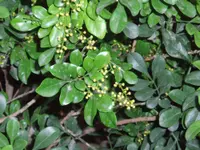
Selective cane training
Tie new canes loosely to horizontal wires or a fence as they grow, spacing them 10–15 cm apart to improve light penetration, airflow, and fruit quality when growing Rubus foliosus.

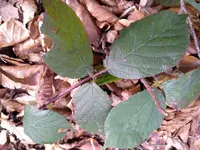
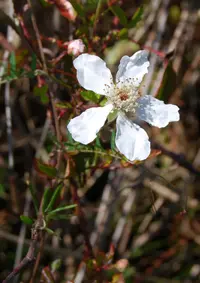
Rubus foliosus is a shrubby bramble in the rose family, related to raspberries and blackberries. It typically forms thickets with arching, often thorny canes and divided leaves. The plant is native to specific regions of Europe, where it grows in woodland edges, hedgerows, and other semi-wild areas. Its small flowers are followed by aggregate fruits that resemble other Rubus berries. Gardeners value it mainly in naturalistic plantings and wildlife gardens, since it can spread and form dense cover. Understanding how to care for Rubus foliosus starts with recognizing its preference for sun to light shade, moderate moisture, and well-drained, humus-rich soil.

Care Difficulty
Moderate Care

Light Preference
Partial Sun

Water Requirements
Moderate Water

Temperature Preference
Cool Climate

Hardiness Zone
6–9

Soil Texture
Sandy, Loamy, Organic-rich

Soil pH
Acidic (5.5–6.5), Slightly acidic (6.5–7.0)

Soil Drainage
Moist but well-drained

Fertilization
Minimal (feed rarely)
Scan your plant to receive care tips personalized for your specific plant
Available on iOS and Android
This species thrives in bright outdoor sites with ample direct sun and some protection from extremes.
This shrub prefers evenly moist, well-drained soil without long periods of drought or saturation.
This bramble is adapted to temperate climates with cool winters and mild to warm summers.
This shrub handles a wide humidity range but grows best with moderately moist air.
Rubus foliosus prefers moist, well-drained, fertile soil that supports steady cane growth and fruiting.
This species can be grown in containers if the pot is large and stable enough for its root system and canes.
This woodland bramble usually needs only light feeding in reasonably fertile soil.
Pruning keeps this vigorous bramble manageable and encourages productive new growth.
This species is better suited to the ground than to long-term container culture.
This bramble is commonly multiplied by vegetative methods for predictable growth and form.
This bramble is generally cold hardy in temperate climates and needs limited winter attention.

Plant Health Check
Not sure what's wrong with your plant? Check your plant's health inside the app.
Rubus foliosus belongs to a notoriously complex genus where many microspecies and local forms exist, and some authors treat it as part of an aggregate rather than a clearly separated species. This taxonomic difficulty reflects the high natural hybridization and apomixis (asexual seed formation) found in Rubus.
This species forms a low to medium bramble with slender, arching, and often bristly stems rather than the thick canes typical of cultivated blackberries. The more delicate shoots and foliage give it a lighter, less dense thicket structure in natural stands.
The small aggregate fruits are readily eaten by wild birds, which then disperse the seeds across suitable habitats. This animal-mediated dispersal helps the plant colonize disturbed ground and woodland edges over time.
This species spreads moderately by arching canes and underground suckers. In fertile, moist soil it can form dense thickets over time, so edging, regular pruning, and removing unwanted shoots help keep it within bounds.
Keep your plants happy and healthy with plant identification, disease detection, and easy care guidance.