Shear After Bloom
Use clean shears to lightly trim back spent flower stems immediately after the main bloom flush to encourage a denser mat and a modest second flowering rather than letting the stems go to seed.

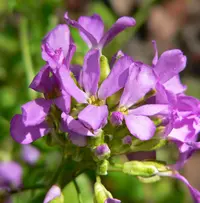
Rose rockcress (Arabis blepharophylla) is a low, mat-forming perennial often used as a groundcover or along rock edges and dry slopes. It forms dense cushions of small, spoon-shaped leaves that are typically gray-green. In spring it produces bright rose to magenta flower clusters that create a strong color contrast against the foliage.
This species is native to coastal California, where it naturally grows on rocky hillsides and open, well-drained sites. It tends to be relatively easy to grow if given sun, good drainage, and moderate moisture. Gardeners who learn how to care for rose rockcress usually find it reliable in suitable climates.

Care Difficulty
Easy Care

Light Preference
Full Sun

Water Requirements
Moderate Water

Temperature Preference
Cold Hardy

Hardiness Zone
5–8

Soil Texture
Sandy, Loamy, Rocky

Soil pH
Acidic (5.5–6.5), Slightly acidic (6.5–7.0)

Soil Drainage
Well-drained

Fertilization
Minimal (feed rarely)
Scan your plant to receive care tips personalized for your specific plant
Available on iOS and Android
Arabis blepharophylla prefers bright exposure with cool conditions and protection from harsh midday sun.
This species prefers slightly dry, free-draining conditions and is sensitive to prolonged soil saturation.
This plant is a cool-season perennial that handles mild cold better than intense heat.
Humidity is rarely a limiting factor for this plant and typical outdoor levels are usually adequate.
This species prefers sharply drained, mineral-rich soil that does not stay wet.
This compact alpine perennial is suitable for container growing outdoors.
Arabis blepharophylla is a light feeder that benefits from modest nutrition during active growth.
Arabis blepharophylla responds well to light, timely pruning that keeps the mat dense and floriferous.
This species is more often transplanted in the garden than grown long-term in containers.
Arabis blepharophylla is commonly propagated by division, stem cuttings, or seed.
This low alpine perennial is generally cold hardy and needs only simple winter care in most temperate gardens.

Plant Health Check
Not sure what's wrong with your plant? Check your plant's health inside the app.
This species is native to coastal hills and bluffs of central California, especially in the San Francisco Bay Area, where it grows on rocky, well-drained slopes in mild Mediterranean climates with wet winters and dry summers.
It forms low, evergreen mats of foliage that can stay green year-round in mild climates, then produces dense clusters of bright magenta to purplish-pink, four-petaled flowers in late winter to early spring before many other perennials start blooming.
As a member of the mustard family Brassicaceae, it has the characteristic cross-shaped (cruciform) flowers and produces slender, pod-like fruits known as siliques that release small seeds after flowering.
This species forms low, spreading mats but is not usually aggressive. It slowly enlarges from the crown and short stems, creating a small carpet. Division or edging keeps it neatly contained in rock gardens and border fronts.
Keep your plants happy and healthy with plant identification, disease detection, and easy care guidance.