Colorado four o'clock Care (Mirabilis multiflora)

Also known as: Desert Four o'Clock
Colorado four o'clock

About Colorado four o'clock

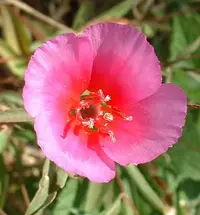
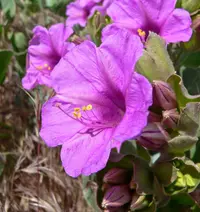
Colorado four o'clock (Mirabilis multiflora) is a long-lived perennial wildflower native to arid regions of the southwestern United States. It forms low, rounded clumps with many branching stems. Plants produce trumpet-shaped, magenta to purple flowers that open later in the day and attract hummingbirds and night-flying pollinators. Fleshy roots store water, which supports good drought tolerance once established. This species suits low-maintenance, dry gardens and restoration plantings where the soil is well-drained and not heavily watered. It prefers full sun and poor to moderately fertile soils, so care for Colorado four o'clock is generally straightforward in dry, sunny climates.

Main Plant Requirements

Care Difficulty

Easy Care

Light Preference

Full Sun

Water Requirements

Low Water

Temperature Preference

Warm Climate

Hardiness Zone

4–8

Soil Texture

Sandy, Loamy, Rocky

Soil pH

Slightly acidic (6.5–7.0), Slightly alkaline (7.0–7.5)

Soil Drainage

Well-drained

Fertilization

Minimal (feed rarely)

Get Personalized Care Plan

Scan your plant to receive care tips personalized for your specific plant

Available on iOS and Android

How to Care for the Colorado four o'clock

This sun-loving perennial needs strong light to flower well and stay compact.

  • Provide 6–8 hours of direct sun daily; in hot inland areas, prioritize morning sun with light afternoon shade.
  • Colorado four o'clock tolerates light partial shade (4–5 hours), but flowering decreases and stems can stretch and flop.
  • In summer, watch for leaf scorch in reflected or all-day sun and offer slight shade; in cooler seasons, avoid deep shade, which causes sparse blooms.

This drought-tolerant perennial prefers infrequent, deeper watering over frequent light drinks.

  • Outdoors in well-drained soil, water when the top 5–7 cm feels dry and the foliage begins to look slightly less firm, then soak the root zone thoroughly.
  • Reduce watering in cool seasons when growth slows; in prolonged summer drought on sandy soils, monitor every few days and water only when the soil is dry and crumbly.
  • Mirabilis multiflora shows overwatering by yellowing, limp foliage and possible stem base rot, while underwatering causes crispy, browning leaf edges and poor flowering.

This species thrives in warm, dry climates and dislikes prolonged cold or excess humidity.

  • Active growth and flowering are strongest at 70–90°F (21–32°C), with established plants tolerating brief spikes up to about 100°F (38°C) if soil drains well.
  • Plants are damaged by hard frost; protect when temperatures drop near 28–30°F (-2 to -1°C), as repeated freezes can kill top growth.
  • In mild-winter climates, roots may survive short dips to 20–25°F (-6 to -4°C) under mulch, then resume growth as spring temperatures rise above 55°F (13°C).

This species naturally tolerates low humidity and usually does not need special humidity management indoors or outdoors.

Mirabilis multiflora prefers lean, fast-draining soil that mimics dry, rocky habitats.

  • Use sandy or sandy-loam soil with coarse particles to prevent water from lingering around the tuberous roots.
  • In containers, mix roughly 50% cactus potting mix with 25% coarse sand and 25% small gravel for sharp drainage.
  • Aim for slightly alkaline to neutral pH around 7.0–8.0 and avoid highly acidic mixes.
  • Do not add large amounts of moisture-retentive peat or coco coir, which can cause root rot in prolonged wet periods.

This species can grow well in containers when given enough depth and sharp drainage.

  • Choose a deep, heavy pot so the substantial tuber and spreading top growth do not tip the container in wind.
  • Fill the bottom layer with coarse gravel or large pumice pieces to keep the drainage holes from clogging with fine mix.
  • Set the container where rainwater can drain freely away from the base so runoff does not keep the lower drainage holes submerged.

Mirabilis multiflora benefits from light feeding in poor soils but often needs no fertilizer in naturally rich, well-drained ground.

  • Use a balanced, slow-release granular fertilizer or compost once in early spring as new growth starts.
  • Apply at 1/2 the label strength to avoid soft, weak growth on this drought-adapted perennial.
  • In containers, feed with a diluted balanced liquid fertilizer every 4–6 weeks during active growth.
  • Stop feeding in late summer so Colorado four o'clock can harden off before winter dormancy.

Pruning Mirabilis multiflora is simple and mainly focused on cleanup and encouraging compact growth.

  • In late winter or very early spring, cut back old, woody stems to just above new buds to refresh the plant.
  • Remove dead, damaged, or crossing stems during the growing season using clean, sharp hand pruners.
  • Lightly trim back lanky growth after flowering flushes to keep a dense, rounded shape and more blooms.
  • Deadhead spent flowers if seed spread is not desired, but this is optional for plant health.

This deep-rooted perennial is usually grown in the ground, so focus on careful transplanting rather than frequent repotting.

  • Transplant in early spring or early fall, when temperatures are mild and soil is workable.
  • Move only when necessary, such as overcrowding or poor site conditions, since large tuberous roots resent disturbance.
  • Dig a wide, deep hole, lifting the plant with as much root and surrounding soil as possible to reduce stress.
  • Water deeply after transplanting and keep soil slightly moist until new growth shows stable establishment.

Mirabilis multiflora plant care includes straightforward propagation, mainly by seed and occasionally by division of mature clumps.

  • Collect ripe seeds in late summer, then sow in fall outdoors or in late winter indoors after a brief cold stratification period.
  • Provide well-drained sandy or loamy soil, light cover over the seeds, and moderate moisture for germination.
  • In early spring, divide only larger, established clumps, keeping tuberous roots intact and minimizing cutting.
  • Space new plants widely to allow mature spread and reduce later need for moving or thinning.

This species is quite cold hardy in much of its native range and generally needs minimal winter attention once established.

  • Plants tolerate typical light frosts, dying back to underground tubers in colder climates and resprouting in spring.
  • In zones with repeated hard freezes, apply a 5–8 cm layer of dry mulch over the root zone after the first hard frost.
  • Container-grown plants in colder regions can be moved to a sheltered, cold but frost-free location for winter.

Care Tips

Encourage Deep Roots

In the first growing season, let the soil dry slightly deeper between waterings to promote strong taproot development, which improves long-term drought tolerance.

Use Gravel Mulch

Apply a 2–3 cm layer of coarse gravel or small rock around the crown instead of organic mulch to keep the base dry, reduce rot risk, and mimic its native rocky habitat.

Deadhead For Reblooms

Regularly remove spent flowers and their forming seed pods during peak season so the plant diverts energy into new blooms rather than seed production.

Mark Tubers In Fall

After frost dieback, mark the plant’s location with a stake so you avoid disturbing the large underground tubers during winter cleanup or soil work.

Support In Windy Sites

In exposed, windy locations, position a low decorative rock or discreet stake on the windward side to reduce stem breakage while still allowing natural, spreading growth when growing Colorado four o'clock.

Common Pests and Diseases

Spider mites

This pest thrives in hot, dry conditions and can occur on Mirabilis multiflora foliage, causing fine stippling and a dusty or bronzed look on leaves. Symptoms include very fine webbing on stems and undersides of leaves.

Solution

Rinse foliage thoroughly with a strong but controlled stream of water, focusing on leaf undersides, and repeat every few days until activity drops. In dry regions, slightly raising ambient humidity around the plant and using insecticidal soap or a horticultural oil labeled for mites helps break the life cycle without harming the roots or tubers.

Leaf spot

This disease can appear during humid or wet periods, causing small brown to tan spots that may merge and lead to premature leaf drop. Symptoms include more severe damage on lower, denser foliage where moisture lingers.

Solution

Remove and dispose of affected leaves, avoid overhead watering, and water at soil level early in the day so foliage dries quickly. Improve spacing and airflow around plants, and in recurring cases use a copper or chlorothalonil-based fungicide according to label directions as part of broader Mirabilis multiflora care.

Aphids

These insects cluster on tender shoot tips and flower stems, sucking sap and causing curling or distortion of new growth. Symptoms include sticky honeydew and sometimes sooty mold on nearby surfaces.

Solution

Dislodge colonies with a firm stream of water, then follow up with insecticidal soap or a light horticultural oil, coating all sides of stems and leaves. Encourage or preserve natural predators such as lady beetles and lacewings by avoiding broad-spectrum insecticides nearby.

Root-knot nematodes

This pest affects the underground tuberous roots, leading to galls or swellings that interfere with water and nutrient uptake. Symptoms include stunted growth, reduced flowering, and plants that struggle despite apparently adequate water and light in sandy or previously infested soils.

Solution

Remove and destroy severely affected plants and avoid replanting Mirabilis multiflora or other susceptible species in the same soil for several years. In infested beds, improve soil organic matter, rotate with nematode-resistant or non-host plants, and consider using clean, certified transplants and solarization of bare soil during the hottest months to reduce nematode levels.

Interesting Facts

Twilight-opening flowers

The flowers open in late afternoon or early evening and often stay open through the night, aligning their bloom time with crepuscular and nocturnal pollinators such as hawkmoths.

Deep taproot survival

This species develops a thick, deep taproot that allows it to access moisture far below the soil surface, helping it survive in arid, rocky habitats of the southwestern United States.

Specialist desert native

Colorado four o'clock is native to dry canyon slopes and foothills of the Colorado Plateau and adjacent regions, where it often grows in sandy or gravelly soils with minimal organic matter.

Botan icon

Did you know?

Genetic studies indicate that Mirabilis multiflora belongs to a group within the Nyctaginaceae that diversified in North American arid and semi-arid regions, highlighting an evolutionary history closely tied to the development of modern desert ecosystems.

FAQs about Colorado four o'clock

This species performs best outdoors in a sunny, dry location with good drainage. Indoors, light and airflow are usually insufficient, and plants become weak and sparse. Colorado four o'clock indoor care is generally practical only for short-term display.

Grow Healthy Plants with Botan Care

Keep your plants happy and healthy with plant identification, disease detection, and easy care guidance.

Botan plant care app — identify plants on mobile

Explore More Plants