Autumn soil marking
In late spring, mark the plant’s location with a discreet stake or tag before foliage dies back, so you avoid disturbing the dormant crown when cultivating or replanting nearby.

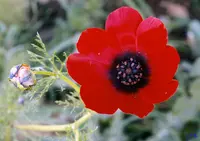
Adonis palaestina is a small, cool-season perennial from the Mediterranean region and western Asia, often grown as an ornamental for its bright yellow flowers. The plant forms low clumps of finely divided, fern-like foliage, with upright stems that carry showy, buttercup-like blooms in early spring.
In nature it occurs in open, rocky or grassy habitats with good drainage and mild, wet winters followed by dry summers. It can be somewhat challenging in typical gardens because it dislikes waterlogged soil, summer moisture, and root disturbance.
Gardeners who want to care for Adonis palaestina should provide a sunny to lightly shaded position, sharply drained soil, and protection from excessive summer irrigation or humidity.

Care Difficulty
Moderate Care

Light Preference
Full Sun

Water Requirements
Moderate Water

Temperature Preference
Warm Climate

Hardiness Zone
8–10

Soil Texture
Sandy, Loamy, Rocky

Soil pH
Slightly acidic (6.5–7.0), Neutral (7.0)

Soil Drainage
Well-drained

Fertilization
Minimal (feed rarely)
Scan your plant to receive care tips personalized for your specific plant
Available on iOS and Android
This Mediterranean spring ephemeral prefers bright, cool conditions with moderate direct sun.
This species prefers moist but not saturated soil during active growth and much drier conditions in summer dormancy.
This cold-tolerant perennial grows during cool seasons and rests through summer heat.
This species tolerates typical indoor humidity but grows best with moderately moist air.
This plant prefers light, well-drained mineral soils that do not stay wet after rainfall or watering.
This species can be grown in containers if the pot allows for cool, free-draining, relatively deep root conditions.
This Mediterranean perennial needs only light feeding, as excessive nutrients reduce flowering and shorten lifespan in Adonis palaestina.
This species needs minimal structural pruning, mainly to maintain plant health and encourage tidy flowering clumps in Adonis palaestina.
This species is usually grown in open ground; any moving or dividing of Adonis palaestina must be done carefully to avoid root disturbance.
This plant is usually propagated from seed, as mature clumps dislike disturbance and division of Adonis palaestina can be risky.
In climates with cool, relatively dry winters similar to the eastern Mediterranean, this hardy perennial needs only modest winter attention.

Plant Health Check
Not sure what's wrong with your plant? Check your plant's health inside the app.
This species is naturally restricted to the eastern Mediterranean region, mainly in parts of Israel, Jordan, Lebanon, Syria, and nearby areas, where it grows in open woodlands, rocky slopes, and Mediterranean scrub.
It flowers very early in the season, often in late winter to early spring, taking advantage of cool, moist conditions before surrounding vegetation fully leafs out and shades the ground.
Its finely divided, almost fern-like leaves form a low mound at the base, with solitary yellow flowers carried on separate stems above the foliage, creating a clear visual separation between leaves and blooms.
All parts of this plant contain cardiotoxic compounds that affect the heart. Ingestion can cause nausea, vomiting, irregular heartbeat, and potentially serious poisoning in both pets and humans. It should never be eaten and must be kept away from animals.
Keep your plants happy and healthy with plant identification, disease detection, and easy care guidance.