Post-bloom deadheading
As soon as flowers fade, cut off the spent blooms and seed pods at the base of the stalk to prevent seed set and direct energy back into bulb storage for next year.

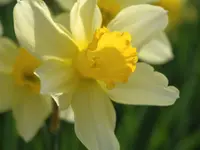
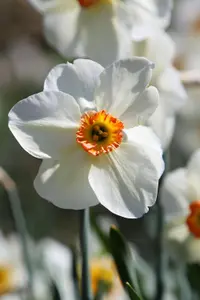
The nonesuch daffodil, Narcissus × incomparabilis, is a classic spring-flowering bulb grown mainly for its bright, long-lasting blooms. It is a hybrid daffodil with a single flower per stem, usually showing yellow or white petals with a contrasting cup. Plants form clumps of upright, strap-shaped leaves and naturalize well in garden beds, under deciduous trees, and in lawns left unmown during spring.
This hybrid originates from European species but is now widely cultivated in temperate gardens. It is generally easy to grow and long-lived when planted in well-drained soil and given full sun to light shade. Simple, consistent conditions make it straightforward to care for nonesuch daffodil over many years.

Care Difficulty
Easy Care

Light Preference
Full Sun

Water Requirements
Moderate Water

Temperature Preference
Cold Hardy

Hardiness Zone
4–9

Soil Texture
Sandy, Loamy, Organic-rich

Soil pH
Acidic (5.5–6.5), Slightly acidic (6.5–7.0)

Soil Drainage
Well-drained

Fertilization
Minimal (feed rarely)
Scan your plant to receive care tips personalized for your specific plant
Available on iOS and Android
This hybrid daffodil performs best in bright, direct light during the growing season.
This bulb prefers moderate, consistent moisture during active growth, then drier soil in summer dormancy.
This daffodil is cool-temperate, thriving in mild springs and tolerating substantial winter cold outdoors.
This plant grows well in typical outdoor humidity and rarely needs special humidity management.
This bulb prefers loose, well-aerated, fast-draining soil to prevent rot and support strong flowering.
This species is suitable for container growing when the pot is deep and drains rapidly to protect bulbs from excess moisture.
This hybrid daffodil benefits from modest feeding to support flowering but does not need heavy fertilization.
Narcissus × incomparabilis needs only light pruning focused on post-flowering cleanup rather than shaping.
This daffodil is typically grown in the ground and only needs transplanting when clumps become crowded or flowering declines.
Narcissus × incomparabilis is most commonly propagated by bulb division rather than by seed.
In most temperate climates, this daffodil is cold hardy and needs minimal winter care once established.

Plant Health Check
Not sure what's wrong with your plant? Check your plant's health inside the app.
This daffodil belongs to the Incomparabilis group, a historic garden hybrid between trumpet daffodils (large-cupped) and short-cupped types, first described in the 17th century from cultivated rather than wild plants.
Its flowers are characterized by a cup (corona) that is longer than one-third but shorter than the length of the outer petals, a proportion used by botanists and horticulturists to distinguish it from other Narcissus groups.
Narcissus × incomparabilis forms long-lived clumps that often persist and bloom for decades in old gardens, churchyards, and meadows, making it a useful indicator of historic plantings in temperate regions.

The hybrid group that includes Narcissus × incomparabilis played an important role in early daffodil breeding in Europe, providing parent material for many modern large-cupped cultivars that dominate ornamental daffodil displays today.
Non-flowering often comes from bulbs planted too shallow or deeply, depleted bulbs, shade, or cutting foliage too early in previous years. Allow leaves to yellow naturally and use a balanced, low-nitrogen fertilizer right after flowering.
Keep your plants happy and healthy with plant identification, disease detection, and easy care guidance.