Deep taproot protection
Mark the planting spot clearly and avoid digging or cultivating within a 30–45 cm radius, since the deep, brittle taproot resents disturbance and damaged plants often decline rather than recover.

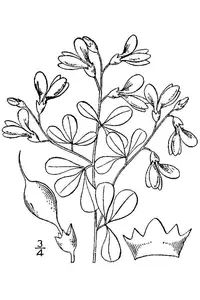
Horseflyweed, Baptisia tinctoria, is a hardy herbaceous perennial in the legume family. It forms a bushy clump with slender stems and small, bluish-green leaves. In early to mid-summer, it carries wiry spikes of small yellow flowers, followed by decorative black seed pods that often persist into fall. This plant is native to dry, open habitats in eastern North America, such as prairies, sandy woods, and roadsides. It develops a deep taproot, which makes it drought-tolerant once established but slow to settle after planting. Overall, it suits gardeners who prefer low-maintenance perennials and want to learn how to care for horseflyweed in sunny, well-drained sites.

Care Difficulty
Easy Care

Light Preference
Full Sun

Water Requirements
Low Water

Temperature Preference
Cold Hardy

Hardiness Zone
3–9

Soil Texture
Sandy, Loamy, Rocky

Soil pH
Acidic (5.5–6.5), Slightly acidic (6.5–7.0)

Soil Drainage
Well-drained

Fertilization
Minimal (feed rarely)
Scan your plant to receive care tips personalized for your specific plant
Available on iOS and Android
This sun-loving perennial thrives in open, bright locations typical of dry meadows and prairies.
This deep-rooted legume prefers dry to moderately moist soil and is highly drought tolerant once established.
This hardy North American perennial is well adapted to climates with cold winters and warm summers.
Humidity has little impact on Baptisia tinctoria, which is well adapted to dry, open sites.
Baptisia tinctoria prefers lean, well-drained, often sandy soil that does not stay wet.
This deep-rooted species is generally unsuited to long-term container growing.
Baptisia tinctoria is a North American native that usually needs minimal feeding once established.
Pruning Baptisia tinctoria is mainly cosmetic and for plant health rather than growth control.
Horseflyweed forms a deep taproot, so transplanting should be infrequent and done with care.
Propagation of Baptisia tinctoria is possible but slow, so it is usually done from seed.
This species is very cold hardy and usually needs no special winter care in the ground.

Plant Health Check
Not sure what's wrong with your plant? Check your plant's health inside the app.
This species naturally occurs in dry, sandy, nutrient-poor soils of Eastern North America and is especially common in coastal plains and open pine barrens, where many other perennials struggle to survive.
As a member of the legume family, its root nodules host symbiotic bacteria that convert atmospheric nitrogen into plant-available forms, allowing it to thrive without rich soil and gradually enrich its immediate surroundings.
Historically, its yellow flowers and seed pods were used as a local, less potent substitute for true indigo dyes from other Baptisia species, which led to the common name yellow wild indigo.

Baptisia tinctoria produces a deep, branching root system and woody crown that make established plants extremely long-lived and very difficult to transplant, so in natural populations individual clumps can persist in the same dry, open habitat for many decades.
Lack of blooms usually results from too much shade, nutrient‑rich or frequently fertilized soil, or plants that are still immature. This species often needs several years of establishment and lean, sunny conditions before flowering reliably.
Keep your plants happy and healthy with plant identification, disease detection, and easy care guidance.