blooddrops Care (Adonis annua)

Also known as: Pheasant's-eye
blooddrops

About blooddrops

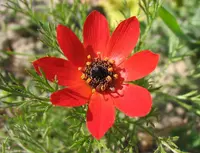
Blooddrops, Adonis annua, is a small annual wildflower grown mainly for its bright red, cup-shaped blooms with dark centers. It forms low, bushy clumps with fine, feathery leaves that give it a delicate look.

This species is native to parts of Europe, North Africa, and western Asia, where it grows in open, sunny fields and light, well-drained soils. It can be somewhat challenging, as it dislikes disturbance, needs good drainage, and does not tolerate heavy, waterlogged ground.

Gardeners who care for blooddrops usually treat it as a specialty plant for sunny borders, rock gardens, or naturalistic plantings with moderate moisture and lean soil.

Main Plant Requirements

Care Difficulty

Moderate Care

Light Preference

Full Sun

Water Requirements

Moderate Water

Temperature Preference

Cool Climate

Hardiness Zone

5–8

Soil Texture

Sandy, Loamy, Organic-rich

Soil pH

Acidic (5.5–6.5), Slightly acidic (6.5–7.0)

Soil Drainage

Well-drained

Fertilization

Minimal (feed rarely)

Get Personalized Care Plan

Scan your plant to receive care tips personalized for your specific plant

Available on iOS and Android

How to Care for the blooddrops

Adonis annua thrives in bright, open sites with direct sun exposure for strong flowering.

  • Provide 6–8 hours of direct sun daily; morning to early afternoon sun is ideal in most climates.
  • The plant tolerates light partial shade, especially with 3–4 hours of morning sun, but flowering of blooddrops decreases in heavier shade.
  • In very hot regions, protect from intense late-afternoon sun to reduce leaf scorch and premature flowering decline.

Adonis annua prefers evenly moist but not saturated soil throughout its growing season.

  • Water when the top 2–3 cm of soil feels dry, then soak the root zone thoroughly, allowing excess to drain away.
  • During cool spring weather, watering needs are modest; increase checks in hot, dry periods to prevent wilted, drooping foliage.
  • Avoid soggy conditions that cause yellowing leaves and root rot; improve drainage if water pools for more than 15–20 minutes after irrigation.

This annual prefers cool to mild conditions and does best when extremes of heat and cold are avoided.

  • Aim for daytime temperatures around 55–70°F (13–21°C) during active growth for strong stems and flowers.
  • Plants tolerate light chills down to about 28–30°F (-2– -1°C), but hard frost below this can damage or kill them.
  • In hot summers above 80–85°F (27–29°C), flowering may shorten; provide some afternoon shade and consistent moisture to reduce stress.

Adonis annua handles typical outdoor humidity well and rarely needs special humidity management for healthy growth.

Adonis annua prefers light, well‑drained soil that dries a little between waterings.

  • Use a sandy or sandy‑loam mix with moderate organic matter to keep roots aerated and prevent waterlogging.
  • Blend roughly 60–70% garden loam or potting soil with 20–30% coarse sand and 10–20% compost for structure and nutrients.
  • Aim for slightly alkaline to neutral pH around 7.0–7.8, avoiding strongly acidic mixes that reduce vigor.
  • Avoid heavy clay or peat‑heavy mixes that stay wet, and improve drainage with coarse sand or fine grit if water lingers.

This species is suitable for container growing, especially for small displays or seasonal color.

  • Choose a pot at least 20–25 cm deep to allow its taproot to develop without curling tightly at the base.
  • Select a clay or other porous pot material if faster drying is needed in rainy or cool climates to prevent root rot.
  • Top‑dress the soil surface with fine grit to keep the root neck slightly drier and reduce splash that can encourage disease on blooddrops foliage.

Adonis annua grows best in moderately fertile, well-drained soil and needs only light feeding.

  • Use a balanced, dilute liquid fertilizer (such as 10-10-10 at 1/2 strength) for caring for blooddrops in containers or poor soil.
  • Feed every 4–6 weeks during the active spring–early summer growing season.
  • Avoid heavy, high-nitrogen products that cause lush foliage with fewer flowers; prioritize bloom-focused balance.
  • Stop feeding by late summer and do not fertilize during winter dormancy or after plants have set seed.

Pruning Adonis annua is minimal and focuses on maintaining tidy, healthy growth.

  • In late spring and early summer, remove spent flower heads to encourage a neater appearance and sometimes a longer bloom period.
  • Snip off dead, diseased, or storm-damaged stems at the base with clean, sharp scissors or small snips.
  • Thin out weak or crowded seedlings early to improve air flow and overall plant vigor, leaving the strongest plants.
  • Allow some flowers to mature and set seed if natural self-sowing is desired for next year.

This annual species dislikes root disturbance, so transplanting Adonis annua should be planned carefully and done sparingly.

  • Sow seeds in final positions outdoors or in biodegradable pots to avoid later root disruption and transplant shock.
  • If grown in trays, transplant very young seedlings when they have 1–2 true leaves, before roots circle the container.
  • Handle seedlings by the leaves, not the stems, and move them with a generous soil plug to keep roots intact.
  • Plant out in early spring into well-drained soil, water gently, and shade for a few days to reduce transplant stress.

Adonis annua is propagated almost exclusively from seed, as vegetative methods are unreliable for this annual.

  • Sow fresh seeds in late summer or fall outdoors, or in early spring in pots kept cool, since germination benefits from a cold period.
  • Use a gritty, well-drained seed mix and cover seeds lightly, about 2–3 mm deep, to prevent rot yet allow light access.
  • Maintain evenly moist but not waterlogged conditions at 50–60°F; germination may be slow and irregular.
  • Thin or prick out seedlings carefully once large enough to handle, minimizing root disturbance to support strong establishment.

As a cool-season annual, Adonis annua generally needs little targeted winter care in mild climates.

  • In regions with mild winters, overwinter seeds or young rosettes outdoors in well-drained soil without extra protection.
  • Where winters are wet and cold, apply a light, dry mulch to improve drainage and reduce soil heaving around seedlings.
  • In very cold or variable climates, start plants in pots under cold-frame conditions, then plant out after the hardest frosts have passed.

Care Tips

Autumn soil preparation

Prepare the bed in autumn by removing deep-rooted weeds and working in well-rotted compost so the fine roots can establish quickly in the cool, moist soil these annuals prefer.

Precise direct sowing

Sow seeds exactly where the plants will grow, spacing them 10–15 cm apart and covering only lightly, because the long taproot resents disturbance and transplanting often leads to stunting.

Cool-season succession

In mild-winter climates, stagger sowings every 2–3 weeks from late summer to early autumn to extend the flowering window and replace plants that fail to establish.

Self-seeding management

Allow some spent flowers to set seed and drop naturally, then mark these patches and avoid deep cultivation in that area so self-sown seedlings can emerge the following season when growing blooddrops.

Targeted support planting

Interplant with low, sturdy companions such as compact grasses or low-growing perennials to provide gentle support for the delicate stems and reduce lodging from wind and rain.

Common Pests and Diseases

Downy mildew

This disease causes yellow, pale, or angular leaf spots with a grayish or whitish downy growth on the undersides in cool, damp weather.

Solution

Remove and discard affected leaves, avoid overhead watering, and ensure good spacing for airflow; in prolonged wet conditions, a copper-based fungicide labeled for ornamental annuals can be applied preventively according to label directions.

Leaf spot

This disease produces small brown to dark-purple lesions on leaves and sometimes stems, which can merge and cause partial defoliation in wet or overcrowded plantings.

Solution

Promptly remove and dispose of spotted foliage, water at soil level in the morning, reduce crowding, and if spotting progresses in rainy periods, apply a broad-spectrum fungicide suitable for flowering annuals following label guidance.

Aphids

These insects cluster on young stems, buds, and leaf undersides, sucking sap and causing curling, distortion, and sticky honeydew that can attract sooty mold.

Solution

Dislodge colonies with a firm jet of water, then treat remaining insects with insecticidal soap or neem oil, repeating every 5–7 days until populations drop while also controlling nearby ant activity that protects aphids.

Leaf miners

These insects create pale, winding tunnels within the leaves as larvae feed inside the leaf tissue, which can reduce vigor and spoil the display of the fine foliage.

Solution

Pinch off and dispose of mined leaves as soon as tunnels appear, use floating row covers early in the season to block egg-laying adults, and in heavier infestations apply a systemic insecticide labeled for ornamental annuals before damage becomes extensive.

Botrytis blight

This disease appears as soft, water-soaked patches on petals, leaves, or stems that develop fuzzy gray mold, especially in cool, humid, stagnant air.

Solution

Remove all affected flowers and foliage, improve air circulation, keep foliage as dry as possible, and in persistent cool, wet conditions consider a targeted botrytis fungicide for flowering annuals, rotating products to reduce resistance risk when growing blooddrops in the same area year after year.

Interesting Facts

Mediterranean arable relic

This annual species is native to the eastern Mediterranean and western Asia but now persists mainly as a weed of traditional cereal fields and fallows, especially in calcareous, well-drained soils.

Distinctive dark nectar guide

Each scarlet petal usually carries a near-black blotch at the base that acts as a visual nectar guide for pollinators, helping insects orient toward the flower’s reproductive organs.

Toxic alkaloid content

All parts of the plant contain cardioactive compounds similar to those in related Adonis species, which makes it poisonous to livestock and humans if ingested.

Botan icon

Did you know?

In parts of southern Europe and the eastern Mediterranean, this species has declined sharply as an arable wildflower due to herbicide use and changes in cereal farming, and is considered regionally threatened or vulnerable in several modern floristic surveys.

FAQs about blooddrops

Lack of flowers often comes from insufficient light, overly rich nitrogen fertilizer, or soil that stays too wet. Cool, unsettled weather can also delay buds. Improve light, drainage, and nutrient balance to support reliable flowering.

Grow Healthy Plants with Botan Care

Keep your plants happy and healthy with plant identification, disease detection, and easy care guidance.

Botan plant care app — identify plants on mobile

Explore More Plants