Haworthia angustifolia Care

Haworthia angustifolia

About Haworthia angustifolia

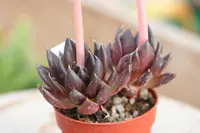
Haworthia angustifolia is a small, stemless succulent from South Africa, valued for its narrow, upright, green leaves arranged in dense rosettes. The leaves often show faint striping or translucence, giving the plant a refined, architectural look in containers.

In nature, it grows in rocky, well-drained sites, coping with strong light and irregular rainfall. This background explains its preference for bright light, modest watering, and gritty soil.

Its slow growth, compact size, and tolerance of indoor conditions make it suitable for windowsills and desks. Many growers find it straightforward to care for Haworthia angustifolia when overwatering is avoided.

Main Plant Requirements

Care Difficulty

Easy Care

Light Preference

Bright Indirect Light

Water Requirements

Low Water

Temperature Preference

Tropical / Frost Sensitive

Hardiness Zone

10–11

Soil Texture

Sandy, Loamy, Rocky

Soil pH

Acidic (5.5–6.5), Slightly acidic (6.5–7.0)

Soil Drainage

Well-drained

Fertilization

Minimal (feed rarely)

Get Personalized Care Plan

Scan your plant to receive care tips personalized for your specific plant

Available on iOS and Android

How to Care for the Haworthia angustifolia

This compact succulent prefers bright, indirect light and protection from harsh midday sun.

  • Provide 4–6 hours of bright, filtered light daily, such as an east-facing window or light shade outdoors.
  • Tolerates partial shade, but in very low light leaves may stretch and lose their dense rosette form, indicating it needs a brighter spot.
  • In summer, shield Haworthia angustifolia from strong afternoon sun to prevent leaf scorch; in winter, move closer to the brightest window or use supplemental light.

Watering should mimic dry habitats, with thorough soaking followed by a clear drying period.

  • Allow the top 3–5 cm of soil to dry fully before watering, then water until excess drains away through the mix.
  • In spring and summer, this may mean watering every 10–21 days depending on temperature and light; in winter, extend intervals when growth slows.
  • Soft, translucent, or yellowing leaves suggest overwatering and possible root rot, while wrinkled, folding leaves indicate the plant needs water soon.

This species prefers warm, stable conditions without frost or extreme heat fluctuations.

  • Aim for 65–80°F (18–27°C) for active growth, with slightly cooler nights improving resilience and overall vigor.
  • Protect from temperatures below 40°F (4°C); prolonged exposure near freezing can damage tissues, and hard frost is often fatal.
  • Tolerates short heat spells up to about 95°F (35°C) if shaded from intense sun and given good airflow, but avoid hot, enclosed spaces.

This species handles typical indoor humidity well and rarely needs special adjustments.

  • Target 30–50% humidity, similar to most heated or air-conditioned homes.
  • Dry air is usually tolerated; issues arise more from excess moisture on leaves than from low humidity.
  • If leaf tips shrivel while soil moisture is correct, place the pot away from strong heating vents or intense airflow rather than adding humidity.

This succulent needs a very fast-draining, mineral-rich mix to protect its shallow roots from rot.

  • Use a gritty mix: 50–70% inorganic materials such as pumice, coarse sand, or small grit, with 30–50% cactus potting mix.
  • Aim for a loose, airy texture where water flows through within seconds and the mix dries in 2–4 days.
  • Slightly acidic to neutral pH around 6.0–7.0 suits Haworthia angustifolia and keeps nutrients available without encouraging rot.
  • Avoid heavy, peat-dominant or clayey mixes; if using standard potting compost, cut it heavily with perlite and grit to improve drainage and aeration.

This species is well suited to container growing, including small pots on windowsills.

  • Choose a pot only 2–4 cm wider than the rosette to keep the mix drying evenly and prevent prolonged moisture around the roots.
  • Unglazed terracotta is useful because it wicks moisture from the mix, reducing the risk of waterlogged conditions after irrigation.
  • Select a low, stable pot shape so the shallow root system anchors well and the plant does not tip if the rosette leans toward light.

This small succulent has low nutrient demand, so use light feeding to support healthy growth without forcing soft, weak tissue.

  • Use a diluted balanced liquid fertilizer (around 10-10-10 or 20-20-20 at 1/4 strength) during active growth in spring and summer.
  • Apply every 4–6 weeks only when the soil is already moist, not on dry roots.
  • Avoid compost-heavy mixes; lean, gritty soil suits Haworthia angustifolia and limits rot risk.
  • Stop feeding in fall and winter when growth slows, to match the plant’s semi-dormant state.

This species needs minimal pruning, focused on hygiene and keeping rosettes tidy rather than reshaping the plant.

  • Best time for light pruning is late spring or early summer when growth is active.
  • Remove dead, dried, or damaged leaves by gently pulling or cutting at the base with clean, sharp scissors.
  • Trim spent flower stalks at the soil line once they brown, which directs energy back to leaf and root growth.
  • Discard any rotting tissue promptly to improve airflow and reduce fungal problems around the crown.

Container-grown plants stay compact for years, so repotting is infrequent and mainly done to refresh soil or manage offsets.

  • Plan to repot every 3–4 years or when roots circle the pot, growth slows, or offsets crowd the container.
  • Choose late spring or early summer, using a shallow pot and a very free-draining cactus or succulent mix.
  • Slide the plant out gently, tease roots apart lightly, and remove old, soggy soil without breaking healthy roots.
  • After repotting Haworthia angustifolia, keep it slightly dry and shaded for 5–7 days to limit transplant shock and root rot.

New plants are most commonly produced from offsets, with seeds or leaf cuttings used less often for home growers.

  • Divide offsets in late spring or early summer when the parent plant is actively growing.
  • Detach pups with a clean knife, keeping some roots attached, and let cut surfaces dry for 1–2 days.
  • Plant in a sterile, gritty succulent mix and keep barely moist, providing bright, indirect light and 70–80°F temperatures.
  • Seed propagation is slower; sow fresh seed on well-drained mix, keep slightly moist, and maintain warm, stable conditions for germination.

This succulent is not frost hardy and needs controlled conditions in winter, especially in cold climates.

  • Keep plants above 45°F, ideally 50–60°F, as repeated frost can damage tissues and roots.
  • Move outdoor containers indoors before first frost, placing them in bright, indirect light with good air circulation.
  • Water sparingly in winter, allowing soil to dry almost completely, since cool, wet media encourage root rot.
  • Avoid cold drafts on windowsills by adding a slight air gap or insulating tray under the pot.

Care Tips

Rotate For Symmetry

Turn the pot 90° every 2–3 weeks so the rosette receives even light and develops a balanced, upright form instead of leaning toward the brightest side.

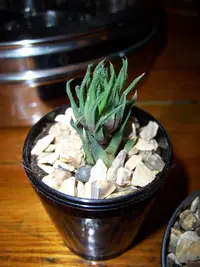
Use Top Dressing

Apply a 0.5–1 cm layer of inert grit such as pumice, fine gravel, or coarse sand on the soil surface to keep leaf bases dry, reduce fungus gnat activity, and improve visual inspection of the crown for rot.

Dry-Season Rest

In late fall and winter, allow slightly longer dry intervals and avoid repotting or dividing, which respects the plant’s natural semi-dormant phase and reduces stress when light levels are lower.

Root Health Checks

Every 12–18 months, gently slip the root ball out of the pot at the start of the growing season to check for firm, white roots and trim any brown, mushy sections before replanting in fresh mix.

Targeted Pest Monitoring

Inspect leaf bases and the tight rosette center with a hand lens every month for mealybugs or scale, and isolate and treat the plant promptly if cottony clusters or sticky residue appear to protect long-term Haworthia angustifolia care.

Common Pests and Diseases

Mealybugs

This pest appears as small white cottony clusters tucked into leaf bases and along leaf edges. Symptoms include slowed growth, sticky residue, and gradual yellowing or shriveling of leaves.

Solution

Isolate the plant, then dab visible mealybugs with cotton swabs dipped in 70% isopropyl alcohol and repeat weekly until no new insects appear. Increase light and airflow, avoid overfertilizing, and, if needed, use a ready-to-use succulent-safe insecticidal soap, ensuring it dries quickly on the foliage.

Aloe mite

This pest, also called eriophyid mite, causes distorted, swollen, or warty growths on leaves and leaf tips. Symptoms include corky, tumor-like galls that do not rub off and slowly spread over time.

Solution

Remove and discard all affected leaves or rosettes well below the deformed area, using clean, disinfected tools, and dispose of waste in the trash rather than compost. Keep the plant isolated, monitor new growth closely, and in advanced cases discard the entire plant and its soil to protect nearby succulents.

Soft scale

These insects form small, domed, tan to brown bumps on leaves and stems that may exude sticky honeydew. Symptoms include sooty black mold growing on the honeydew and weak, dull-looking foliage.

Solution

Gently scrape or rub off scale with a cotton pad or soft brush, then wipe the leaves with a cloth lightly moistened with 70% isopropyl alcohol. Follow up with 1–2 applications of insecticidal soap or horticultural oil labeled for succulents, applied in the evening to avoid leaf burn, and improve light and airflow to support recovery.

Fungal leaf spot

This disease causes small, water-soaked spots on leaves that turn brown, gray, or black, sometimes with a yellow halo. Symptoms include localized lesions that can merge into larger dead patches, especially on older or shaded leaves.

Solution

Remove affected leaves at the base and discard them, then allow the plant to dry well between waterings and avoid wetting the rosette. Improve airflow, provide bright filtered light, and if spotting continues, apply a low-toxicity fungicide suitable for succulents according to label directions.

Crown and root rot

This disease develops in overly wet or poorly drained soil, causing the basal leaves to yellow, turn mushy, and detach easily, while the central crown softens and collapses. Symptoms include a sour smell and black or brown tissue at the soil line.

Solution

Remove the plant from its pot, cut away all soft or dark tissue, and allow healthy remaining parts to dry for 1–2 days before replanting in fresh, fast-draining cactus/succulent mix. Reduce watering to short, infrequent soakings, keep temperatures around 65–80°F with good airflow, and discard plants that are extensively mushy with no firm tissue left.

Interesting Facts

Grasslike leaf form

This species forms narrow, arching leaves that resemble coarse grass blades rather than the typical chunky rosettes seen in many other Haworthia species, an adaptation that helps it shed intense light in its native South African habitat.

Clumping growth habit

Over time it produces many offsets from the base, forming dense, multi-headed clumps that stabilize the plant in gritty, shallow soils and allow older rosettes to die back without losing the colony.

Semi-translucent leaf tips

The upper portions of the leaves often have slightly translucent tissue, called leaf windows, which allows light to penetrate deeper into the photosynthetic cells when the plant grows partly shaded among rocks and grasses.

FAQs about Haworthia angustifolia

This species is slow-growing, typically adding only a few leaves per year. Indoors it usually forms a compact rosette about 8–12 cm tall and 8–15 cm wide under stable, moderate light and drought-style watering.

Grow Healthy Plants with Botan Care

Keep your plants happy and healthy with plant identification, disease detection, and easy care guidance.

Botan plant care app — identify plants on mobile

Explore More Plants