


Mark Dormant Sites
Use small, discreet markers to outline clumps while foliage is present so you do not accidentally disturb the underground tubers during its long dormant period.

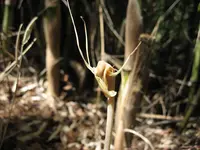
Arachnitis uniflora, commonly called spider-flower, is a small, unusual flowering plant known for its pale, waxy blooms emerging from the forest floor. It is a mycoheterotroph, meaning it relies on fungi for nutrition instead of photosynthesis, so it lacks normal green leaves.
This species is native to cool, moist forests of southern South America, often growing in deep leaf litter and shaded, undisturbed woodland. Because it depends on specific soil fungi and stable microclimates, it is considered difficult to cultivate and is not suited to casual indoor culture.
Gardeners interested in how to care for Spider-flower should understand it is best maintained in specialized collections that can closely mimic its natural, fungus-rich forest habitat.

Care Difficulty
Hard Care

Light Preference
Shade

Water Requirements
Keep Soil Moist

Temperature Preference
Cool Climate

Hardiness Zone
Unknown

Soil Texture
Peaty, Organic-rich, Loamy

Soil pH
Strongly acidic (4.5–5.5), Acidic (5.5–6.5)

Soil Drainage
Moist but well-drained

Fertilization
Minimal (feed rarely)
Scan your plant to receive care tips personalized for your specific plant
Available on iOS and Android
This woodland parasite thrives in cool, low-light forest conditions with very limited direct sun.
This mycoheterotrophic forest herb depends on consistently moist but not saturated soil around its underground parts.
This species favors cool, stable woodland temperatures and does poorly in climatic extremes.
This mycoheterotrophic forest plant needs consistently moist, cool, high-humidity conditions to thrive.
Arachnitis uniflora requires a very loose, humus-rich medium that stays evenly moist yet never waterlogged.
This species can be grown in containers only under carefully controlled, cool, shaded, high-humidity conditions.
Arachnitis uniflora is a nutrient-sensitive forest species that generally performs best with minimal or no added fertilizer.
Arachnitis uniflora requires almost no structural pruning, but light tidying helps maintain hygiene around the plant.
This species is rarely grown in standard pots; transplanting is best done with great care due to its delicate roots and mycorrhizal dependence.
Practical home propagation of Arachnitis uniflora is rarely successful because it depends on specific mycorrhizal fungi for survival.
In climates matching its cool native forests, Arachnitis uniflora usually needs little targeted winter care.

Plant Health Check
Not sure what's wrong with your plant? Check your plant's health inside the app.
This species is a full mycoheterotroph, meaning it lacks chlorophyll and obtains carbon and nutrients by parasitizing soil fungi rather than performing photosynthesis.
The plant spends most of its life as a network of pale underground structures connected to fungi, only sending up a short flowering stem above the soil surface for a brief reproductive phase.
It is native to the cool, moist forests of southern South America, especially the temperate rainforests of Chile and Argentina, where it is closely associated with specific ectomycorrhizal fungi linked to local trees.

Genetic and ecological studies suggest this species taps into ectomycorrhizal networks that connect multiple tree species, effectively drawing resources from an entire forest community through its fungal hosts rather than from a single plant partner.
This mycoheterotrophic species depends on specific underground fungi and cool, moist conditions to flower. Lack of suitable fungal partners, disturbance of leaf litter, or warmer, drier conditions usually result in weak growth and no blooms.
Keep your plants happy and healthy with plant identification, disease detection, and easy care guidance.

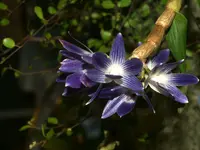
Queen Victoria's Dendrobium
Dendrobium victoriae-reginae
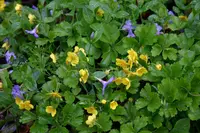
Appalachian barren strawberry
Waldsteinia fragarioides
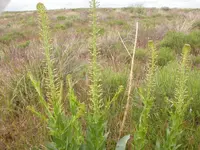
green princesplume
Stanleya viridiflora
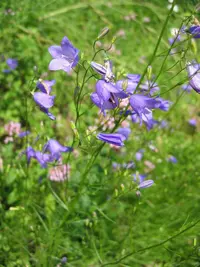
bluebell bellflower
Campanula rotundifolia
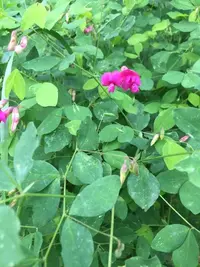
Rosy-flowered Everlasting-pea
Lathyrus roseus
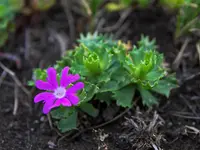
Fairy Primrose
Primula minima
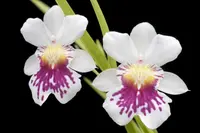
Miltoniopsis phalaenopsis
Miltoniopsis phalaenopsis
roseleaf sage
Salvia involucrata