Streaked rock orchid Care (Dendrobium striolatum)

Streaked rock orchid

About Streaked rock orchid

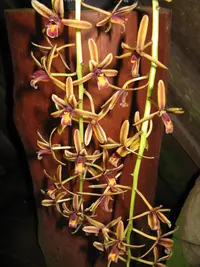
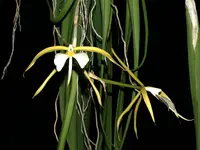
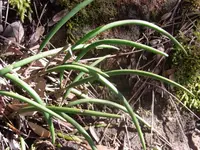
Streaked rock orchid, Dendrobium striolatum, is a compact epiphytic or lithophytic orchid that often grows on rocks or tree trunks in the wild. It forms wiry, slender canes with small, narrow leaves and produces many delicate, yellow to greenish flowers with fine streaks.

This species is native to eastern Australia, where it usually occurs in open forests and along rocky outcrops with good air movement. Its tough canes and modest size make it relatively manageable, but it needs stable conditions and regular moisture to thrive.

Understanding how to care for Streaked rock orchid starts with providing bright, filtered light, good drainage, and consistent, light humidity without prolonged waterlogging.

Main Plant Requirements

Care Difficulty

Moderate Care

Light Preference

Partial Shade

Water Requirements

Moderate Water

Temperature Preference

Warm Climate

Hardiness Zone

10–11

Soil Texture

Rocky, Sandy, Organic-rich

Soil pH

Acidic (5.5–6.5)

Soil Drainage

Well-drained

Fertilization

Minimal (feed rarely)

Get Personalized Care Plan

Scan your plant to receive care tips personalized for your specific plant

Available on iOS and Android

How to Care for the Streaked rock orchid

This species prefers bright, indirect light that mimics open forest or rocky ledge conditions.

  • Provide 4–6 hours of filtered morning sun or dappled light; avoid harsh midday sun that can scorch leaves and canes.
  • Tolerates light shade, but flowering in Streaked rock orchid declines if grown in less than bright, indirect light for most of the day.
  • Outdoors, give more protection in summer when sun is intense, and move or angle plants for slightly higher light in autumn and winter.

Watering should respond to moisture loss rather than a fixed calendar schedule.

  • Allow the top 2–3 cm of the potting mix or moss to dry before watering again, then soak thoroughly and let excess drain away.
  • In active growth and warmer weather, expect to water more often; in cooler months, reduce frequency but do not let canes shrivel.
  • Watch for yellow, soft roots or a sour smell as signs of overwatering, and wrinkled, limp leaves or canes as signs of underwatering and drought stress in Dendrobium striolatum.

This orchid prefers mild conditions with distinct but not extreme temperature shifts between day and night.

  • Aim for 60–80°F (16–27°C) during active growth, with a slight night drop to 55–65°F (13–18°C) to support healthy development.
  • Tolerates brief dips to about 35–40°F (2–4°C), but prolonged exposure near freezing damages foliage and buds and can kill roots.
  • Protect from hot, dry winds and temperatures above 90°F (32°C); increase shade and airflow in heat waves and avoid any frost exposure.

This orchid prefers moderate humidity but copes with typical indoor air if other conditions are stable.

  • Aim for 40–60% humidity; brief drops lower are tolerated if watering and airflow are well managed.
  • Low humidity stress shows as wrinkled pseudobulbs and dull, slow-growing leaves on Streaked rock orchid.
  • Increase humidity with a pebble tray under the pot, grouping plants, or a small room humidifier rather than misting heavily.

This species prefers a very open, airy medium that mimics its natural epiphytic or lithophytic habitat.

  • Use a loose mix of medium orchid bark, fine gravel or pumice, and a small amount of sphagnum to retain some moisture without clogging air spaces.
  • Ensure rapid drainage; water should run through in seconds and the mix should dry moderately fast between waterings to prevent root rot.
  • A slightly acidic pH around 5.5–6.5 suits Dendrobium striolatum, which benefits from low-lime, low-salt components.
  • Avoid dense peat, garden soil, or compost-only mixes that compact, stay wet, and exclude air from the roots.

This species is well suited to container culture, especially in shallow pots or baskets.

  • Choose a squat or shallow pot to match the relatively fine, surface-hugging roots and keep the medium drying evenly.
  • Use a rigid, heavier pot or hang the basket securely, as the clumping canes become top-heavy over time.
  • Select clay or slatted baskets if extra evaporation is needed, or plastic if the growing site is very dry and windy.

This orchid prefers light feeding, as many native species grow naturally on low‑nutrient substrates.

  • Use a balanced NPK orchid fertilizer at 1/4–1/2 label strength for caring for Streaked rock orchid in pots.
  • Feed every 3–4 weeks during active growth in spring–summer, after thorough watering.
  • Switch to a weak, slow‑release or very dilute liquid feed every 6–8 weeks in early autumn.
  • Stop feeding in winter dormancy, except for an occasional very weak solution if growth continues.

Dendrobium striolatum needs only minimal pruning focused on spent and unhealthy growth.

  • Prune in late winter or after flowering finishes, when new shoots are visible.
  • Remove dead, shriveled, or blackened canes and any clearly diseased tissue with clean, sharp snips.
  • Trim only completely spent flower spikes; leave green canes, as they store energy for future blooms.
  • Thin very crowded, crossing canes to improve air movement and keep the clump compact.

This species dislikes frequent disturbance and should be repotted or transplanted only when clearly necessary.

  • Check for roots circling the pot, climbing out of drainage holes, or a tight, congested clump with slowing growth.
  • Plan repotting for late winter to early spring, just before strong new root growth starts, about every 3–4 years.
  • Use a shallow container or mount with free‑draining orchid bark and keep roots shaded and just snug, not buried deeply.
  • Water lightly for 1–2 weeks after repotting, keep in bright but indirect light, and avoid heavy feeding until new roots establish.

Propagation of this orchid is usually done by careful division of mature clumps rather than from seed at home.

  • Divide in late winter or early spring, when new roots begin to form and stress is lower.
  • Select a healthy plant with multiple canes; split into sections with at least 3–4 plump canes each.
  • Plant divisions in small, free‑draining orchid mix, keeping rhizomes just at the surface.
  • Maintain high humidity, bright filtered light, and slightly warmer temperatures to support new root growth.

This orchid is relatively cold tolerant but benefits from moderate winter protection in cultivation.

  • In the ground, a light mulch around the root zone helps buffer temperature swings without burying stems.
  • Container plants are best moved to a sheltered porch, cold frame, or cool indoor spot above freezing.
  • Keep winter watering light, allowing the mix to dry slightly between, to prevent cold‑wet root damage.

Care Tips

Mounting technique

Mount plants on hardwood, cork, or rock with a very thin pad of long-fiber sphagnum only around the roots so they dry quickly yet remain anchored, which closely replicates their natural lithophytic and epiphytic habit.

Air movement management

Provide a small oscillating fan on a low setting aimed past, not directly at, the plant to keep leaf and root surfaces dry between waterings and reduce fungal spotting in cool, humid conditions.

Cool-rest adjustment

In late autumn, reduce nitrogen-rich feeding and slightly extend the interval between waterings while keeping the plant bright and cool to encourage compact growth and reliable flowering the following season.

Root inspection routine

Once or twice a year, gently check exposed roots for firm, silvery surfaces and trim only dead, brown, mushy sections with sterile tools to maintain healthy attachment and prevent rot spread.

Outdoor hardening-off

When moving plants outdoors for the cool season, gradually increase exposure to brighter light and cooler air over 7–10 days to prevent sunscald and temperature shock while growing Streaked rock orchid in temperate climates.

Common Pests and Diseases

Scale insects

This pest feeds on sap along canes and leaf bases, often hiding in the tight crevices of the pseudobulbs and under leaf sheaths. Symptoms include sticky honeydew, sooty mold growth, and yellowing or weakened canes.

Solution

Isolate the plant, then gently scrape off visible scale with a cotton swab dipped in isopropyl alcohol and remove old, loose leaf sheaths where insects hide. Improve air movement around mounted or potted plants and repeat alcohol or insecticidal soap treatments every 7–10 days until no new scale appears.

Spider mites

These insects thrive on plants kept too dry and sheltered, especially on fine-leaved canes, and cause pale stippling and a dull, dusty look to the foliage. Symptoms include fine webbing on the undersides of leaves and along canes.

Solution

Increase humidity and regularly hose or shower the plant, focusing on the undersides of leaves to physically remove mites. For persistent infestations, use a miticide or insecticidal soap labeled for orchids, applying thoroughly and repeating according to label directions while keeping foliage from staying wet overnight in cool conditions.

Orchid aphids

This pest often clusters on soft new growth, flower spikes, and buds, extracting sap and distorting young tissues. Symptoms include sticky honeydew, deformed blooms, and black sooty mold on canes and leaves.

Solution

Rinse affected areas under a moderate stream of water to dislodge insects, then treat remaining colonies with insecticidal soap or a horticultural oil spray, avoiding applications in strong sun. Remove heavily infested buds or stems and monitor new growth closely, especially during active growing and flowering periods.

Bacterial soft rot

This disease affects succulent pseudobulbs and stem bases, especially when plants stay wet and warm with poor air circulation. Symptoms include rapidly spreading, water-soaked, foul-smelling lesions that turn tissues mushy and collapse segments of the clump.

Solution

Immediately cut away all affected tissue with sterile tools, extending into firm, healthy material, and discard contaminated parts in the trash. Allow cut surfaces to dry, dust with ground cinnamon or a bactericide labeled for orchids, then adjust care by improving airflow, spacing plants, and keeping water off the canes and crown during cool or humid nights.

Leaf spot fungi

This disease appears on leaves and thin canes that stay wet for long periods, particularly on shaded or densely mounted plants. Symptoms include small dark spots that may enlarge, coalesce, and cause yellow halos or premature leaf drop.

Solution

Remove and discard leaves or cane sections with extensive spotting, and avoid overhead watering late in the day so foliage dries before night. Improve air circulation, reduce crowding, and, if spotting continues to spread, apply a fungicide suitable for orchids according to label directions while maintaining a drier leaf surface during cool weather.

Interesting Facts

Rock and cliff specialist

This orchid naturally grows on sandstone rocks and exposed cliffs in eastern Australia, often rooting in narrow crevices where organic debris collects.

Cold-tolerant blooms

Unlike many tropical orchids, this species tolerates cool to cold conditions and can flower reliably after exposure to low winter temperatures in its native range.

Tiny but long-lived flowers

It produces many small yellowish flowers with fine streaks on the lip, and individual inflorescences can continue to bloom sequentially over an extended period during the flowering season.

Botan icon

Did you know?

This species often forms extensive, mat-like colonies over rock faces, with generations of creeping pseudobulbs gradually covering large areas and creating a distinctive microhabitat for mosses, lichens, and small invertebrates.

FAQs about Streaked rock orchid

This species usually flowers in late winter to spring, often once a year, though well-established clumps in ideal conditions can give a lighter secondary flush. Flowering is strongly linked to seasonal temperature changes and daylength.

Grow Healthy Plants with Botan Care

Keep your plants happy and healthy with plant identification, disease detection, and easy care guidance.

Botan plant care app — identify plants on mobile

Explore More Plants