Butterfly Bush Care (Buddleja davidii 'Black Knight')

Also known as: Buddlea, Summer Lilac, Orange-eye Butterfly Bush
Butterfly Bush

About Butterfly Bush

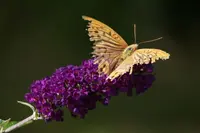
Butterfly bush Buddleja davidii 'Black Knight' is a fast-growing deciduous shrub valued for its long, arching stems and dense clusters of deep purple, almost black flowers. It is native to central China but is now widely grown in temperate gardens for its ability to attract butterflies, bees, and other pollinators.

This cultivar forms a vase-shaped shrub with gray-green leaves and a floriferous habit from summer into fall. It is generally easy to grow, provided it receives full sun, well-drained soil, and moderate moisture.

Gardeners who want to learn how to care for Butterfly Bush often choose 'Black Knight' for its vigorous growth and reliable flowering in suitable climates.

Main Plant Requirements

Care Difficulty

Easy Care

Light Preference

Full Sun

Water Requirements

Low Water

Temperature Preference

Cold Hardy

Hardiness Zone

5–9

Soil Texture

Sandy, Loamy, Rocky

Soil pH

Acidic (5.5–6.5), Slightly acidic (6.5–7.0)

Soil Drainage

Well-drained

Fertilization

Minimal (feed rarely)

Get Personalized Care Plan

Scan your plant to receive care tips personalized for your specific plant

Available on iOS and Android

How to Care for the Butterfly Bush

This shrub flowers best with strong sun exposure and open sky.

  • Provide 6–8 hours of direct sun daily; full sun all day gives the heaviest bloom and darkest flower color on Butterfly Bush.
  • Accepts light afternoon shade in hotter regions, but dense or all‑day shade causes weak, leggy growth and poor flowering.
  • Plant in a spot with unshaded southern or western exposure; ensure nearby trees or buildings do not block summer and late‑season sun.

This plant prefers soil that dries slightly between deep waterings.

  • Outdoors in the ground, water when the top 5–7 cm of soil is dry, then soak deeply so moisture reaches the root zone.
  • In the first growing season, monitor Buddleja davidii 'Black Knight' closely; wilting leaves and dry, crumbly soil indicate it needs water.
  • Yellowing leaves, soft stems, or standing water around the base suggest overwatering; improve drainage with coarse materials and reduce frequency.

This hardy shrub tolerates a wide range of outdoor temperatures in temperate climates.

  • Active growth and flowering are strongest around 65–85°F (18–29°C), typical of late spring through early fall in many regions.
  • Mature plants usually survive down to about -10°F (-23°C) with mulched roots, though top growth may die back and resprout in spring.
  • Handles summer heat up to about 95°F (35°C) if soil is not waterlogged; in heatwaves, avoid pruning or transplanting to reduce stress.

Humidity is not a major factor for Buddleja davidii 'Black Knight' in typical outdoor conditions.

This shrub prefers moderately fertile, well-structured, sharply draining soil to support fast growth and flowering.

  • Use a light loam or sandy loam with some organic matter, avoiding heavy, compacted clay that stays wet.
  • Aim for slightly acidic to neutral pH, roughly 6.0–7.5, which suits most Butterfly Bush cultivars.
  • Blend garden soil with coarse sand or grit and compost to improve drainage and root aeration.
  • On heavy sites, raise the planting area or use a berm to prevent water from pooling around the root zone.

This species is suitable for container growing outdoors when the pot setup manages its vigorous root system and drainage.

  • Choose a large, heavy container that resists tipping, as the tall, floriferous stems can become top-heavy in wind.
  • Use a gritty mix, such as 60–70% loam-based compost with coarse sand or fine gravel, to keep drainage fast.
  • Elevate the pot on feet or bricks so drainage holes stay clear and water does not stagnate under the container.

This shrub blooms well in average soil, but light feeding supports stronger growth and flowering.

  • Apply a balanced granular fertilizer (around 10-10-10) or thin compost layer in early spring as new growth begins.
  • Use a slow-release product for Butterfly Bush in poorer soils, following label rates rather than overapplying.
  • Feed once more in mid-summer in short-season climates; skip extra feeding in rich or amended beds.
  • Avoid fertilizing in late fall or winter to prevent soft growth; use half-strength liquids if container-grown.

Pruning strongly influences flowering performance and shrub shape in Buddleja davidii 'Black Knight'.

  • Carry out main pruning in late winter or very early spring before buds break.
  • Remove dead, damaged, and crossing wood first, cutting cleanly with sharp bypass pruners or loppers.
  • Shorten remaining stems to 30–60 cm from the base to encourage vigorous new flowering shoots.
  • Deadhead spent flower spikes in summer to reduce self-seeding and keep the shrub compact.

This shrub is most often grown in the ground, so transplanting is more common than container repotting.

  • Transplant in early spring or early fall, avoiding extreme heat or freezing periods.
  • Look for signs like slow growth, roots circling a pot, or a shrub outgrowing its space before moving it.
  • Dig a wide planting hole, loosen circling roots gently, and set the root ball at the same soil level.
  • Water deeply after transplanting, then keep soil evenly moist for several weeks to limit transplant shock.

Gardeners most often multiply this plant using cuttings rather than seed to keep the same flower color.

  • Take softwood cuttings in late spring or early summer, 10–15 cm long, from healthy non-flowering shoots.
  • Remove lower leaves, dip the cut end in rooting hormone, and insert into a free-draining mix of perlite and compost.
  • Keep cuttings warm (65–75°F) with high humidity and bright, indirect light until roots develop.
  • Semi-ripe cuttings in late summer also root well; overwinter young plants frost-free in cold climates.

This shrub is generally cold hardy but benefits from simple measures in colder regions.

  • Tolerates frost in many temperate areas, but very low temperatures can damage top growth.
  • Apply a 5–8 cm mulch layer around the root zone in late fall, keeping it off the stems.
  • In zones with severe freezes, container plants are better moved to a sheltered, unheated space.

Care Tips

Renewal coppicing

Every 3–4 years, cut the entire shrub back to 15–30 cm from the ground in late winter to remove old woody stems and stimulate vigorous, floriferous new growth.

Selective stem thinning

During the growing season, remove a few of the oldest, thickest stems at the base to improve air circulation, reduce fungal risk, and encourage younger flowering shoots.

Seed head control

Deadhead spent flower panicles before seed matures, especially near wild or natural areas, to reduce self-seeding and focus the plant’s energy on new blooms.

Wind and weight management

In windy or exposed sites, shorten the tallest shoots by about one-third in midsummer and stake any leaning stems to prevent breakage under wind or heavy flower clusters.

Wildlife-friendly underplanting

Underplant with low, non-competitive groundcovers or mulch lightly around the base to keep roots cool and moist while maintaining bare space near stems for good airflow when growing Butterfly Bush.

Everything About Butterfly Bush

Common Pests and Diseases

Spider mites

This pest feeds on leaf sap, causing fine speckling, dull foliage, and webbing on leaves and stems, especially in hot, dry weather. Symptoms include premature leaf drop and overall loss of vigor.

Solution

Rinse foliage thoroughly with a strong stream of water, including the undersides of leaves, and repeat weekly until activity drops. Increase humidity around the shrub if possible, encourage natural predators like lady beetles, and use insecticidal soap or horticultural oil labeled for mites if infestations persist, following all Butterfly Bush care instructions on the product label.

Aphids

These insects cluster on new shoots and flower buds, sucking sap and excreting sticky honeydew that can lead to sooty mold growth. Symptoms include curled or distorted young leaves and reduced flowering quality.

Solution

Prune off heavily infested shoot tips and wash remaining stems with water to dislodge colonies. If needed, apply insecticidal soap or a light horticultural oil to growing tips and the undersides of leaves, repeating at 5–7 day intervals until populations are controlled.

Caterpillars

This pest chews irregular holes in leaves and may strip foliage from tender shoots, especially on younger plants. Symptoms include ragged leaves and green or brown droppings on or below the plant.

Solution

Hand-pick caterpillars when numbers are low and remove nearby weeds that may host larvae. For larger infestations, use a biological control such as Bacillus thuringiensis (Bt) targeting leaf-eating caterpillars, applied in the evening and repeated as directed on the label.

Leaf spot

This disease causes small brown or tan spots on leaves that may enlarge and merge, leading to premature yellowing and leaf drop in humid or crowded conditions. Symptoms include more severe spotting on lower, shaded foliage.

Solution

Remove and discard affected leaves and any fallen debris to reduce sources of infection, and thin surrounding vegetation to improve air circulation and faster leaf drying. In severe, recurring cases, use a fungicide labeled for ornamental shrubs at the first sign of spotting, following local guidelines.

Downy mildew

This disease leads to yellow or pale patches on upper leaf surfaces with grayish or purplish fuzzy growth underneath, usually in cool, moist weather. Symptoms include distorted new growth and early leaf drop if conditions stay humid.

Solution

Improve airflow by spacing plants properly and pruning dense interior shoots, and avoid overhead watering late in the day so foliage dries quickly. Remove and dispose of badly affected leaves, and use a suitable ornamental fungicide targeting downy mildew if the problem recurs each season.

Interesting Facts

Deep purple pigment

The flowers show one of the darkest purple tones among commonly grown butterfly bush cultivars, due to high concentrations of anthocyanin pigments, which also make the orange-throated centers stand out strongly to pollinators.

High nectar reward

Its long, narrow flower panicles produce abundant nectar over an extended summer period, making this cultivar notably attractive to butterflies and other pollinating insects compared with many lighter-colored buddleja types.

Compact yet vigorous

Compared with many older Buddleja davidii selections, this cultivar tends to form a somewhat more compact, dense shrub while still showing vigorous shoot growth that responds strongly to hard pruning.

FAQs about Butterfly Bush

Poor flowering often results from excessive shade, heavy pruning in midsummer, or overfertilizing with high-nitrogen products. Old, exhausted wood, drought stress, or frost-damaged tips also reduce bud formation. Prune in late winter and avoid rich, constantly moist soil.

Grow Healthy Plants with Botan Care

Keep your plants happy and healthy with plant identification, disease detection, and easy care guidance.


Botan plant care app — identify plants on mobile

Explore More Plants