largeleaf blackberry Care (Rubus macrophyllus)

largeleaf blackberry

About largeleaf blackberry

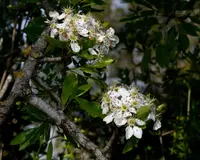
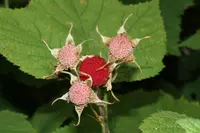
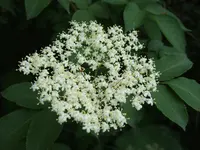
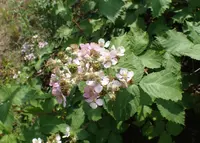
Largeleaf blackberry, Rubus macrophyllus, is a vigorous bramble shrub known for its arching canes, large leaves, and clusters of white to pale pink flowers. It typically produces dark, edible berries that attract wildlife and can form dense thickets over time.

The species is native to parts of Europe but has naturalized in several temperate regions, including areas of North America. Its strong growth, tolerance of poor soils, and ability to spread by canes and seed make it easy to establish but sometimes difficult to contain.

Largeleaf blackberry prefers full sun to light shade, moderately moist soil, and good drainage. Understanding how to care for largeleaf blackberry starts with planning enough space and regular pruning to manage its growth.

Main Plant Requirements

Care Difficulty

Moderate Care

Light Preference

Full Sun

Water Requirements

Moderate Water

Temperature Preference

Cold Hardy

Hardiness Zone

5–8

Soil Texture

Loamy, Sandy, Organic-rich

Soil pH

Acidic (5.5–6.5), Slightly acidic (6.5–7.0)

Soil Drainage

Moist but well-drained

Fertilization

Minimal (feed rarely)

Get Personalized Care Plan

Scan your plant to receive care tips personalized for your specific plant

Available on iOS and Android

How to Care for the largeleaf blackberry

This vigorous bramble thrives outdoors with strong light but benefits from some daily shade.

  • Provide 6–8 hours of direct sun, ideally with morning sun and light afternoon shade to reduce leaf scorch on largeleaf blackberry canes.
  • Tolerates partial shade (about 3–4 hours direct sun), but fruit set and sweetness drop when light falls below this level.
  • In hot summers, use dappled or filtered light during midafternoon; in cooler seasons, allow more open exposure to maximize photosynthesis and berry yield.

This shrub prefers consistently moist, well-drained soil rather than alternating extremes of wet and dry.

  • Water when the top 3–5 cm of soil feels dry, aiming for deep soaking that moistens the root zone instead of frequent light sprinkles.
  • During spring–summer growth, increase watering in hot, windy spells; reduce frequency in fall and winter while still preventing complete soil dryness.
  • Watch for yellowing, soft leaves and sour-smelling soil as signs of overwatering, and for dull, wilting foliage and shriveling berries as signs Rubus macrophyllus is too dry.

This hardy bramble tolerates a wide outdoor temperature range but fruits best within moderate conditions.

  • Optimal growing and fruiting occur around 65–80°F (18–27°C), with steady spring warmth promoting strong cane and leaf development.
  • Established plants usually survive winter lows near 0°F (−18°C), but young canes benefit from mulch protection in colder or exposed sites.
  • Short heat waves up to about 90–95°F (32–35°C) are tolerated if soil moisture is maintained, but prolonged extremes can reduce flowering and sunburn exposed fruit.

This bramble tolerates a wide humidity range and rarely needs special humidity management outdoors.

Rubus macrophyllus prefers deep, moisture-retentive yet well-drained loam for strong cane and fruit production.

  • Aim for a loamy soil rich in organic matter, using roughly 50–60% garden loam, 30–40% compost, and 10–20% coarse sand or fine grit.
  • Keep drainage moderate to fast; water should infiltrate quickly but the soil should stay slightly moist, not waterlogged or bone-dry.
  • Target a slightly acidic to neutral pH around 6.0–7.0; add composted leaf mold or peat-free acidic organic material if soil is very alkaline.
  • Improve aeration and structure by working in coarse organic material and avoiding compaction from frequent foot traffic or heavy machinery.

This species can be grown in containers, but it performs best in large, stable outdoor pots or planters.

  • Choose a container at least 40–50 cm deep and wide to accommodate its vigorous, spreading root system and cane growth.
  • Use a heavy, wide-based pot or add low-placed weight so the container resists tipping from tall, arching canes or wind.
  • Position the container where trailing or trained canes can be supported on a trellis or railing to prevent breakage and improve access for pruning and harvest.

Rubus macrophyllus benefits from modest feeding but grows acceptably in average, unfertilized soil.

  • Apply a balanced slow-release fertilizer (around 10-10-10) at half label rate in early spring as new growth begins.
  • In poor or sandy soils, top-dress with 2–5 cm of well-rotted compost once per year to support steady cane and fruit development.
  • During the main growing season, avoid high-nitrogen products that push soft, overly leafy growth at the expense of flowers and fruit.
  • Stop feeding largeleaf blackberry by late summer and do not fertilize during winter dormancy to prevent tender growth prone to cold damage.

Pruning keeps Rubus macrophyllus manageable, productive, and healthy.

  • Best time is late winter to very early spring before buds break, when cane structure is easy to see.
  • Remove dead, diseased, or winter-damaged canes at ground level with clean, sharp bypass pruners or loppers.
  • Thin crowded, weak, or crossing stems to improve air flow and light, which supports better flowering and fruiting.
  • Shorten excessively long canes to the desired framework to control spread and maintain an accessible harvest height.

This vigorous bramble is usually grown in the ground, so focus on thoughtful site transplanting rather than frequent repotting.

  • Transplant in late fall or early spring when plants are dormant and soil is workable, reducing water stress and transplant shock.
  • Look for signs such as stunted growth, dense suckering, or roots circling a container if Rubus macrophyllus is grown in pots.
  • Lift the plant with as much root ball as possible, keep roots shaded and moist, and replant at the same soil depth in well-drained ground.
  • Water thoroughly after transplanting, then maintain even moisture for several weeks while new feeder roots establish, avoiding waterlogged conditions.

Rubus macrophyllus is commonly multiplied from vegetative material rather than seed for consistent growth and fruiting.

  • Use tip layering in late summer: bend a flexible cane to the ground, bury the tip 5–8 cm deep, and sever once rooted.
  • Take semi-ripe stem cuttings in late spring to early summer, use a rooting hormone, and keep in humid, bright but indirect light.
  • Divide rooted suckers in early spring or fall, ensuring each section has healthy buds and a good root portion, then replant promptly.
  • Seeds require cold stratification, so chill moist seed for several weeks, then sow in a free-draining medium at cool, outdoor temperatures.

This bramble is generally cold hardy in many temperate regions and often needs only minimal winter attention.

  • In colder climates, apply a 5–8 cm mulch layer around the root zone to moderate freeze–thaw cycles and protect fine roots.
  • Leave healthy canes standing over winter, then carry out major structural pruning in late winter rather than autumn.
  • For container plants, move pots to a sheltered, unheated space or group and insulate containers so roots do not freeze solid.

Care Tips

Install strong support

Set sturdy posts and tensioned wires before the plant matures, then fan out canes along the wires so fruiting laterals are well spaced, easy to harvest, and less prone to fungal disease.

Annual cane renewal

After fruiting, remove spent floricanes at ground level and tie in only the strongest new primocanes, which concentrates energy into fewer, higher-quality fruiting canes next season.

Floor management strip

Maintain a 60–90 cm weed-free strip under the row using mulch or careful shallow cultivation to reduce competition for water and nutrients while keeping paths grassy or covered for mud-free access.

Targeted bird protection

As berries start to blush, drape fine-mesh netting over the row and secure it at the base to protect fruit from birds without restricting light or air movement.

Winter cane bundling

In colder regions, gather and loosely tie canes into bundles and, if necessary, bend them slightly toward the trellis to reduce wind damage and make late-winter pruning and caring for largeleaf blackberry more efficient.

Common Pests and Diseases

Raspberry beetle

This pest feeds on flowers and developing fruits, causing misshapen, tunneled berries that may dry out or rot. Symptoms include small grubs inside fruits and brownish scars on the berry surface.

Solution

Remove and destroy infested fruits and any wild brambles nearby to reduce breeding sites, then use fine mesh netting over plants during flowering to exclude adult beetles. In larger plantings, apply a spinosad-based spray targeted to the flowering period, following label directions and avoiding times when pollinators are most active.

Raspberry cane borer

This insect damages young canes by tunneling in the pith, leading to wilting, flagging tips, and weak, easily broken stems. Symptoms include two characteristic girdling rings on the cane just below the wilted portion.

Solution

Prune out wilted cane tips 15–20 cm below the lowest girdle as soon as symptoms appear and destroy the cut material. Maintain a clean planting by removing old biennial canes after fruiting to reduce overwintering sites and avoid nearby unmanaged bramble thickets that can harbor borers.

Late leaf rust

This disease produces pale yellow spots on the upper leaf surface and orange powdery pustules on the undersides and on fruits, which may become unmarketable. Symptoms include premature leaf yellowing and drop in late summer, especially in humid conditions.

Solution

Prune dense, tangled growth of largeleaf blackberry to improve airflow, remove and destroy infected canes and fallen leaves, and avoid overhead watering late in the day. In areas with a history of rust, apply a labeled copper or sulfur fungicide preventively from late spring, rotating products as allowed to reduce resistance risk as part of general Rubus macrophyllus care.

Cane blight

This disease causes dark, sunken lesions at pruning wounds or damaged areas, leading to partial cane dieback and reduced fruiting. Symptoms include brittle, grayish canes with dead side shoots, often following mechanical injury or winter damage.

Solution

Make pruning cuts during dry weather, cutting just above a healthy bud and removing dead or weakened canes at ground level, then destroy all prunings. Avoid wounding canes, improve spacing and trellising for good air movement, and in problem sites consider a preventive fungicide spray at or just after pruning according to local guidelines.

Raspberry aphid

These insects cluster on young shoots and leaf undersides, sucking sap and causing curled, distorted leaves and sticky honeydew that can attract sooty mold. This pest also acts as a vector for several raspberry viruses, which can severely reduce vigor and yield.

Solution

Regularly inspect young growth and wash colonies off with a strong water spray or wipe off small infestations by hand. Encourage lady beetles and lacewings, remove nearby wild Rubus hosts, and if needed use an insecticidal soap or horticultural oil directed only to affected shoots, repeating as label directions allow until populations are controlled.

Interesting Facts

Large shade-tolerant leaves

This species has unusually large, thin leaflets for a blackberry, which allow efficient light capture in shaded forest edges and hedgerows compared with many other Rubus species.

Aggressive clonal spread

It expands mainly through long, arching canes that root where they touch the ground, forming dense, thorny thickets that can displace local vegetation in parts of western Europe.

Hybridization with natives

In regions where it is introduced, Rubus macrophyllus can hybridize with closely related blackberry species, which may blur species boundaries and complicate field identification for botanists.

FAQs about largeleaf blackberry

This species spreads vigorously by arching canes and root suckers. In many regions it is considered invasive and can form dense thickets, so regular pruning, root barrier use, and monitoring of seedlings are important.

Grow Healthy Plants with Botan Care

Keep your plants happy and healthy with plant identification, disease detection, and easy care guidance.

Botan plant care app — identify plants on mobile

Explore More Plants