Slope Planting Strategy
Plant on slight slopes or raised edges so water drains quickly away from the crown, which helps prevent root rot and keeps the mat dense over time.

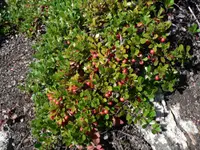
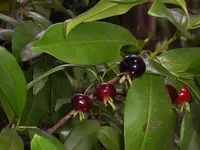
Bearberry, Arctostaphylos uva-ursi, is a low, woody groundcover shrub known for its small glossy leaves, pinkish spring flowers, and bright red berries. It forms dense, trailing mats that help stabilize sandy or rocky soils.
This species is native to cool, northern regions of North America, Europe, and Asia, where it grows in open forests, heaths, and coastal areas. It is slow-growing but long-lived, and once established it is quite hardy.
Bearberry prefers full sun, well-drained, acidic, low-fertility soil, which can make how to care for bearberry slightly different from typical garden shrubs.

Care Difficulty
Moderate Care

Light Preference
Full Sun

Water Requirements
Low Water

Temperature Preference
Cold Hardy

Hardiness Zone
2–6

Soil Texture
Sandy, Loamy, Rocky

Soil pH
Strongly acidic (4.5–5.5), Acidic (5.5–6.5)

Soil Drainage
Well-drained

Fertilization
Minimal (feed rarely)
Scan your plant to receive care tips personalized for your specific plant
Available on iOS and Android
This low-growing evergreen groundcover performs best with strong outdoor light and cool conditions.
This species prefers dry, well-drained soil and is adapted to low-water conditions once established.
This cold-hardy shrub is adapted to cool to moderate climates and tolerates significant winter chill.
Humidity is rarely a concern for Arctostaphylos uva-ursi in typical outdoor conditions.
This plant prefers lean, sharply drained, sandy soil that mimics dry, rocky sites.
This species can be grown in containers, but it performs best in wide, low pots that suit its spreading habit.
This low-nutrientadapted groundcover usually needs little to no feeding when grown in suitable, lean soil.
Arctostaphylos uva-ursi benefits from light, occasional pruning to maintain a dense, healthy mat.
This species is rarely kept long term in containers, so care focuses on careful outdoor transplanting.
This plant is commonly propagated for groundcover use, but success depends on stable, cool conditions.
This evergreen shrub is very cold hardy and usually needs minimal winter attention in the ground.

Plant Health Check
Not sure what's wrong with your plant? Check your plant's health inside the app.
The red berries are a key late-season food source for bears in northern habitats, which is why the plant is commonly called bearberry and the species name uva-ursi literally means bear grape in Latin.
This species thrives on very poor, sandy, or rocky, acidic soils with low nutrients, where many other shrubs cannot survive, making it a classic indicator of nutrient-poor, well-drained sites in boreal and subarctic regions.
Its stems creep along the ground and can root at nodes, so after low-intensity fires the plant often resprouts from protected underground parts and quickly re-covers disturbed slopes and open forest floors.

Bearberry leaves are evergreen and can persist on the plant for several years, allowing it to photosynthesize whenever conditions are mild enough, which is an important advantage in cold climates with very short growing seasons.
This species spreads slowly to moderately by surface stems that root where they touch soil, forming a low mat. It is not typically aggressive but can gradually cover open, sunny, well-drained areas over several years.
Keep your plants happy and healthy with plant identification, disease detection, and easy care guidance.