Contain Spreading Habit
Use shallow edging, buried boards, or plastic barriers 10–15 cm deep to keep the running stems from rooting into unwanted beds and lawn areas.

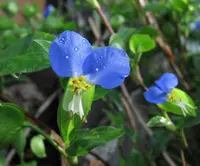
Asiatic dayflower, Commelina communis, is a low, spreading herbaceous plant often seen in gardens, roadsides, and moist disturbed areas. It grows quickly, forming loose clumps or groundcover with soft, lance-shaped leaves.
The plant is best known for its bright blue, short-lived flowers that open for a single day, giving it the common name dayflower. It is native to East Asia but has naturalized widely in North America.
This species tolerates a range of conditions and can self-seed readily, which makes it easy to grow but sometimes weedy. It prefers moist soil, partial sun, and light shade, and gardeners should learn how to care for Asiatic dayflower to keep it controlled.

Care Difficulty
Easy Care

Light Preference
Partial Sun

Water Requirements
Regular Water

Temperature Preference
Cool Climate

Hardiness Zone
4–9

Soil Texture
Sandy, Loamy, Silty

Soil pH
Acidic (5.5–6.5), Slightly acidic (6.5–7.0)

Soil Drainage
Moist but well-drained

Fertilization
Minimal (feed rarely)
Scan your plant to receive care tips personalized for your specific plant
Available on iOS and Android
Commelina communis grows best with moderate sun exposure that mimics bright woodland edges or open, moist meadows.
This species prefers consistently moist soil but not waterlogged conditions throughout the growing season.
This plant grows as a warm-season species and slows or dies back when exposed to cold conditions.
This species handles a wide humidity range but grows best with moderate moisture in the air.
Commelina communis prefers moist, loose, nutrient-rich soil that does not stay waterlogged.
This species adapts well to container growing outdoors on patios, balconies, or garden edges.
Compost or light feeding supports healthy growth of Asiatic dayflower without making it invasive in rich soils.
Pruning Commelina communis is mainly used to control spread and refresh foliage.
Transplanting this spreading groundcover is straightforward and helps manage where it grows.
Commelina communis multiplies quickly through both vegetative growth and seed.
This species is generally cold hardy in temperate climates and needs minimal winter care outdoors.

Plant Health Check
Not sure what's wrong with your plant? Check your plant's health inside the app.
The flowers have two large vivid blue petals and one much smaller whitish petal, a distinctive arrangement in the spiderwort family that makes the bloom look almost like a tiny face. This petal pattern helps attract specific insect pollinators that orient themselves using the contrasting colors and sizes.
Each individual flower usually opens for only one morning and withers by afternoon, but the plant produces many buds over time so flowering can continue for weeks. This strategy lets the plant conserve resources while still offering frequent nectar and pollen to visiting insects.
The intense blue of the petals is produced by anthocyanin pigments, mainly cyanidin derivatives, stabilized by metal ions and cell pH. This combination creates a stable blue coloration that has been used in botanical studies on flower color chemistry.

In some parts of East Asia, the petals of Commelina communis have historically been used as a natural blue dye and early watercolor pigment, including for painting and for coloring paper, because the extracted color is easy to apply even though it fades with light exposure.
This species spreads quickly by seed and creeping stems, especially in moist, disturbed soil. In many regions it is considered weedy or invasive. Regular pulling, edging, and mulching help limit spread and prevent it from dominating beds.
Keep your plants happy and healthy with plant identification, disease detection, and easy care guidance.