Substrate Depth Management
Maintain a consistently shallow but even substrate layer, about 3–5 cm thick, to encourage broad, petal-like caps rather than tall, stressed fruiting bodies that dry out quickly.

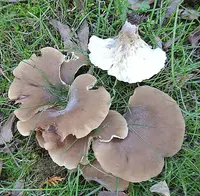
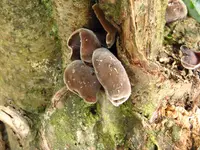
Shoehorn oyster, Hohenbuehelia petaloides, is a saprophytic fungus that breaks down dead wood and rich organic debris in forests and woodchip beds. It forms fan- to shell-shaped caps with thick, rubbery flesh and closely spaced gills, usually in overlapping clusters. This species occurs widely in temperate regions, often in gardens, parks, and mulched landscapes, not just deep woodland. It is generally regarded as an edible mushroom, but identification errors with look-alikes can be a concern. For those who want to learn how to care for Shoehorn Oyster in cultivation, it typically prefers cool to mild temperatures, steady moisture, and a wood-based or high-lignin substrate rather than standard potting soil.

Care Difficulty
Moderate Care

Light Preference
Partial Shade

Water Requirements
Keep Soil Moist

Temperature Preference
Cool Climate

Hardiness Zone
Unknown

Soil Texture
Loamy, Silty, Organic-rich

Soil pH
Acidic (5.5–6.5), Slightly acidic (6.5–7.0)

Soil Drainage
Moist but well-drained

Fertilization
Minimal (feed rarely)
Scan your plant to receive care tips personalized for your specific plant
Available on iOS and Android
This wood-decaying fungus prefers cool, evenly lit woodland conditions rather than strong direct sun.
Moist, but not waterlogged, conditions are essential for reliable fruiting.
Stable, cool to mild temperatures support strong mycelial growth and fruiting.
This fungus benefits from moderately moist air but humidity is less critical than substrate moisture.
Hohenbuehelia petaloides grows on organic-rich, well-aerated substrates rather than standard potting soil.
This species can be grown in containers if the vessel supports stable moisture and gas exchange.
This saprophytic fungus gains most nutrients from its substrate, so caring for Shoehorn Oyster focuses more on fresh organic matter than heavy fertilization.
Hohenbuehelia petaloides does not require structural pruning, but timely removal of spent tissue keeps the culture clean and productive.
This fungus is usually grown on logs, woodchips, or enriched substrates, so transplanting focuses on moving colonized material rather than classic repotting.
Most Hohenbuehelia petaloides propagation uses mycelium from culture or spawn rather than sexual seed-like spores for predictable results.
Outdoor cultures of this species tolerate moderate cold but benefit from basic winter management in harsher climates.

Plant Health Check
Not sure what's wrong with your plant? Check your plant's health inside the app.
The spore print of this species forms a thick, gelatinous layer rather than a dry powder, a feature used by mycologists to separate it from look‑alike brown or grey saprotrophic fungi.
Its gill surfaces produce microscopic, sticky droplets containing toxins that immobilize nematodes, allowing the fungus to use these small worms as an additional nitrogen source.
This fungus commonly colonizes wood‑chip mulches in parks, gardens, and roadside plantings, thriving in disturbed, nutrient‑rich substrates where many other woodland fungi fail to fruit.

Molecular studies have shown that what was once treated as a broadly defined Hohenbuehelia petaloides complex actually contains several closely related species, and some older records from Europe and North America are now being reassigned as taxonomists refine its true distribution and identity.
This fungus is generally considered inedible or of very poor culinary value due to its tough, rubbery texture. Identification errors with similar-looking toxic species are possible, so it should not be collected or eaten for food.
Keep your plants happy and healthy with plant identification, disease detection, and easy care guidance.