Royal fly agaric Care (Amanita regalis)

Also known as: King of Sweden Amanita
Royal fly agaric

About Royal fly agaric

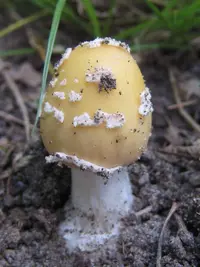
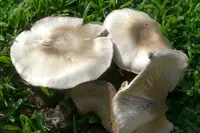
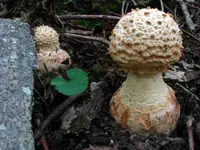
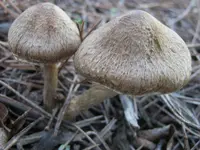
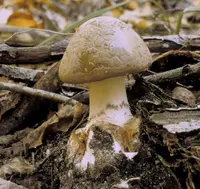
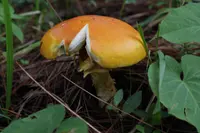
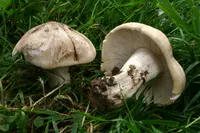
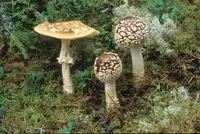
Royal fly agaric, Amanita regalis, is a large, showy mushroom rather than a leafy plant. It is closely related to the classic red fly agaric but has a brown to yellow-brown cap with pale warts and a stout, ringed stem.

This species typically grows in cool coniferous and mixed forests, especially with spruce and pine, forming mycorrhizal partnerships with tree roots. It appears on forest floors, often in mossy, acidic soils.

Because it depends on living tree partners and specific soil fungi, Amanita regalis is difficult to cultivate deliberately. For most growers, it is not practical to care for Royal fly agaric beyond conserving its natural woodland habitat.

Main Plant Requirements

Care Difficulty

Hard Care

Light Preference

Partial Shade

Water Requirements

Regular Water

Temperature Preference

Cool Climate

Hardiness Zone

Unknown

Soil Texture

Loamy, Sandy, Organic-rich

Soil pH

Acidic (5.5–6.5)

Soil Drainage

Moist but well-drained

Fertilization

Minimal (feed rarely)

Get Personalized Care Plan

Scan your plant to receive care tips personalized for your specific plant

Available on iOS and Android

How to Care for the Royal fly agaric

This ectomycorrhizal mushroom prefers cool, filtered forest light rather than open sun.

  • Provide dappled or light shade under trees, with brief morning sun up to 2–3 hours but avoid direct afternoon sun to prevent drying of caps and mycelium.
  • Aim for conditions similar to a mixed conifer or birch woodland edge, where Royal fly agaric receives shifting patches of light through foliage.
  • In summer, increase shade when canopy is thin or in recently thinned woods; in autumn, tolerate slightly brighter light as air temperatures drop.

This forest fungus depends on consistently moist, not waterlogged, soil around its tree partners.

  • Maintain evenly moist humus-rich soil; allow only the top 1–2 cm to begin drying before the area is moistened again by rain or careful supplemental watering.
  • Use well-drained, loose forest-type soil; avoid standing water or compacted, puddling ground, which can rot mycelium and suppress fruiting of Amanita regalis.
  • Watch for shriveling caps and cracking soil surface as signs of dryness, and for sour smell or slimy, collapsing caps as clues of chronic overwatering.

This species is adapted to cool, temperate climates and does poorly in extreme heat or hard frost.

  • Optimal mycelial activity and fruiting commonly occur around 50–65°F (10–18°C), typical of cool late-summer to autumn woodland conditions.
  • Short exposures down to about 28–30°F (-2– -1°C) may be tolerated, but repeated hard frosts below this threshold can damage fruiting bodies and underlying mycelium.
  • Sustained heat above 77–82°F (25–28°C), especially with dry air and soil, reduces fruiting; provide shade, mulch, and moisture to buffer temperature swings.

This ectomycorrhizal fungus is adapted to cool, moist forest air, so humidity matters mainly when trying to cultivate it artificially.

  • Aim for 60–80% humidity, especially during pin and fruit body development, to reduce drying and deformation.
  • In very dry air, caps crack, margins dry and curl, and stems may stop elongating prematurely.
  • Increase humidity with a closed, ventilated tent or chamber, moist (not wet) leaf litter, and frequent fine misting away from direct airflow.

This species requires a very specific, forest-like substrate rather than standard potting soil.

  • Use a loose, humus-rich, sandy to loamy substrate built from conifer or birch leaf litter, coarse sand, and a small portion of forest topsoil.
  • Ensure rapid drainage so water never pools; excess moisture promotes competing molds and suffocates the fungal mycelium.
  • Keep pH slightly acidic, around 4.5–6.0, by using conifer litter, peat, or decomposed needles instead of lime-treated components.
  • Avoid compacted, manure-heavy, or sterile mixes, as these limit aeration, disrupt mycorrhizal partners, and hinder Amanita regalis establishment.

This species is generally unsuitable for normal container growing because it relies on mycorrhizal partnership with tree roots in natural soil.

This ectomycorrhizal fungus does not need routine fertilizing and usually performs best in low-input, natural soils.

Amanita regalis does not require pruning in the way garden plants do, since its visible part is a short-lived mushroom.

This species is rarely suited to container culture, since it relies on a stable symbiosis with tree roots in the soil.

  • Avoid disturbing established colonies; transplanting often breaks the fine fungal connections to host tree roots.
  • If relocation is unavoidable, move a generous plug of native soil containing mycelium and associated fine roots.
  • Carry out any move during cool, moist weather to limit desiccation stress on the fungal network.
  • Water the new site lightly and keep soil evenly moist, not waterlogged, while the fungus re-establishes.

Reproducing Amanita regalis under garden conditions is difficult and rarely attempted by home growers.

This woodland fungus is naturally cold hardy in its native range and needs no active winter care in the ground.

Care Tips

Host Tree Selection

Establish the fungus only near suitable mycorrhizal partners such as spruce, pine, or birch, and avoid isolated lawns or garden beds without these trees, since successful growing Royal fly agaric depends on this root association.

Minimal Disturbance Zone

Mark and keep a 30–50 cm radius around the colonized area free from digging, raking, or heavy foot traffic so the underground mycelium is not physically damaged.

Leaf Litter Management

Leave a light layer of undecayed conifer needles or birch leaves over the colonized area to maintain a stable microclimate, but clear away thick, matted layers that stay soggy and may encourage competing fungi.

Controlled Water Delivery

Use a fine-rose watering can or a soaker hose that delivers low-pressure water to the soil surface, which reduces compaction and prevents damage to emerging fruiting bodies.

Fruiting Body Hygiene

Remove and dispose of heavily decayed or moldy caps with gloves and tools, not bare hands, to limit spread of opportunistic molds and keep the site cleaner for future fruiting cycles.

Common Pests and Diseases

fungal mycelial parasites

This disease involves parasitic fungi that invade the mycelial network of Amanita regalis in soil or decaying wood, leading to reduced vigor and malformed fruiting bodies. Symptoms include patchy, weak mycelium, aborted caps, and discolored, watery tissue at the base of mushrooms.

Solution

Remove and destroy visibly affected fruiting bodies and any heavily colonized substrate, then replace with fresh, uncontaminated material. Improve drainage and avoid overwatering to keep the substrate just evenly moist, and maintain good site hygiene by promptly removing spent or decaying mushrooms to reduce pathogen load when aiming to grow Amanita regalis.

bacterial soft rot

This disease causes mushroom tissues to become water-soaked, slimy, and foul-smelling, especially in warm, overly wet conditions or in stored specimens. Symptoms include collapsing caps, mushy stems, and rapid breakdown of tissues starting from bruised or damaged areas.

Solution

Discard and remove all affected mushrooms immediately, and avoid handling caps and stems roughly to limit bruising. Reduce excess surface moisture by improving air circulation, spacing fruiting bodies so they do not touch, and keeping irrigation light and indirect rather than soaking the caps.

slugs and snails

These pests feed on developing and mature fruiting bodies, leaving irregular holes in caps and stems and sometimes consuming entire young mushrooms overnight. This pest problem is more pronounced in damp, shaded habitats with abundant leaf litter or mulch.

Solution

Hand-pick slugs and snails at dusk or early morning and remove sheltering debris such as dense leaf piles close to the mushrooms. Where regulations allow, create physical barriers such as copper tape rings or coarse grit around the fruiting area, and use iron phosphate slug baits placed away from the mushrooms to reduce feeding pressure without contaminating the fruiting bodies.

fungus gnat larvae

These insects lay eggs in moist organic substrate, and the larvae can tunnel into the base of stems or developing buttons, weakening or destroying fruiting bodies from below. Symptoms include hollowed stems, stunted or aborted mushrooms, and small black adult gnats hovering near the substrate surface.

Solution

Allow the upper layer of the substrate to dry slightly between waterings while still keeping the deeper layer moist, which disrupts the larval environment. Remove and discard heavily damaged mushrooms and, if needed, apply a biological control such as Bacillus thuringiensis israelensis (Bti) to the substrate according to label directions to target larvae without harming the fungus itself.

Interesting Facts

Northern European specialist

This species occurs mainly in boreal and montane regions of Fennoscandia, the Baltic area, and parts of central and eastern Europe, where it is closely associated with coniferous forests dominated by spruce and pine.

Strict mycorrhizal partner

It forms ectomycorrhizal associations with tree roots, exchanging mineral nutrients and water for sugars from the host tree, and is typically found near Norway spruce and Scots pine rather than broadleaf trees.

Distinct cap coloration

Its cap is usually deep brown to chestnut with yellow warts and a yellowish margin, which sets it apart visually from the bright red and white pattern of the closely related Amanita muscaria.

Botan icon

Did you know?

Genetic and morphological studies indicate that this species is part of a distinct northern lineage within the Amanita muscaria species complex, and some mycologists have debated its rank as a separate species versus a geographic variant, illustrating how fungal species boundaries can be difficult to define.

FAQs about Royal fly agaric

Yes. This mushroom contains potent neurotoxins, including ibotenic acid and muscimol. Ingestion can cause nausea, vomiting, confusion, hallucinations, seizures, or coma. Keep children and animals away and seek medical help immediately if eaten.

Grow Healthy Plants with Botan Care

Keep your plants happy and healthy with plant identification, disease detection, and easy care guidance.

Botan plant care app — identify plants on mobile

Explore More Plants