ashen knight Care (Tricholoma virgatum)

ashen knight

About ashen knight

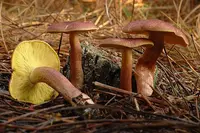
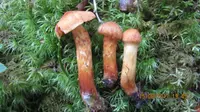
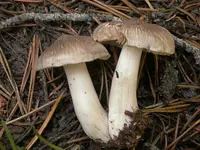
Ashen knight is a wild mushroom, not a true garden plant, known scientifically as Tricholoma virgatum. It forms fleshy caps on short stems, rather than leafy growth. The cap is usually conical to bell-shaped, smooth, and silvery gray with darker fibers, giving it a striking metallic look.

This fungus is native to temperate forests, especially in Europe and North America, where it grows on the ground among conifers and sometimes broadleaf trees. It forms mycorrhiza, a partnership with tree roots, which makes it difficult to cultivate at home and limits how to care for ashen knight. It prefers cool, moist woodland conditions and naturally develops in undisturbed, well-drained forest soils.

Main Plant Requirements

Care Difficulty

Hard Care

Light Preference

Partial Shade

Water Requirements

Keep Soil Moist

Temperature Preference

Cool Climate

Hardiness Zone

Unknown

Soil Texture

Loamy, Silty, Organic-rich

Soil pH

Acidic (5.5–6.5)

Soil Drainage

Moist but well-drained

Fertilization

Minimal (feed rarely)

Get Personalized Care Plan

Scan your plant to receive care tips personalized for your specific plant

Available on iOS and Android

How to Care for the ashen knight

This woodland fungus prefers cool, shaded forest conditions rather than direct open sun.

  • Provide dappled or filtered light under trees, roughly equivalent to 1–3 hours of weak morning sun with shade the rest of the day.
  • Avoid strong midday or afternoon sun, which can dry the substrate and inhibit fruiting of ashen knight in exposed sites.
  • Favor north- or east-facing woodland edges where leaf litter stays moist and light levels stay low, especially in late spring to autumn.

This mycorrhizal fungus relies on consistently moist, well-drained forest soil instead of direct surface watering.

  • Aim for soil that stays evenly moist 5–10 cm deep but never waterlogged, letting only the top 1–2 cm dry slightly between natural rains or irrigation.
  • Watch for overwatering signs like standing water, sour smell, or slimy litter, and reduce added water while improving drainage if these appear.
  • In dry or hot periods, supplement rainfall with gentle watering that moistens the upper 10–15 cm of soil, avoiding strong jets that disturb leaf litter around Tricholoma virgatum.

This temperate woodland species fruits best in cool to mild conditions with moderate seasonal swings.

  • Optimal fruiting usually occurs around 50–65°F (10–18°C), common in autumn in many temperate forests where soil stays cool and moist.
  • The fungus tolerates brief drops near 32°F (0°C) in soil, but repeated hard freezes below 28°F (-2°C) or frozen, bare ground limit visible fruiting.
  • Sustained heat above 77–82°F (25–28°C) with dry soil suppresses mushrooms, so a shaded, humid microclimate helps buffer summer temperature extremes.

This ectomycorrhizal fungus prefers cool, moist air but does not require tightly controlled humidity when grown outdoors in suitable climates.

  • Aim for 60–80% humidity by situating the ashen knight in shaded, wind-sheltered woodland or a similarly humid microclimate.
  • Leaves or mulch around the host tree help trap surface moisture, supporting consistently moist air at ground level.
  • Dry, exposed, breezy sites cause caps to dry, crack, or abort, so use windbreaks and maintain evenly moist soil to buffer humidity swings.

This woodland mushroom relies on a loose, moist, well-drained forest-type substrate rather than conventional potting soil.

  • Use a deep layer of sandy to loamy mineral soil topped with 5–10 cm of leaf litter or fine bark to mimic natural forest floor structure.
  • Ensure drainage is free-flowing so water never stands, but keep the upper horizon consistently slightly moist, not waterlogged or bone-dry.
  • Maintain soil pH around 4.5–6.0, incorporating pine needles or oak leaves to gently acidify and provide slow-decomposing organic matter.
  • For practical Tricholoma virgatum plant care, avoid compacted clay, synthetic fertilizers, and heavily manured mixes, which disrupt the fungus–tree association.

This species is generally unsuitable for container growing because it depends on long-term ectomycorrhizal association with living tree roots in open soil.

Tricholoma virgatum is a wild ectomycorrhizal fungus that does not benefit from direct fertilization in garden or container settings.

Tricholoma virgatum does not require pruning because it is a wild mushroom, not a woody or leafy ornamental plant.

This fungus naturally forms symbiotic relationships with tree roots and is not suited to standard repotting or transplanting like a houseplant.

  • Avoid attempting container culture; the mycelium depends on living host tree roots in suitable forest soil.
  • If growing trees for Tricholoma virgatum association, plant young trees in autumn or early spring into well-drained, mildly acidic soil.
  • Minimize root disturbance of host trees; damaged roots can reduce mycelium vigor and fruiting.
  • Maintain stable soil moisture and avoid compaction around host trees to limit stress on the fungal network.

Propagation of this species is highly specialized and not practical for home growers, as it depends on complex mycorrhizal partnerships with trees.

In its natural range, this ectomycorrhizal mushroom is fully cold hardy and needs no active winter care from the grower.

Care Tips

Host tree matching

Select planting sites under compatible conifers such as pine or spruce that are already established, since this ectomycorrhizal fungus depends on forming a root partnership with suitable host trees to fruit reliably.

Minimal disturbance zone

Mark a 40–60 cm radius around productive patches and avoid raking, digging, or heavy foot traffic there so the underground mycelium network stays intact and can keep producing mushrooms year after year.

Litter layer management

Maintain a thin, continuous layer of conifer needles and small twigs over the fruiting zone, removing only thick mats or compacted debris, to balance moisture retention with enough air exchange for healthy mycelium.

Targeted moisture retention

Use a light, breathable mulch such as loose pine needles at the periphery of fruiting areas to moderate surface drying after rain without burying or smothering emerging caps.

Seasonal fruiting checks

During the main fruiting season, survey known patches 1–2 times per week after rainfall to monitor productivity, spot signs of competition or disease early, and adjust site management when caring for ashen knight in semi-managed woodland settings.

Common Pests and Diseases

Mycophagous springtails

These insects feed on fungal mycelium and developing fruiting bodies, sometimes leaving pitted or scarred mushroom caps. Symptoms include small surface nibbles, irregular holes, and visible tiny, jumping insects in moist substrates.

Solution

Reduce excess surface moisture by improving drainage and ventilation around the cultivation area, and avoid overwatering the substrate. Remove and discard heavily damaged mushrooms, then use sticky traps and a fine-mesh barrier over vents or openings to limit re‑infestation in controlled setups used for growing ashen knight.

Fungus gnat larvae

This pest lives in damp substrates where it tunnels through fungal mycelium and soft mushroom tissue. Symptoms include stunted or deformed caps, water-soaked spots, and small black adult gnats flying around the growing area.

Solution

Allow the upper substrate layer to dry slightly between waterings and improve airflow to make conditions less favorable for larvae. Remove and discard affected mushrooms, use yellow sticky traps for adults, and, in controlled production, apply a biological control such as Bacillus thuringiensis israelensis (BTI) according to label directions to target larvae in the substrate.

Parasitic competitor fungi

This disease involves contamination of the substrate by fast-growing molds or other parasitic fungi that overrun Tricholoma virgatum mycelium. Symptoms include off-color patches (green, gray, or black), fuzzy or powdery growth, and failure of the target mushroom to fruit properly.

Solution

Discard heavily contaminated substrates promptly and clean tools, trays, and surfaces with a suitable disinfectant to prevent spread. On new batches, use well-pasteurized or sterilized substrates, maintain good hygiene, and avoid introducing unfiltered outdoor debris into controlled cultivation spaces.

Bacterial blotch

This disease, often caused by Pseudomonas species, produces greasy, water-soaked spots or streaks on mushroom caps that may darken and become slimy. Symptoms include localized softening of tissue and rapid deterioration in very wet conditions.

Solution

Lower humidity slightly, increase air movement, and avoid overhead misting directly onto caps so surfaces dry between watering cycles. Remove and discard affected mushrooms, then sanitize watering equipment and any surfaces that came into contact with slimy tissue to reduce bacterial load.

Slugs and snails

These pests feed directly on mushroom caps and stems, leaving large irregular holes, shredded tissue, and slime trails on and around the fruiting bodies. This pest is most active in damp, shaded outdoor settings or in poorly sealed greenhouses.

Solution

Hand-pick slugs and snails during the evening or early morning and remove nearby hiding spots such as boards and dense ground debris. Use copper barriers, iron phosphate baits placed away from the main fruiting area, and improved perimeter sealing to keep them out of cultivation zones.

Interesting Facts

Distinctly bitter taste

The ashen knight mushroom is well known among mycologists for its pronounced bitter taste, which makes it unappealing and unsafe as food even aside from toxicity concerns.

Silvery conical cap

This species has a characteristically sharply conical to bell-shaped cap with a silvery gray surface and darker fibrils, giving it a metallic or ashen appearance that inspired its common name.

Mycorrhizal with conifers

It forms ectomycorrhizal associations with coniferous trees, especially pines and spruces, exchanging mineral nutrients and water from the soil for sugars produced by the tree through photosynthesis.

Botan icon

Did you know?

This species has been implicated in poisoning cases in Europe, and although not as notorious as some deadly relatives, it is widely regarded as toxic and is strongly discouraged for consumption in modern field guides.

FAQs about ashen knight

This mushroom is considered poisonous and should never be eaten. It contains gastro-intestinal irritants that can cause nausea, vomiting, abdominal pain, and diarrhea. Identification mistakes with edible species are common, so foraging is strongly discouraged.

Grow Healthy Plants with Botan Care

Keep your plants happy and healthy with plant identification, disease detection, and easy care guidance.

Botan plant care app — identify plants on mobile

Explore More Plants