Clean substrate tools
Always disinfect drills, saws, or inoculation tools with 70% isopropyl alcohol before and between logs or blocks to reduce bacterial and fungal contaminants that can outcompete Auricularia angiospermarum.

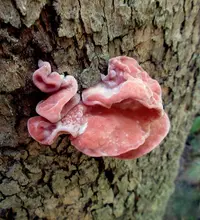
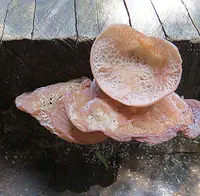
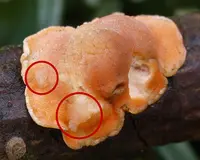
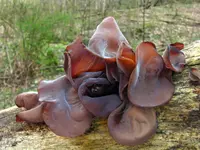
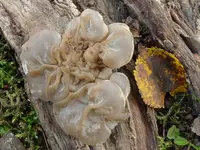
Wood ear, Auricularia angiospermarum, is a jelly-like fungus rather than a typical leafy plant. It forms soft, ear-shaped brackets on decaying wood, usually on hardwood logs and branches. The fruiting bodies are brown to dark brown and slightly translucent when fresh.
This species occurs in temperate and subtropical forests, where it feeds on dead wood and helps recycle nutrients. It is generally considered easy to cultivate under controlled, consistently moist conditions, but it depends strongly on suitable wood and humidity. For anyone learning how to care for wood ear, it responds best to stable moisture, shaded conditions, and clean, low-contaminant substrates.

Care Difficulty
Moderate Care

Light Preference
Partial Shade

Water Requirements
Keep Soil Moist

Temperature Preference
Warm Climate

Hardiness Zone
Unknown

Soil Texture
Organic-rich, Peaty, Loamy

Soil pH
Acidic (5.5–6.5)

Soil Drainage
Moist but well-drained

Fertilization
Minimal (feed rarely)
Scan your plant to receive care tips personalized for your specific plant
Available on iOS and Android
Auricularia angiospermarum grows best in low to moderate light that mimics a shaded woodland habitat.
Water management focuses on keeping the substrate consistently moist but never stagnant.
Temperature strongly influences colonization speed and fruiting quality for this species.
This fungus needs high, stable humidity to form consistent fruiting bodies.
This species grows best on moist, decomposing wood rather than typical garden soil.
This species can be grown in containers when they hold a stable, moist wood-based substrate.
Auricularia angiospermarum grown on suitable woody substrate usually needs no additional fertilizer.
Pruning needs for Auricularia angiospermarum are minimal and mainly hygienic.
This fungus is usually managed by renewing or moving its woody substrate rather than conventional repotting.
Propagation focuses on expanding mycelium rather than traditional plant methods for Auricularia angiospermarum.
Outdoor cultures are generally cold tolerant but benefit from moderate winter protection in harsh climates.

Plant Health Check
Not sure what's wrong with your plant? Check your plant's health inside the app.
This species was described in 2022 from tropical and subtropical regions of China and Thailand, where it fruits on woody angiosperms rather than the conifer or temperate hardwood hosts typical of several related Auricularia species.
It can be reliably separated from similar brown, ear‑shaped Auricularia by its spore size and shape and by the form of its basidia, which are the spore‑producing cells examined under a microscope.
Phylogenetic studies indicate that this fungus represents a lineage specialized on flowering‑plant wood, supporting the view that host preference for angiosperms evolved multiple times within the Auricularia group.
The fruiting bodies are edible and widely used in Asian cuisine when properly identified, cleaned, and cooked. They have a crunchy texture, mild flavor, and are typically added to soups, stir-fries, and salads.
Keep your plants happy and healthy with plant identification, disease detection, and easy care guidance.