Host tree matching
Establish this ectomycorrhizal fungus only near compatible host trees such as oaks or related native hardwoods, and avoid moving soil or leaf litter far from the original stand to maintain its specific root partnerships.

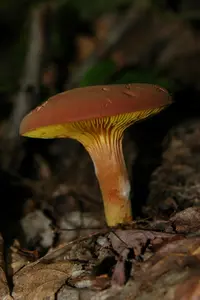
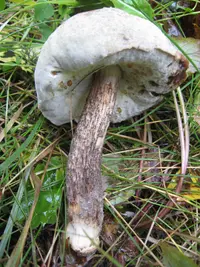
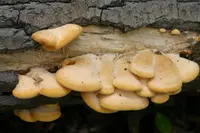
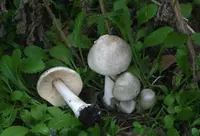
Phylloporus leucomycelinus, commonly called a gilled bolete, is a mycorrhizal fungus that forms a symbiotic partnership with tree roots rather than a typical houseplant. It produces small to medium fruiting bodies with a cap and distinctive yellow, gill-like structures underneath, though it is more closely related to boletes than classic gilled mushrooms. This species is usually found in forested areas, often near broadleaf or mixed woodlands, emerging from soil rich in leaf litter. Because it relies on living tree partners and complex soil life, it is not practical to cultivate indoors or in standard pots. For anyone exploring how to care for Gilled Bolete, focus lies on maintaining healthy host trees and undisturbed, moist, well-drained forest-type soil.

Care Difficulty
Moderate Care

Light Preference
Partial Shade

Water Requirements
Keep Soil Moist

Temperature Preference
Warm Climate

Hardiness Zone
Unknown

Soil Texture
Loamy, Organic-rich

Soil pH
Acidic (5.5–6.5)

Soil Drainage
Moist but well-drained

Fertilization
Minimal (feed rarely)
Scan your plant to receive care tips personalized for your specific plant
Available on iOS and Android
This ectomycorrhizal fungus prefers dappled forest light rather than direct, open sun.
This fungus depends on consistently moist, not saturated, soil conditions around its tree partners.
This species fruits best under mild, temperate conditions typical of shaded woodlands.
This ectomycorrhizal fungus needs consistently moist, humid conditions to fruit well in cultivation.
Phylloporus leucomycelinus relies on a loose, aerated, organic-rich substrate that mimics forest soil around host tree roots.
This species is challenging but can be trialed in containers that host compatible tree seedlings outdoors.
This mycorrhizal fungus relies mainly on its tree host for nutrients, so Gilled Bolete needs no direct fertilization.
Pruning is not applicable to Phylloporus leucomycelinus, as it is a wild ectomycorrhizal fungus rather than a managed garden plant.
This species is not suited to routine repotting, as it lives in soil in symbiosis with tree roots rather than as a potted plant.
Intentional propagation of Phylloporus leucomycelinus is specialized and usually left to research or advanced mycology projects rather than home cultivation.
No special winter care is needed in its suitable climate range, as this ectomycorrhizal fungus overwinters naturally in soil.

Plant Health Check
Not sure what's wrong with your plant? Check your plant's health inside the app.
This species belongs to a bolete group, but its spore-bearing surface is broken into structures that look like gills rather than typical round pores, which is why it is sometimes called a gilled bolete.
Its name leucomycelinus refers to its pale to yellowish mycelium, the threadlike fungal network in soil and litter that can be visible at the base of the fruiting body when carefully excavated.
This species has been documented forming ectomycorrhizae, a type of root symbiosis, with tropical trees in the family Dipterocarpaceae, helping trees absorb water and nutrients while receiving sugars in return.
This fungus is considered edible by some foragers, but identification is challenging and related species can be confusing. Only experienced mushroom identifiers should eat it, and local expert guidance is strongly recommended before any consumption.
Keep your plants happy and healthy with plant identification, disease detection, and easy care guidance.