bolete mould Care (Hypomyces chrysospermus)

Also known as: bolete eater
bolete mould

About bolete mould

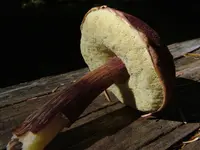
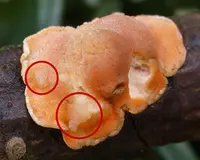
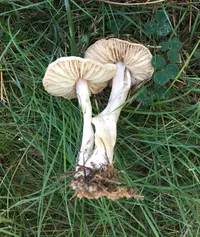
Bolete mould, Hypomyces chrysospermus, is a parasitic fungus that attacks bolete mushrooms rather than a true plant. It forms a yellow to golden crust over the host mushroom, eventually deforming and covering it completely. The surface may turn brownish with age and develop a powdery texture as spores mature.

This species occurs mainly in forests where boletes grow, especially in temperate regions of North America and Europe. It relies on its host mushrooms, so it cannot be grown like a typical houseplant. Because of this host dependence, attempts to care for bolete mould at home are usually unreliable and suited only to advanced fungal growers.

Main Plant Requirements

Care Difficulty

Hard Care

Light Preference

Partial Shade

Water Requirements

Keep Soil Moist

Temperature Preference

Cool Climate

Hardiness Zone

Unknown

Soil Texture

Loamy, Sandy, Organic-rich

Soil pH

Acidic (5.5–6.5), Slightly acidic (6.5–7.0)

Soil Drainage

Moist but well-drained

Fertilization

Minimal (feed rarely)

Get Personalized Care Plan

Scan your plant to receive care tips personalized for your specific plant

Available on iOS and Android

How to Care for the bolete mould

Hypomyces chrysospermus develops best on its bolete hosts under dappled forest light rather than open sun.

  • Aim for 2–4 hours of gentle morning sun with bright, filtered light the rest of the day in mixed woodland or lightly shaded garden beds.
  • Provide partial shade under trees or shrubs; consistent leaf cover helps protect bolete mould from rapid drying and intense midday or afternoon sun.
  • Avoid full, exposed sun, especially in summer; strong light combined with heat can desiccate host boletes, while very dense shade can reduce host mushroom formation.

On its bolete hosts, Hypomyces chrysospermus depends on consistently moist, not waterlogged, conditions in the upper soil and litter layer.

  • Maintain evenly moist soil, allowing the top 2–3 cm of forest duff or mulch to dry slightly between natural rains or supplemental watering.
  • Use well-drained, humus-rich soil; puddling, sour odors, or slimy, collapsing boletes indicate excess moisture and poor aeration.
  • In dry spells, apply a gentle soak every few days, then wait until caps feel firm but not brittle; shriveling suggests drought stress, while mushy tissue suggests overwatering.

This fungus thrives on boletes in mild, temperate conditions and reacts poorly to both hard frost and extreme heat.

  • Optimal activity typically occurs around 55–75°F (13–24°C), matching the main fruiting season of its bolete hosts in many temperate forests.
  • Growth slows below about 45°F (7°C) and is usually stopped or damaged by repeated freezes, so sustained frost periods reduce visible infections.
  • Prolonged heat above 85°F (29°C), especially when combined with dry air, can halt host mushroom production and indirectly limit Hypomyces chrysospermus development.

This fungus only develops reliably in consistently moist, humid conditions close to its natural forest floor habitat.

  • Aim for 70–90% humidity around colonizing substrate, avoiding any prolonged drying of the surface.
  • Dry air slows mycelial spread and fruiting-body infection; edges of tissue turning hard and pale indicate humidity stress.
  • Increase humidity by using a sealed, ventilated tub or tent with damp perlite or moss, not by misting directly onto the bolete mould.

This species is not grown in true soil but on naturally occurring or placed bolete mushrooms in forest-like conditions.

  • Provide a loose, organic, debris-rich layer (leaf litter, partially decomposed wood, and duff) over or around harvested boletes to mimic a natural forest floor.
  • Maintain very free drainage beneath the mushroom layer using coarse bark, wood chips, or gravel so excess water runs off quickly.
  • Keep the substrate slightly acidic, roughly pH 5.0–6.5, by using oak or other hardwood leaf litter and avoiding lime or alkaline ash additions.
  • Avoid compacted, clay-heavy, or waterlogged mineral soil, which promotes bacterial rot instead of stable Hypomyces chrysospermus colonization.

This species can be maintained in containers only as a controlled culture on boletes rather than as a typical potted plant.

  • Use a shallow, wide container so infected boletes can be spaced apart, improving air movement around each specimen.
  • Drill extra side ventilation holes in plastic tubs to balance high humidity with enough gas exchange to prevent bacterial slime.
  • Elevate boletes on mesh or a perforated tray above a moist reservoir layer so water never pools directly against the fungal tissue.

Hypomyces chrysospermus grows as a parasitic fungus on boletes and does not benefit from conventional plant fertilization.

Pruning is not applicable to Hypomyces chrysospermus because it is a parasitic mould on host mushrooms, not a typical garden plant.

This species is not suited to standard repotting, as it lives on bolete mushrooms rather than in soil like a typical houseplant.

  • Avoid container culture; instead, allow the fungus to colonize suitable bolete hosts in natural or semi-natural conditions.
  • If moving colonized material, transfer whole infected mushrooms gently to a new, similar habitat to minimize disturbance.
  • Handle only with gloves, place material on compatible bolete hosts, and avoid burying deeply to reduce stress.
  • Maintain comparable moisture, shade, and organic litter levels between the original and new site to support recovery.

Propagation of Hypomyces chrysospermus is specialized and generally left to natural spore spread rather than controlled methods.

Outdoor populations of this fungus require no deliberate winter care from gardeners, as they persist via spores and seasonal fruiting.

Care Tips

Select host boletes

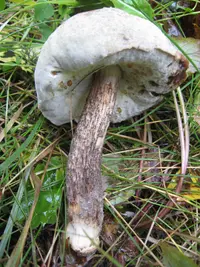
Collect only firm, healthy boletes with minimal insect damage as host mushrooms, since decayed or heavily worm-eaten fruiting bodies collapse before Hypomyces chrysospermus can fully colonize and sporulate.

Pre-dry host surface

After cleaning the host boletes, let them air-dry on a wire rack for 1–2 hours so the surface is dry to the touch, which slows competing molds and gives the parasite a slight advantage when inoculated.

Use controlled inoculation

Transfer spores with a sterile swab or scalpel from an active Hypomyces colony onto fresh host boletes in a closed box or tent, and keep this inoculation chamber closed except for brief checks to limit contamination from other fungi.

Rotate colonizing trays

If multiple trays are used, rotate and gently shift their position every 1–2 days to even out subtle airflow and microclimate differences, improving uniform colonization rather than patchy growth when growing bolete mould.

Discard early contaminants

Inspect hosts daily and promptly remove any boletes showing black, bright green, or fuzzy grey molds so they do not outcompete the yellow Hypomyces growth on nearby specimens.

Common Pests and Diseases

Desiccation and collapse

Symptoms include rapid drying, shriveling, and collapse of the bolete host tissue, often when collected and kept in low humidity or high airflow conditions. This problem reflects the natural preference of this parasitic fungus for consistently moist, cool environments on fresh boletes.

Solution

Maintain high humidity around collected material (70–85%) using a closed, ventilated container, avoid direct airflow, and mist the surrounding substrate lightly rather than the fungus surface. Remove severely dried host pieces and replace them with freshly collected, disease-free boletes to stabilize the microclimate and support growing bolete mould.

Bacterial soft rot

This disease causes wet, foul-smelling, slimy patches on the parasitized bolete, leading to rapid breakdown of the mushroom tissue beneath the mould. These bacteria thrive in overly wet, stagnant, warm conditions around decomposing host material.

Solution

Discard any host pieces that show slimy, foul-smelling decay and clean containers or trays with hot water and mild disinfectant. Reduce free water by avoiding direct spraying, increase gentle ventilation, and provide a slightly cooler environment (55–65°F) while keeping humidity moderately high but not dripping wet.

Competing saprophytic moulds

This disease appears as patches of green, blue-green, gray, or black mould overgrowing or crowding out the golden bolete mould on the host mushroom. These competitors usually establish when spores from other fungi land on the same mushroom and find excess moisture and stagnant air.

Solution

Physically remove and discard contaminated mushroom pieces and any substrate heavily colonized by other moulds. Improve hygiene by using clean tools and containers, keep humidity high but not condensing, and increase mild airflow so surfaces dry between light mistings while still preventing complete desiccation, which supports more stable Hypomyces chrysospermus care instructions.

Fungus gnats

These insects are small dark flies whose larvae tunnel through the parasitized bolete, causing soft, pitted areas and accelerating decay of both host and mould. This pest is attracted to moist, nutrient-rich, decomposing mushroom tissue in enclosed culture setups.

Solution

Remove and discard heavily infested mushroom pieces and clean the enclosure to remove larvae and organic debris. Use fine mesh covers on vents, allow the top surface of the substrate or host to dry slightly between mistings, and place yellow sticky traps near but not touching cultures to reduce adult gnat numbers without chemical sprays.

Interesting Facts

Parasitic on boletes

This fungus specifically parasitizes bolete mushrooms (Boletaceae), overgrowing their caps and stems with a dense fungal layer rather than living independently in soil or wood.

Color-changing infection

Infections typically start as a white coating, then turn golden-yellow as spores mature, and finally may become brown, giving rise to the common name bolete mould.

Destroys host structure

As it spreads, the fungus consumes and distorts the bolete’s tissue so severely that the original pore surface and cap structure can become almost unrecognizable.

Botan icon

Did you know?

This species belongs to a group of fungi known as hypocrealean mycoparasites, which are specialized parasites of other fungi and have evolved highly specific enzyme systems to break down the tissues of their mushroom hosts without relying on plant or animal substrates.

FAQs about bolete mould

Growth is relatively fast once a suitable host bolete is colonized. The fungus can cover a mushroom in a few days under warm, moist conditions. Without a compatible host, it does not grow or persist.

Grow Healthy Plants with Botan Care

Keep your plants happy and healthy with plant identification, disease detection, and easy care guidance.

Botan plant care app — identify plants on mobile

Explore More Plants