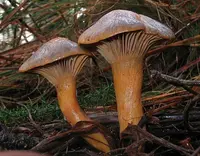
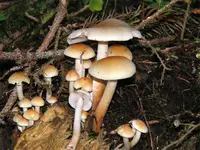
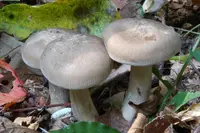
purple pinwheel Care (Marasmius haematocephalus)

Also known as: mauve parachute
purple pinwheel

About purple pinwheel

Marasmius haematocephalus, often called purple pinwheel, is a small saprophytic fungus that grows on fallen twigs, leaf litter, and woody debris. It is not a houseplant in the usual sense but sometimes kept in decorative terrariums or fungal displays.

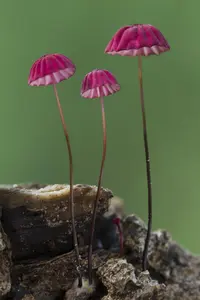
The fruiting bodies are tiny, with thin dark stems and flat, purple to reddish caps that resemble miniature pinwheels. It typically occurs in warm, humid forests, especially in tropical and subtropical regions.

Because it is a fungus relying on decaying organic matter, it is not easy to maintain indoors long term. Those who want to learn how to care for purple pinwheel need to focus on stable humidity, gentle airflow, and consistently moist but not waterlogged substrate.

Main Plant Requirements

Care Difficulty

Hard Care

Light Preference

Shade

Water Requirements

Keep Soil Moist

Temperature Preference

Tropical / Frost Sensitive

Hardiness Zone

Unknown

Soil Texture

Loamy, Peaty, Organic-rich

Soil pH

Strongly acidic (4.5–5.5), Acidic (5.5–6.5)

Soil Drainage

Moist but well-drained

Fertilization

Minimal (feed rarely)

Get Personalized Care Plan

Scan your plant to receive care tips personalized for your specific plant

Available on iOS and Android

How to Care for the purple pinwheel

This small woodland fungus prefers soft, indirect light similar to a shaded forest floor.

  • Provide dappled or filtered light with 1–3 hours of gentle morning sun and no harsh afternoon sun to prevent drying of the substrate.
  • Allow partial to full shade under trees or shrubs; bright shade from open canopies suits purple pinwheel fruiting bodies well.
  • In summer, shield from strong midday sun; in cooler seasons, slightly brighter but still filtered light can support more consistent fruiting.

Moist, well-drained organic substrate is essential for reliable fruiting of Marasmius haematocephalus.

  • Aim for evenly moist leaf litter or woody debris; the top 1–2 cm should feel damp but not soggy when pressed between fingers.
  • Increase moisture during warm, dry periods by gently soaking the substrate, then allowing excess water to drain so no standing water remains.
  • Reduce added moisture in cool or wet seasons; signs of overwatering include foul odor and slimy decay, while crisp, brittle mycelium or caps suggest underwatering.

Stable, mild temperatures support consistent development of this woodland mushroom.

  • Optimal growth occurs around 68–77°F (20–25°C), with fruiting often strongest in warm, humid conditions after rain.
  • Short exposures down to about 50°F (10°C) are tolerated, but repeated cold snaps slow growth and can halt fruiting.
  • Prolonged heat above 86°F (30°C) dries the substrate and damages mycelium, so provide shade and moisture during hot spells and avoid any frost exposure.

This fungus requires consistently high humidity to fruit reliably in cultivation.

  • Aim for 70–90% humidity around the substrate, using a closed terrarium, humid chamber, or plastic tub with air holes.
  • In dry air the caps dry, margins curl, and fruiting stops, even if the substrate stays moist.
  • Raise humidity by lightly misting the air, adding a moist perlite layer, and keeping fresh airflow gentle but continuous for purple pinwheel.

This species fruits on decaying organic matter, so it needs a loose, fibrous, wood-rich substrate rather than typical garden soil.

  • Use a mix based on well-soaked hardwood sticks, small twigs, or wood chips blended with leaf litter or shredded, pesticide-free hardwood mulch.
  • Ensure the substrate drains freely but stays evenly moist by avoiding fine mineral soils and adding coarse bark or chunky coconut husk for structure.
  • Maintain a slightly acidic to neutral environment around pH 5.5–7.0, which supports fungal growth and limits competing organisms.
  • Avoid compacted, clay-heavy, or waterlogged substrates, which collapse air spaces and reduce the oxygen needed for Marasmius haematocephalus colonization and fruiting.

This species can be grown in containers if the vessel is adapted for stable, evenly moist woody substrate.

  • Choose a wide, shallow tub or tray to spread colonized wood pieces in a single layer, which supports better gas exchange around the mycelium.
  • Drill multiple small side holes just above the base so excess water drains while the lower substrate stays humid rather than waterlogged.
  • Select opaque or dark-sided containers to reduce light heating the substrate, which helps prevent rapid drying at the surface while keeping the interior stable.

Marasmius haematocephalus, often called purple pinwheel, usually needs little or no fertilizer when grown on naturally rich, woody or leaf-litter substrates.

Marasmius haematocephalus does not require conventional pruning, since the visible mushrooms are only the fruiting bodies of an underground fungus.

This fungus is not repotted in the usual sense; instead, conditions for its wood- or litter-based substrate are managed.

  • Transplant only when shifting colonized wood, mulch, or leaf litter to a new site, keeping the substrate intact to limit disturbance.
  • Time moves for mild, moist weather in spring or fall so the mycelium, the feeding network of threads, does not dry out.
  • Monitor for slowed or reduced fruiting, which can indicate the original substrate is decomposed and a fresh woody or leafy base is needed.
  • Handle pieces gently, keep them shaded and slightly moist, and place them in similar organic material to reduce stress on the mycelium.

Propagation focuses on spreading the mycelium rather than treating this fungus like a standard ornamental plant.

  • Use substrate transfer: move small chunks of colonized wood, bark, or leaf litter onto fresh, similar material.
  • Carry this out in humid, mild spring or fall conditions to reduce desiccation of the mycelium.
  • Keep the new substrate evenly moist, shaded, and well ventilated to encourage colonization and later mushroom formation.

In mild, frost-free to light-frost climates, this species usually persists in its substrate without special winter care.

  • In cooler regions, maintain a loose mulch layer over colonized ground or wood to buffer temperature swings.
  • Avoid waterlogged conditions, which can damage the mycelium more than moderate cold.
  • Container displays should be kept in a sheltered, frost-free spot with stable, cool temperatures and consistent light moisture.

Care Tips

Substrate refresh cycles

Rotate or replace the woody or leaf-litter substrate every 6–12 months to prevent nutrient exhaustion and mold buildup, keeping a small portion of the old material to help reintroduce the established fungal network.

Targeted misting pattern

Mist the immediate fruiting area lightly with clean, non-chlorinated water rather than soaking the entire container, which helps maintain a local humidity pocket around the pins while avoiding waterlogged substrate.

Airflow fine-tuning

Provide gentle, indirect airflow with a small fan set several feet away and on low speed to prevent stagnant, mold-prone air while still protecting the delicate caps from direct drafts.

Clean handling tools

Use disinfected tweezers or scissors to remove spent mushrooms and any decaying debris, which reduces competing fungi and bacteria and supports consistent fruiting when caring for purple pinwheel.

Microclimate monitoring

Place a small digital hygrometer and thermometer at substrate level to track the actual microclimate around the fungus, then adjust venting, misting, or distance from light sources based on those readings rather than room conditions alone.

Common Pests and Diseases

Fungivorous springtails

These insects are tiny, soil‑ or substrate‑dwelling arthropods that feed on fungal mycelium and fruiting bodies, occasionally grazing on young purple pinwheel caps and stems. Symptoms include small surface nibbling, distorted very young mushrooms, and noticeable jumping white or gray specks in very moist setups.

Solution

Reduce constant saturation in the substrate, allow the top layer to dry slightly between misting, and increase airflow around the culture. For heavier infestations, physically remove heavily affected clusters, use fine insect screens on ventilation openings, and, if needed for indoor displays, apply a targeted insecticidal soap or pyrethrin spray to the surrounding substrate only, never directly on the mushrooms intended for observation or consumption.

Fungus gnat larvae

These insects lay eggs in damp, organic substrates and the larvae feed on fungal mycelium and developing fruiting bodies, leading to weak, collapsed or partially tunneled mushrooms. Symptoms include soft or hollow stipes, deformed caps, and small black adult gnats flying around the growing area.

Solution

Allow the surface of the substrate to dry slightly between waterings, improve drainage, and use sticky traps to reduce the adult gnat population. In persistent cases, introduce a biological control such as Bacillus thuringiensis israelensis (Bti) as a drench to the substrate, and cover exposed substrate with a breathable top layer (such as coarse sand or fine gravel) to reduce egg‑laying near developing Marasmius haematocephalus.

Mite grazing

These insects, typically saprophagous or fungivorous mites, can colonize very humid cultures and feed on mycelium and tender fruiting tissue. Symptoms include tiny pits or rough patches on caps and stems, slow or uneven fruiting, and visible moving specks under close inspection or a hand lens.

Solution

Lower humidity slightly while maintaining adequate moisture in the substrate, and increase ventilation so surfaces dry between misting. Remove and discard heavily colonized substrate sections, clean containers or benches, and if needed use horticultural oil or sulfur treatments on the surrounding environment rather than directly on the mushrooms, to avoid residue on the fruiting bodies while reducing mite pressure.

Bacterial blotch

This disease is caused by opportunistic bacteria that thrive on constantly wet mushroom surfaces, creating greasy, discolored spots and rapid softening of caps. Symptoms include yellow‑brown to dark, slimy lesions on caps and stipes, often starting where water droplets persist.

Solution

Avoid overhead spraying that leaves standing water on fruiting bodies; instead, mist the surrounding air or substrate so surfaces dry quickly. Remove blotched mushrooms promptly, improve airflow, disinfect tools and containers with diluted bleach or alcohol between cycles, and keep humidity high but not saturated (around 85–90%) to balance hydration and disease suppression in purple pinwheel indoor care setups.

Interesting Facts

Blood-red pinwheel caps

This species is known for its tiny, vividly blood-red, pinwheel-shaped caps that often fade to pinkish or pale tones with age, creating striking color contrast on forest litter.

Revivable dried mushrooms

The fruiting bodies can dry out completely during drought and later revive and continue releasing spores when moisture returns, a trait that inspired the generic name Marasmius, from Greek for not withering.

Umbrella-like cap ribs

Its caps show distinct radial striations and a shallowly pleated surface, giving an umbrella-rib appearance that helps distinguish it from other small red litter decomposers in tropical and subtropical forests.

Botan icon

Did you know?

This fungus often fruits in neat, spaced-out troops or loose arcs on fallen leaves and twigs in warm, humid regions, and has become a familiar ornamental curiosity in tropical-style terraria and vivaria due to its miniature, long-stalked red caps.

FAQs about purple pinwheel

This fungus does best outdoors in humid, shaded, consistently moist environments such as mulched beds or decaying wood. Indoors, conditions are usually too dry and stable, so fruiting bodies rarely appear or persist for long.

Grow Healthy Plants with Botan Care

Keep your plants happy and healthy with plant identification, disease detection, and easy care guidance.

Botan plant care app — identify plants on mobile

Explore More Plants