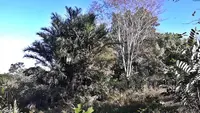
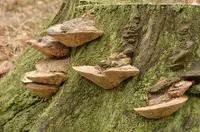
Smoky-gilled Hypholoma Care (Hypholoma capnoides)

Also known as: Conifer Tuft
Smoky-gilled Hypholoma

About Smoky-gilled Hypholoma

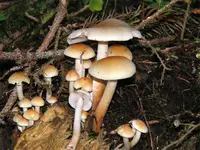
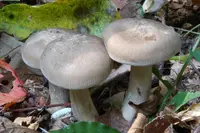
Smoky-gilled Hypholoma (Hypholoma capnoides) is a saprotrophic mushroom that decomposes dead conifer wood rather than growing in soil like a typical houseplant. It forms dense clusters of small to medium caps in shades of yellow-brown with characteristically gray to smoky gills beneath. In nature it is most often found on stumps, buried roots, and fallen logs in coniferous forests across North America and Europe. Its growth depends strongly on the right wood substrate, moisture, and temperature, which makes cultivation more technical than for common culinary mushrooms. Anyone learning how to care for Smoky-gilled Hypholoma should understand its need for consistently moist, cool conditions and clean, well-colonized wood-based substrate.

Main Plant Requirements

Care Difficulty

Hard Care

Light Preference

Partial Shade

Water Requirements

Keep Soil Moist

Temperature Preference

Cool Climate

Hardiness Zone

Unknown

Soil Texture

Loamy, Silty, Organic-rich

Soil pH

Acidic (5.5–6.5)

Soil Drainage

Moist but well-drained

Fertilization

Minimal (feed rarely)

Get Personalized Care Plan

Scan your plant to receive care tips personalized for your specific plant

Available on iOS and Android

How to Care for the Smoky-gilled Hypholoma

This saprobic fungus prefers cool, lightly shaded forest conditions rather than full, open sun.

  • Provide dappled or filtered light under conifers or mixed woodland, with 2–4 hours of gentle morning sun and shade by early afternoon.
  • Avoid full, exposed midday sun, which can dry the substrate and shorten fruiting periods for Smoky-gilled Hypholoma.
  • In summer, favor north or east-facing woodland edges; in cooler seasons, slightly more open canopy light supports stronger, more frequent fruiting.

Hypholoma capnoides depends on consistently moist, not waterlogged, forest substrates to fruit well.

  • Keep the substrate evenly moist so that the top 2–5 cm feel damp but not soggy, especially during active fruiting periods.
  • Ensure excellent drainage through loose, woody debris or well-aerated soil; standing water, sour odors, or slimy mycelium indicate overwatering and poor aeration.
  • Allow the surface to approach just moist between rains or irrigations; shriveling caps and dry, brittle stipes signal that conditions have become too dry.

This wood-rotting mushroom favors cool to mild conditions and loses vigor in prolonged heat or hard freezes.

  • Optimal fruiting usually occurs around 50–65°F (10–18°C), with growth slowing above 70°F (21°C).
  • Hypholoma capnoides mycelium can survive brief drops near 25–28°F (-4 to -2°C) in wood, but exposed fruiting bodies are easily damaged by hard frost.
  • In hot spells above 77–80°F (25–27°C), provide deeper shade and higher substrate moisture to reduce heat stress and drying.

This wood-rotting fungus prefers moderately moist air but copes with typical outdoor fluctuations.

  • Aim for ambient humidity around 50–70% in shaded, sheltered spots where the substrate does not dry out rapidly.
  • Dry air combined with drying wood causes shriveling caps, pale gills, and slowed or halted fruiting.
  • Increase local humidity by mulching surrounding wood, lightly misting the substrate (not flooding), or using windbreaks to reduce rapid evaporation for Smoky-gilled Hypholoma.

Hypholoma capnoides grows on dead conifer wood, so the “soil” should mimic decaying, well-aerated timber rather than mineral garden soil.

  • Use well-rotted conifer logs, chips, or a coarse mix of sawdust and wood chips with high organic content and open structure.
  • Ensure very free drainage so water passes through the woody substrate quickly, preventing waterlogging that encourages competing molds.
  • Keep pH slightly acidic to neutral (about 5.5–7.0), which matches typical conifer wood and favors mycelium spread.
  • Improve aeration and structure by mixing different chip sizes and lightly packing the material, avoiding dense, compacted wood dust.

This species can be grown in containers if they hold structured woody substrate rather than standard potting soil.

  • Choose a deep, sturdy tub or bucket that can support the weight of soaked wood without tipping in wind.
  • Drill multiple side and bottom holes so excess water drains and fresh air reaches the inner wood matrix.
  • Position the container in bright shade to keep the wood moist while preventing overheating of the substrate and mycelium.

This wood-decaying fungus usually gains enough nutrients from its substrate, so fertilizer is rarely necessary for Smoky-gilled Hypholoma in typical outdoor culture.

Pruning is generally not applied to Hypholoma capnoides, since it is a mushroom-forming fungus rather than a traditional ornamental plant.

Transplanting focuses on moving colonized substrate rather than handling individual Hypholoma capnoides fruiting bodies.

  • Transplant when mycelium has fully colonized a log or sawdust block and growth slows or the substrate shrinks and dries.
  • Time moves for cool, moist periods in spring or fall to reduce stress and drying of the mycelium.
  • Shift the entire colonized piece into a new shaded site or container without breaking it apart.
  • Water gently after moving and maintain steady moisture so the fungal network can re-establish contact with the new environment.

Propagation of this fungus relies on spores or mycelium rather than typical plant methods for Hypholoma capnoides care.

  • Use spawn (colonized grain, sawdust, or plug spawn) to inoculate fresh logs or pasteurized sawdust blocks.
  • Inoculate in spring or early fall when ambient temperatures are mild and stable.
  • Keep the substrate evenly moist and shaded to support mycelial spread and colonization.
  • Minimize disturbance of the inoculated material so the mycelium can form a continuous network and eventually produce fruiting bodies.

This species is cold hardy in temperate climates and usually needs little targeted winter care when growing outdoors.

  • In very exposed sites, keep colonized logs or beds under leaf litter or loose mulch to moderate temperature swings.
  • For container-based cultures, move blocks to an unheated but sheltered area to avoid repeated freeze–thaw cycles.
  • Maintain only light moisture in winter, avoiding waterlogged conditions that encourage rot or competing fungi.

Care Tips

Select safe logs

Harvest only from conifer logs that are clearly dead, bark-intact, not resin-soaked, and free of blue-stain fungi to reduce competition and contamination when growing Smoky-gilled Hypholoma.

Mimic forest shade

When cultivating outdoors, position inoculated logs on the north or east side of structures or under established shrubs to reproduce cool, shaded woodland edges and prevent substrate from drying out too fast.

Stabilize fruiting sites

Secure logs or stumps half-buried in the ground or braced with stones so they do not roll or shift, which helps maintain fine mycelial connections and supports more reliable flushes.

Manage slug access

Place coarse sand or copper barriers around the fruiting zone and remove ground litter touching the logs to reduce slug damage on young caps without using broad-spectrum pesticides.

Rotate harvest cuts

Cut clusters cleanly at the base with a disinfected knife and alternate harvest points on the same log, which reduces wounding in one area and helps the colony regenerate more evenly over time.

Common Pests and Diseases

Mycena competition

Symptoms include very slow or patchy colonization of the wood substrate and sparse or weak fruiting clusters. This issue is caused by naturally occurring Mycena fungi that colonize conifer wood before or alongside Hypholoma capnoides.

Solution

Remove and discard heavily overrun substrate and start fresh with well-colonized spawn on clean conifer wood. Use properly pasteurized or freshly cut, relatively dry conifer logs or chips, keep the substrate in a shaded, well-ventilated area, and avoid mixing in old, decayed wood that already carries visible tiny white or gray Mycena mushrooms.

Trichoderma green mold

This disease produces fast-spreading white, then bright green powdery mold patches on colonized substrate, sometimes overrunning primordia and young caps. This contamination thrives in overly wet, poorly ventilated conditions or in substrate that was not properly pasteurized or was exposed to unclean tools or containers.

Solution

Cut out and discard contaminated sections if localized; if the outbreak is extensive, discard the whole block or bed. For future cycles, use clean tools, avoid overwatering, maintain good airflow, and prepare substrate with correct heat treatment or use fresh, sound conifer wood with minimal handling, following strict Hypholoma capnoides care instructions to reduce mold pressure.

Fungus gnat larvae

These insects lay eggs in damp substrate, and the larvae tunnel through mycelium and developing mushrooms, causing deformed or hollow stems and increased bacterial problems. This pest is especially common in moist outdoor beds and in sheltered, humid fruiting setups.

Solution

Remove and discard heavily infested clusters and allow the upper substrate layer to dry slightly between waterings. Use fine mesh or insect netting over fruiting areas, improve drainage, avoid standing water, and, if needed, apply yellow sticky traps near the bed to reduce adult gnat populations before they lay eggs.

Bacterial blotch

This disease causes slimy, greasy-looking yellow to brown spots on caps, sometimes with soft, water-soaked tissue and an unpleasant smell. It develops rapidly on wet surfaces when water sits on the caps for long periods in warm, stagnant air.

Solution

Harvest and discard affected mushrooms and reduce overhead watering so caps do not remain wet. Provide stronger but gentle airflow, water the substrate directly instead of the caps, and keep humidity high but not condensing on surfaces to prevent new infections.

Interesting Facts

Smoke-colored gills

The gills of this mushroom start pale and gradually turn gray to smoky as spores mature, which explains its common name smoky gilled woodlover. This color change helps distinguish it from similar yellow-gilled toxic species that do not develop such deep gray gills.

Conifer stump specialist

This species grows almost exclusively on dead or heavily decayed conifer wood, such as pine or spruce stumps and buried roots. Its presence indicates ongoing decomposition of softwood and contributes to nutrient recycling in coniferous forests.

Edible but risky look-alike

Although considered edible in several European sources, it is easily confused with highly toxic relatives such as Hypholoma fasciculare. Because misidentification can have serious consequences, some field guides recommend avoiding collection unless identification skills are advanced.

Botan icon

Did you know?

Molecular studies have shown that this species, once grouped broadly with other wood-inhabiting agarics, has a closer evolutionary relationship with several toxic Hypholoma species than with many other common stump fungi, highlighting how DNA analysis has reshaped traditional field-based classification.

FAQs about Smoky-gilled Hypholoma

This species is considered edible by some sources, but it is easily confused with highly toxic look-alikes such as Hypholoma fasciculare. Because misidentification risk is high, foragers are strongly advised not to eat it.

Grow Healthy Plants with Botan Care

Keep your plants happy and healthy with plant identification, disease detection, and easy care guidance.

Botan plant care app — identify plants on mobile

Explore More Plants