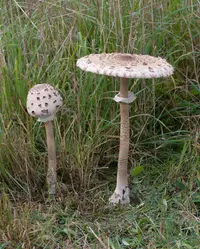
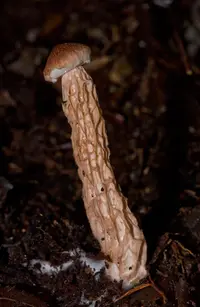
admirable bolete Care (Aureoboletus mirabilis)

admirable bolete

About admirable bolete

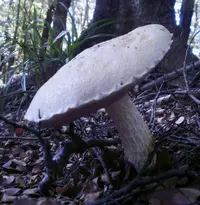
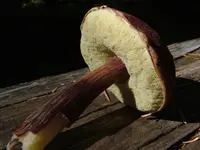
The admirable bolete, Aureoboletus mirabilis, is a fleshy wild mushroom rather than a traditional garden plant. It forms stout stems and smooth, often sticky caps in warm brown to reddish tones, with yellow pores instead of gills beneath.

This species typically grows in conifer forests of western North America, often near hemlock, where it fruits from the ground or well-rotted wood. It depends on a mycorrhizal partnership, exchanging nutrients with tree roots, which makes it difficult to cultivate at home or indoors.

In nature it favors cool, moist, shaded habitats and well-drained, organic-rich forest soils. Because of its close relationship with specific trees, attempts to care for admirable bolete in regular garden or container conditions are rarely successful.

Main Plant Requirements

Care Difficulty

Hard Care

Light Preference

Partial Shade

Water Requirements

Keep Soil Moist

Temperature Preference

Cool Climate

Hardiness Zone

Unknown

Soil Texture

Loamy, Silty, Organic-rich

Soil pH

Strongly acidic (4.5–5.5), Acidic (5.5–6.5)

Soil Drainage

Moist but well-drained

Fertilization

Minimal (feed rarely)

Get Personalized Care Plan

Scan your plant to receive care tips personalized for your specific plant

Available on iOS and Android

How to Care for the admirable bolete

This mycorrhizal bolete prefers cool, forest-like light rather than open, exposed sun.

  • Provide bright dappled shade under conifers or mixed woodland, with 2–4 hours of gentle morning sun and no direct afternoon sun.
  • Allow consistent overhead tree cover; admirable bolete fruiting bodies often appear where light is filtered through branches and leaf litter remains slightly moist.
  • Avoid full, open sun that dries the forest floor, and note that intense summer light can scorch caps and quickly desiccate the substrate.

Moist, not saturated, soil best supports the mycelium of this ectomycorrhizal species.

  • Aim for evenly moist mineral soil with good structure; the top 2–5 cm should never stay waterlogged or form standing puddles after rain.
  • Ensure excellent drainage through sloping ground, coarse organic litter, and avoidance of compacted, heavily trodden sites where water lingers.
  • Watch for anaerobic, sour-smelling soil as a sign of chronic overwatering conditions and cracked, dusty surfaces as an indicator of excessive drying.

This forest bolete favors mild, cool conditions typical of higher-elevation or coastal conifer woods.

  • Optimal fruiting occurs around 55–68°F (13–20°C), especially during late summer to early autumn when nights are cool and days are moderate.
  • Tolerates brief drops near 32°F (0°C) at soil level but active growth and fruiting decline with repeated frosts or frozen ground.
  • Sustained heat above 80°F (27°C) with dry air shortens cap life, so a shaded, humid forest microclimate buffers temperature extremes.

This ectomycorrhizal fungus prefers consistently moist, cool air rather than dry conditions.

  • Aim for 60–80% humidity in shaded, sheltered outdoor spots that do not dry out rapidly.
  • Dry, windy air causes caps to crack, pore surface to brown prematurely, and fruiting bodies to shrivel.
  • To raise local humidity, use thick leaf litter, nearby low shrubs as windbreaks, and avoid raking or exposing the soil surface around admirable bolete.

This species relies on a loose, organic forest substrate rather than conventional garden soil.

  • Mimic a moist, crumbly, organic-rich loam with deep leaf litter, well-decayed wood, and minimal compaction.
  • Ensure drainage is free but not rapid by combining leaf mold, fine bark, and native mineral soil in roughly equal parts.
  • Keep pH slightly acidic, around 5.0–6.5, by using oak or conifer leaf litter instead of alkaline amendments.
  • Avoid dense clay, heavily fertilized beds, and disturbed ground, which disrupt the fine root–fungus contact essential for Aureoboletus mirabilis.

This mycorrhizal species is not realistically suitable for long-term container growing because it depends on a living tree root system in undisturbed ground.

This mycorrhizal fungus relies on its tree partner, so admirable bolete needs no direct fertilization in most garden or woodland settings.

Pruning is not applicable for Aureoboletus mirabilis, as it is a wild mycorrhizal mushroom that completes its life cycle naturally without structural shaping.

This species is best left where it forms its natural mycorrhizal partnership with host trees, so transplanting attempts rarely succeed.

  • Avoid digging up fruiting bodies or surrounding soil, as this disrupts the fine root-fungus network essential for survival.
  • If relocation is attempted for study plots, move only small blocks of soil and feeder roots, keeping them intact and shaded.
  • Plan any move during cool, moist weather to reduce desiccation of the underground mycelium.
  • After disturbance, keep the site evenly moist and undisturbed, but expect that fruiting may decline or not reappear.

Propagation of Aureoboletus mirabilis is specialized and mainly of research interest rather than routine garden practice.

No special winter care is needed, as the underground mycelium is generally hardy in climates where it naturally occurs.

Care Tips

Host tree choice

Establish this mycorrhizal fungus near mature conifers such as hemlock or spruce, since productive fruiting depends on forming a stable root partnership with an appropriate host tree rather than on substrate alone.

Minimal disturbance zone

Mark off a 1–2 m radius around productive host trees and avoid raking, digging, or compacting the soil there, as undisturbed leaf litter and fungal mycelium support more consistent fruiting bodies.

Moisture buffering mulch

Apply a thin, natural mulch layer of conifer needles and small wood chips over the colonized area to buffer moisture and temperature, keeping it loose so air can still reach the soil surface.

Spore-rich relocation

To subtly expand a colony, move small amounts of naturally colonized duff or spore-rich cap fragments to nearby suitable conifer roots, keeping transfers local to reduce disease and invasive risk.

Seasonal fruiting checks

During the main fruiting season, inspect the site after steady rains followed by mild temperatures, timing harvests when caps are firm and pores are still tight for better culinary quality when growing admirable bolete.

Common Pests and Diseases

Fungus gnat larvae

This pest is attracted to consistently wet, organic-rich substrates where the bolete and its mycelium develop. Larvae feed on fine mycelial threads and young tissue, which can weaken fruiting bodies and slow colony expansion.

Solution

Reduce excess surface moisture around the mycelial area, use well‑drained, coarse, woody substrate, and allow the top layer to partially dry between waterings if cultivating in containers. Sticky traps can reduce adult gnat numbers, and a biological control such as Bacillus thuringiensis israelensis (BTI) applied to the substrate helps suppress larvae without harming the fungus.

Slug and snail grazing

These insects are strongly attracted to the moist, fleshy caps and stems, often leaving ragged holes and slime trails on developing fruiting bodies. Damage is mostly cosmetic but can destroy young mushrooms before they mature.

Solution

Hand-remove slugs and snails in the evening or early morning and use physical barriers such as copper tape, coarse grit, or collars around the cultivation bed. In wetter climates, limit dense groundcover immediately around the bolete’s fruiting zone and, if necessary, use iron phosphate bait placed away from the main fruiting cluster.

Parasitic bolete mold

This disease is caused by other competitive fungi that colonize the pore surface or cap, leading to off-color patches, fuzzy mold, or rapid softening and collapse of fruiting bodies. Symptoms include distorted or aborted mushrooms and premature decay in humid, stagnant air conditions.

Solution

Promptly remove and discard any affected fruiting bodies to reduce spore spread and avoid leaving rotting mushroom tissue in the bed. Improve air movement, avoid overhead watering directly onto caps, and keep the fruiting area clean of older, decomposing mushrooms to limit inoculum pressure when caring for admirable bolete.

Interesting Facts

Unusual spruce association

This bolete forms an ectomycorrhizal partnership specifically and almost exclusively with western hemlock (Tsuga heterophylla), rather than with a wide range of conifers like many other boletes. It is therefore strongly tied to mature coastal hemlock forests in the Pacific Northwest and parts of western Canada.

Gelatinous pore layer

The pores and tubes often develop a distinct gelatinous layer that can feel slippery or jelly-like when fresh. This gelatinous tissue is a key field character that helps separate it from other yellow-pored boletes in its range.

Persistent vivid coloration

Fresh fruiting bodies often show striking yellow to golden tubes under reddish to chestnut brown caps, and these colors can remain vivid longer than in many related species. The stipe surface may also show a distinctive reticulate (net-like) or streaked pattern that is more pronounced than in many similar boletes.

Botan icon

Did you know?

Molecular studies have led to the reclassification of this species from the classic genus Boletus into Aureoboletus, reflecting its distinct evolutionary lineage within the bolete group and highlighting how DNA evidence can overturn long-standing morphological groupings.

FAQs about admirable bolete

This species is considered an edible wild mushroom, but edibility always depends on correct identification. Similar-looking toxic boletes exist, so foraging should only be done with expert guidance and local knowledge. Never eat uncertain specimens.

Grow Healthy Plants with Botan Care

Keep your plants happy and healthy with plant identification, disease detection, and easy care guidance.

Botan plant care app — identify plants on mobile

Explore More Plants