Use host debris
When establishing a new patch, mix small amounts of leaf litter and topsoil from an existing healthy hardwood stand into the new bed to introduce compatible soil fungi and microorganisms that support Entoloma sinuatum.

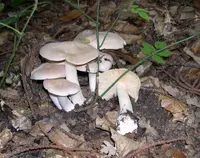
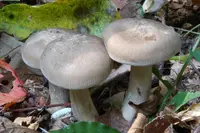
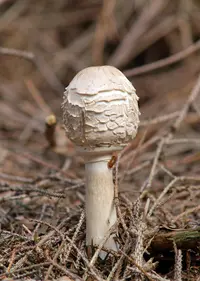
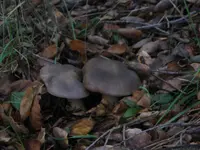
The livid pinkgill, Entoloma sinuatum, is a large terrestrial mushroom, not a true plant, found in woodlands, hedgerows, and grassy areas. It forms fleshy caps with pale, often yellowish to cream surfaces and crowded gills that turn pink as the spores mature.
This species is native to Europe and parts of western Asia and tends to appear in late summer to autumn, often in nutrient-rich soils. It is notoriously difficult and unsafe to cultivate, so attempts to care for livid pinkgill at home are strongly discouraged.
In nature it prefers moist, shaded or semi-shaded sites with organic-rich soil, often near broadleaf trees such as beech or oak.

Care Difficulty
Hard Care

Light Preference
Partial Shade

Water Requirements
Keep Soil Moist

Temperature Preference
Cool Climate

Hardiness Zone
Unknown

Soil Texture
Loamy, Clay, Organic-rich

Soil pH
Slightly acidic (6.5–7.0), Neutral (7.0)

Soil Drainage
Moist but well-drained

Fertilization
Minimal (feed rarely)
Scan your plant to receive care tips personalized for your specific plant
Available on iOS and Android
This fungus prefers low to moderate natural light similar to a shaded woodland edge.
This woodland fungus depends on consistently moist but not waterlogged soil conditions.
This species favors mild, temperate conditions similar to those in mixed deciduous woodlands.
This fungus needs consistently moist air outdoors but humidity is rarely managed directly in cultivation attempts.
This mycorrhizal fungus grows in humus-rich, well-aerated mineral soil rather than conventional potting substrates.
This species is not suitable for container growing because its life cycle depends on complex interactions with tree roots in open soil.
Entoloma sinuatum is a wild, mycorrhizal fungus that should not be fertilized in gardens or containers.
Pruning is not a standard practice for Entoloma sinuatum, as it is a wild mushroom rather than a cultivated plant.
Transplanting this poisonous wild fungus is not recommended and offers no horticultural benefit.
Deliberate propagation of Entoloma sinuatum is strongly discouraged due to its toxicity and ecological role.
This wild fungus needs no intentional winter care and should not be managed like an ornamental plant.

Plant Health Check
Not sure what's wrong with your plant? Check your plant's health inside the app.
This species is responsible for a significant share of serious mushroom poisonings in Europe, because it closely resembles several popular edible agaric and blewitt species collected by foragers.
Its toxins primarily damage the liver and gastrointestinal tract, and symptoms often appear only several hours after ingestion, which can delay treatment and increase medical risk.
This fungus typically fruits in late summer to autumn in nutrient-rich, often calcareous deciduous woodlands and parklands, where it forms ectomycorrhizal associations with broadleaf trees such as beech and oak.

This mushroom’s odour is often described as mealy or flour-like, yet despite this seemingly mild smell, ingesting even a small amount can lead to severe poisoning that sometimes requires intensive hospital care, making how to take care of livid pinkgill in the wild essentially a matter of strict avoidance and proper identification training for foragers.
This fungus is poisonous and must never be eaten. It has caused serious gastrointestinal poisoning and, in some cases, hospitalizations. Confusion with edible mushrooms is common, so foragers should avoid any specimens that resemble it.
Keep your plants happy and healthy with plant identification, disease detection, and easy care guidance.