Sterilize Substrate Thoroughly
Before inoculating, pressure-cook or steam-pasteurize your bulk substrate and any grain spawn to reduce competing fungi and bacteria that can easily outgrow Macrolepiota clelandii.

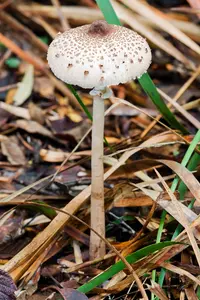
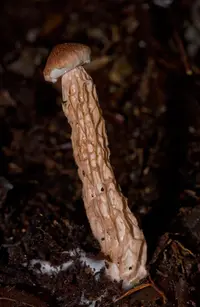
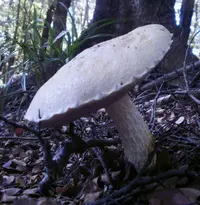
Graceful parasol, Macrolepiota clelandii, is a large saprobic mushroom that feeds on decaying organic matter in soil and litter. It forms tall, slender stems topped with broad, scaly caps that resemble small parasols.
This species occurs mainly in Australia and nearby regions, where it appears in grassy areas, open forests, and disturbed ground after rain. It can be unpredictable and short-lived, which makes it challenging for beginners who want to care for Graceful Parasol in controlled settings.
It typically prefers moist, well-drained, organic-rich substrates and moderate, indirect light similar to shaded garden conditions.

Care Difficulty
Moderate Care

Light Preference
Partial Shade

Water Requirements
Regular Water

Temperature Preference
Warm Climate

Hardiness Zone
Unknown

Soil Texture
Loamy, Organic-rich

Soil pH
Acidic (5.5–6.5)

Soil Drainage
Moist but well-drained

Fertilization
Minimal (feed rarely)
Scan your plant to receive care tips personalized for your specific plant
Available on iOS and Android
This ground-dwelling fungus performs best in bright, indirect woodland-type light rather than open, exposed sun.
Moist, airy soil is essential for reliable fruiting of this ground fungus.
This species fruits best in mild, temperate conditions without temperature extremes.
Humidity plays little role in cultivation, as this fungus relies mainly on overall substrate moisture rather than air moisture.
Macrolepiota clelandii fruits best in loose, organic-rich, well-aerated substrate rather than compact garden soil.
This species is generally unsuitable for container cultivation, since maintaining a stable, deep fungal substrate and micro-ecosystem is difficult in pots.
This ground-dwelling fungus usually gains enough nutrients from organic-rich soil, so additional feeding for Graceful Parasol is minimal.
Pruning does not apply to Macrolepiota clelandii in the usual plant sense, but some hygiene steps help manage its fruiting bodies.
Macrolepiota clelandii is seldom grown in containers; transplanting focuses on moving colonized substrate rather than individual mushrooms.
Propagation of Macrolepiota clelandii is usually done by spreading colonized material rather than by standard plant techniques.
This species is generally hardy in mild to cool climates and needs little active winter care in garden or woodland settings.

Plant Health Check
Not sure what's wrong with your plant? Check your plant's health inside the app.
This large parasol mushroom is native to Australia and is commonly recorded in southern regions, especially in eucalyptus-dominated habitats and grassy areas rather than in northern hemisphere woodlands.
Fruiting bodies often appear in litter rich in eucalyptus leaves, suggesting a strong ecological association with these trees and the specific chemistry of their leaf litter.
Although it resembles several edible parasol species from Europe and Asia, detailed microscopic characters and DNA data support its recognition as a separate southern hemisphere species rather than the same fungus spread worldwide.
This mushroom is considered edible when correctly identified, but it closely resembles some seriously toxic parasol species. Misidentification is common, so many experts advise against eating it unless confirmed by a qualified local mycologist.
Keep your plants happy and healthy with plant identification, disease detection, and easy care guidance.