Silverleaf Fungus Care (Chondrostereum purpureum)

Silverleaf Fungus

About Silverleaf Fungus

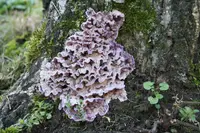
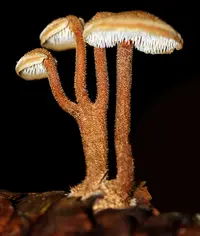
Silverleaf fungus, Chondrostereum purpureum, is a wood-decaying fungus, not a traditional houseplant. It commonly colonizes dead or weakened branches of stone fruit trees and many broadleaf shrubs and trees. The fruiting bodies form thin, layered, bracket-like shelves with velvety purple to gray surfaces. Edges often fade to pale or silvery tones as they age.

This species occurs mainly in temperate regions of North America and Europe, especially in moist woodlands, orchards, and hedgerows. It is easy to establish outdoors on cut stumps but unsuitable for container growing or home display. Gardeners typically manage rather than care for Silverleaf Fungus, since it is better known as a plant pathogen than as an ornamental organism.

Main Plant Requirements

Care Difficulty

Moderate Care

Light Preference

Partial Shade

Water Requirements

Regular Water

Temperature Preference

Cool Climate

Hardiness Zone

Unknown

Soil Texture

Loamy, Silty, Organic-rich

Soil pH

Acidic (5.5–6.5), Slightly acidic (6.5–7.0)

Soil Drainage

Moist but well-drained

Fertilization

Minimal (feed rarely)

Get Personalized Care Plan

Scan your plant to receive care tips personalized for your specific plant

Available on iOS and Android

How to Care for the Silverleaf Fungus

This wood-decay fungus grows best in shaded, humid woodland conditions with only limited direct sun exposure.

  • Provide dappled or filtered light under shrubs or trees, with at most 1–2 hours of weak morning sun and no harsh afternoon sun on fruit tree hosts, as Silverleaf Fungus damage increases under plant stress.
  • Aim for sites receiving 2–5 hours of indirect woodland light; deep, dense shade can slow fruiting, while full sun quickly dries substrates and reduces mycelial activity.
  • Use seasonal canopy changes as a guide: as leaves drop in autumn, increase shading with debris, boards, or north-facing placement to prevent sudden full-sun exposure on colonized wood.

This fungus prefers consistently moist, not waterlogged, wood and soil contact zones.

  • Maintain evenly moist conditions around colonized wood, allowing the upper 2–3 cm of surrounding soil or mulch to feel slightly dry before the next thorough soaking from rain or irrigation.
  • Avoid standing water or heavy clay that stays saturated; poor drainage favors competing microbes and may reduce Chondrostereum purpureum colonization success.
  • In hot, dry periods, monitor for cracking, very light wood, or shrinking mycelial mats and increase gentle watering, while in cool, wet seasons reduce added moisture to prevent anaerobic, foul-smelling conditions.

This fungus is adapted to cool to mild temperate climates and tolerates a broad outdoor temperature range.

  • Optimal colonization and fruiting generally occur around 50–68°F (10–20°C), with steady moisture and shelter from drying winds to limit desiccation of exposed wood surfaces.
  • Growth can continue, though more slowly, between about 40–77°F (4–25°C); brief heat above 80°F (27°C) is tolerated if humidity stays high and the substrate remains shaded.
  • The organism survives short dips close to 23°F (-5°C) in protected wood, but prolonged hard freezes or rapid freeze–thaw cycles damage surface mycelium, so fallen logs or stumps in partially insulated leaf litter provide better winter protection.

This wood-decaying fungus tolerates a wide humidity range but fruits best in consistently moist air.

  • Aim for 70–90% humidity around fruiting bodies to support stable development.
  • It tolerates brief drops to 50–60%, but prolonged dry air leads to shriveling margins and pale, cracked caps.
  • Increase local humidity by misting nearby surfaces, using damp wood or mulch, and reducing direct wind across the fruiting area; this supports caring for Silverleaf Fungus.

Chondrostereum purpureum develops on woody substrates rather than conventional soil, but similar principles apply when preparing a growth medium.

  • Use a coarse, organic-rich mix based on hardwood chips, sawdust, and well-aged compost to mimic decaying wood structure.
  • Keep drainage moderate: the substrate should stay evenly moist yet never waterlogged, with free water draining away within minutes.
  • Maintain a slightly acidic reaction, around pH 5.0–6.5, which favors colonization and reduces competition from many other fungi.
  • Improve aeration by mixing in larger wood chips or shredded bark so air can move through the substrate and anaerobic, sour pockets do not form.

This species is not well suited to conventional container growing, since it is specialized for colonizing woody material rather than forming a stable potted culture.

This wood-decaying fungus does not need routine feeding in garden or woodland settings.

Pruning is not relevant for Chondrostereum purpureum, which behaves as a pathogenic wood-decay fungus rather than an ornamental plant.

Transplanting is generally unnecessary because this species is managed as a wood-decay fungus, not as a potted or garden specimen.

  • If present on unwanted hosts, focus on removal of infected wood rather than moving the organism.
  • Discard prunings and infected branches in sealed bags to reduce spread to nearby trees or shrubs.
  • Avoid transferring infected tools or wood chips to new sites, as this effectively transplants the fungus.
  • For those studying or growing Chondrostereum purpureum under controlled conditions, follow institutional biosecurity and containment protocols.

Deliberate propagation is typically restricted to research or biocontrol programs, not to home cultivation.

  • Specialist labs grow Chondrostereum purpureum from pure culture on sterilized media, then onto wood substrates.
  • Controlled conditions require cool, moist air, clean tools, and strict hygiene to avoid contaminating other fungi.
  • Home gardeners should avoid encouraging spread, as this organism can cause silver leaf disease on many woody hosts.
  • If found on garden trees, manage it as a pathogen rather than attempting any form of propagation.

No specific winter care is recommended, as this fungus is naturally cold hardy in temperate climates.

  • Infected ornamental trees or shrubs can decline over several winters, so monitor for dieback and silvering leaves.
  • Remove and dispose of heavily infected branches during dry winter periods to limit further colonization.
  • Clean tools with disinfectant after winter pruning to reduce disease transfer between hosts.

Care Tips

Use Fresh Substrate

Inoculate only fresh, recently cut stumps or logs with moist sapwood, as old, dry, or decayed wood drastically reduces colonization success when growing Silverleaf Fungus.

Optimize Cut Surface

Make clean, flat cuts on stumps with minimal bark tearing so the fungal plug or slurry maintains close contact with exposed sapwood for faster and more uniform establishment.

Prevent Desiccation

After application, cover treated stumps with a light, breathable material such as coarse wood shavings or a thin mulch layer to reduce drying of the inoculated surface without sealing out air.

Mark Treated Areas

Immediately label or flag treated stumps and logs with date and species so future workers know the area has been biologically controlled and do not disturb the developing mycelium.

Monitor Colonization

Inspect treated wood periodically for purplish fruiting bodies and white internal mycelium, and record these observations to refine timing and technique for future Chondrostereum purpureum care instructions.

Common Pests and Diseases

Silver leaf disease

This disease causes silvering and dull discoloration of leaves on many broadleaf hosts and is the main concern when using this fungus around trees and shrubs. Symptoms include foliage turning pale or silvery, progressive dieback, and dark staining in wood when branches are cut.

Solution

Manage by avoiding wounds on susceptible trees during wet, cool conditions, disinfecting pruning tools between plants, and pruning out affected branches well below the stained wood. In garden or nursery settings, do not introduce this fungus near stone fruits, roses, or other known hosts, and destroy infected prunings rather than composting them.

Competing saprotic fungi

This problem occurs when other wood-decaying fungi colonize the same logs or stumps, outcompeting and slowing the establishment of the target fungus. Symptoms include irregular or patchy fruiting, presence of other brackets or mushroom bodies, and incomplete decay of treated wood.

Solution

Select freshly cut, healthy wood for inoculation and treat stumps as soon as possible after cutting to give this species a head start. Remove and discard heavily colonized wood from other fungi, keep inoculated material shaded but well ventilated, and avoid excessive wetness that favors fast-growing competitors.

Bacterial contamination

This issue affects cultivated mycelium or spawn rather than outdoor fruiting bodies and appears as slimy, discolored patches with sour or unpleasant odor in culture or on inoculated substrates. Symptoms include slow or stalled mycelial growth and uneven colonization of plugs or grain.

Solution

Use strict hygiene when preparing or handling cultures, including sterilized tools and containers, and work quickly to reduce exposure. Discard contaminated batches, start from clean culture or spawn, and store prepared inoculum cool and dry to reduce bacterial growth, following basic Chondrostereum purpureum care instructions for laboratory or controlled use.

Mite predation

These arthropods feed on mycelium or developing fruiting bodies in culture rooms or tightly controlled grow spaces. Symptoms include pitted or scraped surfaces on mycelial mats, reduced vigor, and visible tiny moving dots on the substrate under magnification or close inspection.

Solution

Reduce mite populations by lowering dust and debris, keeping surrounding areas clean, and isolating affected cultures. Use fine-mesh screens, avoid storing grain or organic debris near cultures, and when infestation is heavy, destroy contaminated substrates and restart from clean material in a separate, cleaned space.

Interesting Facts

Cause of silver leaf

This fungus is the primary causal agent of silver leaf disease in many woody plants such as plums, cherries, apples, and roses, where its toxins disrupt leaf cells and create a characteristic silvery sheen without immediately killing the foliage.

Purple bracket fruiting

It forms distinctive, tough, bracket-like fruiting bodies that are purple to violet on top with a paler edge and a white spore-producing underside, often appearing in overlapping tiers on dead or dying hardwood.

Biocontrol for woody weeds

In some forestry and land management programs, carefully formulated inoculum of this species has been tested and used as a biological control agent to kill unwanted hardwood trees and shrubs by colonizing their vascular tissues.

Botan icon

Did you know?

Molecular studies have shown that this species produces airborne basidiospores that can travel considerable distances and infect pruning wounds soon after cutting, which is why pruning susceptible fruit trees is often recommended during dry or colder periods when spore release is lower.

FAQs about Silverleaf Fungus

This species spreads very aggressively via spores and can colonize wounded wood on many broadleaf trees. In forestry it is sometimes used deliberately as a biological control, but in gardens it usually behaves as a serious wood pathogen.

Grow Healthy Plants with Botan Care

Keep your plants happy and healthy with plant identification, disease detection, and easy care guidance.

Botan plant care app — identify plants on mobile

Explore More Plants