Use Fresh Logs
For reliable fruiting, inoculate recently cut, healthy hardwood logs (such as maple or beech) within 2–4 weeks of felling so the mycelium colonizes before competing fungi establish.

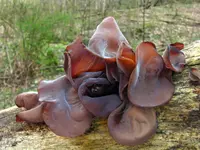
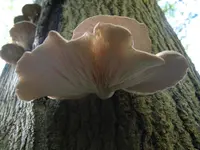
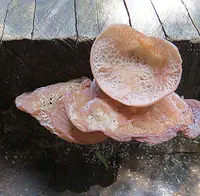
Jelly tree ear (Auricularia americana) is a jelly-like wood-decay fungus, not a typical leafy plant. It forms soft, ear-shaped fruiting bodies on dead or dying hardwoods. The surface is usually brown to tan, with a rubbery, flexible texture that becomes tougher when dry and softer after rain. In nature it is found in cool and temperate forests of North America, especially on fallen logs and stumps. This species is generally considered easy to observe in damp, shaded woodland conditions but more challenging to cultivate at home. Those who want to learn how to care for Jelly Tree Ear should know it prefers consistently moist, shaded, wood-based substrates rather than regular potting soil.

Care Difficulty
Moderate Care

Light Preference
Shade

Water Requirements
Keep Soil Moist

Temperature Preference
Cool Climate

Hardiness Zone
Unknown

Soil Texture
Loamy, Silty, Organic-rich

Soil pH
Acidic (5.5–6.5)

Soil Drainage
Moist but well-drained

Fertilization
Minimal (feed rarely)
Scan your plant to receive care tips personalized for your specific plant
Available on iOS and Android
This wood-decay fungus prefers low to moderate light that mimics a shaded forest setting.
Moisture management focuses on keeping the substrate consistently damp but never saturated.
This species favors cool to mild conditions similar to a shaded woodland environment.
This wood-decaying fungus needs consistently high humidity to fruit and persist.
Auricularia americana grows on wood, so it is managed on woody substrate rather than traditional soil.
This species can be grown in containers that hold inoculated logs or sawdust blocks rather than in soil-filled pots.
Auricularia americana usually grows on decaying hardwood and needs little added nutrition in cultivation.
Pruning Auricularia americana is generally unnecessary because it is a saprophytic fungus rather than a leafy plant.
Cultivated Auricularia americana is usually moved by shifting its colonized substrate rather than traditional repotting.
Propagation of Auricularia americana relies on fungal techniques using spores or mycelium rather than conventional plant methods.
Outdoor Auricularia americana on hardy hardwood logs is generally cold tolerant and needs minimal winter care in temperate climates.

Plant Health Check
Not sure what's wrong with your plant? Check your plant's health inside the app.
This jelly fungus typically fruits in cool conditions on snow-covered or freshly thawed logs, making it one of the few macrofungi that can be commonly seen during late fall, winter, and early spring in northern forests.
It is strongly associated with decaying hardwoods, especially sugar maple in North America, where it helps break down lignin-rich wood and contributes to nutrient cycling in mixed and deciduous forests.
The fruiting bodies can dry out completely and later rehydrate and resume their jelly-like texture after rain or snowmelt, an adaptation that allows repeated spore release across fluctuating moisture conditions.

Molecular studies using DNA sequencing showed that this North American species had long been confused with the Eurasian Auricularia auricula-judae, and it was only formally described and separated as Auricularia americana in 1998 based on genetic and microscopic differences.
This species is considered edible and is used in some cuisines, usually cooked rather than eaten raw. Identification must be certain, since other wood fungi can look similar. Avoid harvesting from polluted areas or chemically treated wood.
Keep your plants happy and healthy with plant identification, disease detection, and easy care guidance.