Golden Gilled Bolete Care (Phylloporus rhodoxanthus)

Also known as: Gilled Bolete
Golden Gilled Bolete

About Golden Gilled Bolete

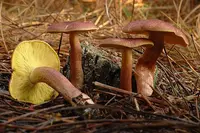
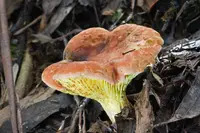
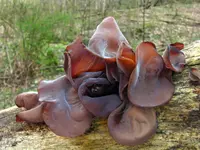
Phylloporus rhodoxanthus, commonly called the golden gilled bolete, is a mycorrhizal fungus, not a leafy houseplant. It forms a partnership with tree roots, helping them absorb nutrients while receiving sugars in return. The fruiting body appears on the forest floor, with a yellow to golden pore surface that looks somewhat like gills. Caps are usually brownish and low, emerging singly or in small groups. This species occurs mainly in mixed or deciduous woodlands, especially with oaks, across parts of North America and other temperate regions. Because it depends on living trees and specific soil fungi, it is difficult to cultivate at home, so how to care for Golden Gilled Bolete mainly involves protecting suitable woodland habitat rather than pot culture.

Main Plant Requirements

Care Difficulty

Hard Care

Light Preference

Partial Shade

Water Requirements

Keep Soil Moist

Temperature Preference

Warm Climate

Hardiness Zone

Unknown

Soil Texture

Loamy, Sandy, Organic-rich

Soil pH

Acidic (5.5–6.5)

Soil Drainage

Moist but well-drained

Fertilization

Minimal (feed rarely)

Get Personalized Care Plan

Scan your plant to receive care tips personalized for your specific plant

Available on iOS and Android

How to Care for the Golden Gilled Bolete

Phylloporus rhodoxanthus, commonly called the golden gilled bolete, develops best in dappled woodland light rather than open sun.

  • Provide 3–6 hours of gentle, filtered light under deciduous trees; morning sun with afternoon shade helps prevent caps from drying and cracking.
  • Avoid full, exposed midday sun, which can desiccate fruiting bodies and warm the soil surface beyond ideal levels for mycelium development.
  • In summer, thicker canopy shade is beneficial, while in early spring and late fall, slightly more broken light is acceptable as the sun angle is lower.

This ectomycorrhizal mushroom relies on consistent, moderately moist forest soil rather than direct, frequent surface watering.

  • Aim for evenly moist, well-drained soil around host tree roots, allowing the top 2–5 cm to lose surface wetness between rains or irrigations.
  • Avoid waterlogged conditions and standing puddles, which can suffocate fungal mycelium and lead to rot or reduced fruiting of Phylloporus rhodoxanthus.
  • During hot, dry spells, deep but infrequent irrigation of the surrounding tree root zone is better than light daily sprinkling that only wets the surface.

This species fruits best in mild, temperate conditions and is sensitive to both hard frost and extreme heat.

  • Optimal fruiting usually occurs around 60–75°F (16–24°C), when soils are cool to mildly warm and paired with adequate moisture.
  • The mycelium can persist below 50°F (10°C), but repeated hard frosts below 28°F (-2°C) can damage or halt visible fruiting bodies.
  • In hot periods above 85°F (29°C), increased shade and stable soil moisture help limit heat stress and premature drying of caps.

This mycorrhizal fungus prefers consistently moist, cool air but mainly depends on soil moisture rather than strict air humidity control.

  • Aim for 60–80% humidity in shaded, wooded settings, avoiding hot, drying winds around Golden Gilled Bolete patches.
  • Dry air combined with dry soil leads to caps cracking, rapid shriveling, and shortened fruiting periods.
  • Increase local humidity by retaining leaf litter, lightly misting surrounding leaf layer in the morning, and avoiding soil exposure to direct sun.

Phylloporus rhodoxanthus relies on specific forest soil conditions rather than a conventional potting substrate.

  • Provide loose, well-drained, organic-rich woodland soil with abundant leaf litter and fine roots from compatible host trees (commonly oaks).
  • Maintain moderately acidic soil, roughly pH 5.0–6.5, avoiding limed or strongly alkaline ground that suppresses mycorrhizal activity.
  • Improve structure by mixing native forest mineral soil with shredded leaf mold and small amounts of aged wood chips, never using heavy clay fills.
  • Avoid compacted, waterlogged, or sterile substrates, since these restrict gas exchange and reduce the fine root associations needed for fruiting.

This ectomycorrhizal species is generally unsuitable for true container growing because it depends on living tree roots in natural soil profiles.

Phylloporus rhodoxanthus forms mycorrhizal partnerships with trees and usually needs little or no direct fertilization.

  • Avoid applying high-dose synthetic fertilizers directly to the fungus; instead, maintain overall tree and soil health.
  • If soil is poor, lightly top-dress in spring with well-rotted compost around the host tree’s root zone, not on the mushrooms.
  • Use any balanced slow-release product only for the associated tree, following label rates and avoiding over-application.
  • Do not feed during winter or host tree dormancy, as excess nutrients can disrupt natural nutrient exchange.

Pruning is not applicable to Phylloporus rhodoxanthus, since it is a mycorrhizal mushroom rather than a woody or leafy plant.

Transplanting is rarely successful because this mushroom depends on a stable mycorrhizal relationship with its host tree.

  • Avoid disturbing soil where the fungus fruits; extensive digging can break up the mycelium network that produces mushrooms.
  • If relocation is necessary, move a young host tree with an intact root ball and surrounding soil rather than handling the fungus directly.
  • Plan any transplant in cool, moist weather to limit root stress and desiccation of the fungal mycelium.
  • Water the transplanted tree deeply and maintain consistent moisture so both roots and fungal partner can recover.

Propagation of Phylloporus rhodoxanthus in gardens is difficult and usually left to natural spore dispersal and root associations.

In most temperate regions this fungus is cold hardy and needs no special winter care beyond normal protection of the host tree and soil.

Care Tips

Mycorrhizal partner checks

When scouting for this fungus, target healthy mixed hardwood stands, especially near oaks and beech, since stable, vigorous host trees significantly increase the chance of persistent fruiting over multiple seasons.

Minimal disturbance harvesting

Cut mushrooms at the base with a clean knife instead of pulling, and avoid raking or disturbing the litter layer so the underground mycelium network and fine tree roots remain intact for future flushes.

Maintain leaf litter

Leave a continuous layer of natural leaf litter and small twigs on the soil surface, since this helps conserve moisture, buffer soil temperature, and support the ectomycorrhizal relationship essential for growing Golden Gilled Bolete.

Seasonal moisture planning

In dry spells, water nearby host trees deeply but infrequently rather than sprinkling the fruiting zone, as this supports root health and mycelium activity without waterlogging the fruiting surface.

Avoid chemical inputs

Do not apply synthetic fertilizers, fungicides, or broad-spectrum insecticides around the fruiting area, because these products can disrupt soil fungi communities and suppress Phylloporus rhodoxanthus fruiting over time.

Common Pests and Diseases

Mycophagous springtails

These insects feed on fungal tissues and can graze on young fruiting bodies, especially in moist leaf litter and soil around developing mushrooms. Symptoms include pitted, scarred, or partially eaten caps and stems, often with many tiny white or gray jumping insects present.

Solution

Limit excess surface moisture by avoiding unnecessary watering in cultivation beds and improving drainage, then gently disturb the leaf litter to expose the insects to drier air. If damage is heavy, use sticky traps nearby to monitor numbers and apply a targeted, soil-safe insecticidal soap drench to the surrounding substrate rather than directly onto the mushrooms you plan to harvest.

Fungus gnat larvae

This pest occurs in damp, organic substrates where larvae feed on fungal mycelium and small primordia, leading to deformed, stunted, or aborted fruiting bodies. Adults are small dark flies hovering near the substrate surface or around mushroom patches.

Solution

Reduce standing moisture, increase airflow, and allow the upper layer of the substrate or leaf litter to dry slightly between irrigation events. To reduce larvae, place yellow sticky traps to catch adults and use a biological control such as a Bacillus thuringiensis israelensis (Bti) drench on the surrounding substrate according to label directions, avoiding direct contact with harvestable mushrooms.

Slug and snail grazing

These pests are common in humid woodland habitats and feed directly on caps and gills, leaving irregular holes, slime trails, and often consuming large portions of fruiting bodies overnight. Damage is usually heaviest after rainy periods or in shaded, dense groundcover.

Solution

Hand-pick slugs and snails during the evening or early morning and remove nearby debris or dense groundcover that provides hiding spots. For ongoing issues, use iron phosphate slug bait placed around, but not on, the mushroom patch, and maintain moderate airflow and less dense mulch to make the area less favorable to these mollusks.

Hypomyces parasitic fungus

This disease is caused by parasitic fungi in the genus Hypomyces that colonize mushroom fruiting bodies, covering them with a white, yellow, or sometimes reddish crust and distorting their shape. Symptoms include a felt-like coating over caps and gills, loss of normal gill structure, and eventual decay.

Solution

Promptly remove and discard any parasitized mushrooms and nearby heavily colonized organic debris to reduce spore buildup. In managed or semi-cultivated settings, improve air movement, avoid overhead watering, and rotate fruiting areas periodically to limit the persistence of this parasite.

Bacterial soft rot

This disease develops under warm, saturated conditions and leads to water-soaked, slimy, and foul-smelling mushroom tissues, especially at the base of stems or in crowded clusters. Symptoms include rapid collapse of affected fruiting bodies and wet, discolored patches that spread quickly in contact with healthy tissue.

Solution

Eliminate overly wet conditions by improving drainage, reducing irrigation frequency, and avoiding pooled water around fruiting bodies. Remove and discard affected mushrooms immediately, handle healthy specimens gently to avoid bruising, and maintain better spacing and airflow in any cultivated or managed patches to discourage bacterial buildup.

Interesting Facts

Gilled but pore-forming

This species belongs to a bolete lineage but has yellow, gill-like ridges instead of the typical round pores, making it an important example of how gills and pores can evolve convergently in mushrooms.

Color-changing tissues

The golden gills and yellow flesh often bruise or slowly stain darker, sometimes with subtle reddish or brownish tones, which mycologists use as a field character when separating it from look-alike species.

Mycorrhizal forest partner

It forms ectomycorrhizal associations with oaks and other hardwoods in North America, exchanging mineral nutrients and water from the soil for sugars from the tree roots, and thus plays a role in forest nutrient cycling.

Botan icon

Did you know?

Molecular studies have shown that this species helped redefine the genus Phylloporus, revealing that several superficially similar yellow-gilled mushrooms around the world are not the same species but part of a more complex evolutionary group.

FAQs about Golden Gilled Bolete

This fungus is generally regarded as edible, but quality varies and some people report digestive upset. Correct identification is critical, since similar-looking boletes may be toxic. Always consult a local expert before eating any wild mushroom.

Grow Healthy Plants with Botan Care

Keep your plants happy and healthy with plant identification, disease detection, and easy care guidance.

Botan plant care app — identify plants on mobile

Explore More Plants