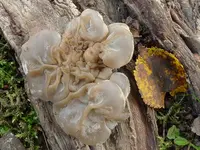
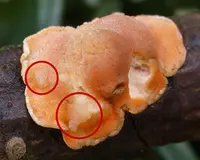
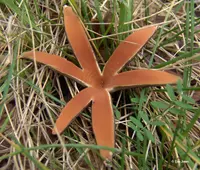
False Yellowfoot Care (Chrysomphalina chrysophylla)

Also known as: golden navel
False Yellowfoot

About False Yellowfoot

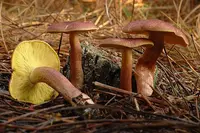
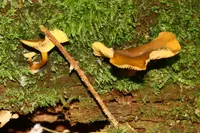
False yellowfoot (Chrysomphalina chrysophylla) is a small woodland mushroom rather than a leafy houseplant. It forms thin, yellow to golden caps with lightly decurrent gills that run slightly down the stem, often growing in dense groups on soil rich in decaying conifer litter.

This species is native to temperate forests of North America and Europe, where it appears in autumn in cool, moist conditions. It is considered a minor edible by some sources, but identification is challenging, which limits any practical attempt to care for False Yellowfoot or cultivate it at home.

In nature it prefers shady sites, consistently moist but well-drained substrates, and soils enriched with rotting needles, wood, and other organic material.

Main Plant Requirements

Care Difficulty

Moderate Care

Light Preference

Partial Shade

Water Requirements

Keep Soil Moist

Temperature Preference

Cool Climate

Hardiness Zone

Unknown

Soil Texture

Loamy, Peaty, Organic-rich

Soil pH

Strongly acidic (4.5–5.5), Acidic (5.5–6.5)

Soil Drainage

Moist but well-drained

Fertilization

Minimal (feed rarely)

Get Personalized Care Plan

Scan your plant to receive care tips personalized for your specific plant

Available on iOS and Android

How to Care for the False Yellowfoot

This forest-dwelling fungus prefers cool, subdued light beneath trees rather than direct open sun.

  • Aim for bright shade or dappled woodland light, similar to what False Yellowfoot receives under conifer or mixed forest canopies.
  • Provide 1–3 hours of weak morning sun at most; avoid direct midday or afternoon sun, which can dry the substrate and damage developing fruiting bodies.
  • In summer, maintain consistent shade with leaf litter or low vegetation; in leafless seasons, protect colonies from sudden exposure by using mulch, branches, or shade cloth if needed.

This species relies on consistently moist, but not waterlogged, forest litter to fruit reliably.

  • Keep the upper 2–5 cm of leaf litter or substrate slightly damp; allow the surface to lose its shine before rewetting rather than following a fixed schedule.
  • Use well-drained, humus-rich material so water moves through quickly; standing water or sour, foul-smelling patches indicate overwatering and poor aeration.
  • Reduce added moisture during cool, wet seasons and increase gentle watering or misting in dry, windy, or hot spells to prevent brittleness, cracking, and premature collapse of fruiting bodies.

This fungus is adapted to cool to mild woodland conditions rather than strong heat or hard frost.

  • Optimal fruiting typically occurs around 45–65°F (7–18°C), with slow growth above 70°F (21°C) and poor performance in prolonged heat.
  • Short exposures down to about 30°F (-1°C) may be tolerated in dormant mycelium, but repeated hard freezes can damage surface growth and fruiting bodies.
  • In warm climates, provide deep shade and mulch to buffer temperatures; in colder areas, a thick litter layer helps insulate the mycelium from rapid freeze–thaw cycles.

This fungus prefers consistently moist, cool air rather than specific indoor humidity control.

  • Aim for 60–80% humidity in shaded, damp outdoor or woodland-like conditions.
  • Tolerates brief drops to 40–50% if the substrate stays evenly moist, but prolonged dry air slows or stops fruiting.
  • Humidity stress shows as shriveling caps and brittle, cracking tissue; increase local moisture with leaf litter cover or nearby damp organic debris.

This woodland fungus fruits best in moist, well-aerated, organic-rich substrate rather than standard potting soil.

  • Provide a loose mix of shredded hardwood litter, well-rotted conifer needles, and partially decomposed leaf mold over a naturally draining forest-type mineral soil.
  • Ensure excess water drains away freely; avoid compacted clay and standing water, which limit oxygen and promote anaerobic rot around the mycelium.
  • Aim for slightly acidic to neutral conditions, around pH 5.0–7.0, typical of mixed woodland floors where Chrysomphalina chrysophylla naturally occurs.
  • Improve aeration by layering coarse wood chips or fine bark beneath the main organic layer, avoiding dense peat-only or manure-heavy substrates.

This species is generally unsuitable for conventional container growing at home.

This forest-dwelling fungus is adapted to low-nutrient conditions and generally does not require fertilization in garden or woodland settings.

Chrysomphalina chrysophylla does not need structured pruning, but light cleanup can support hygiene and observation in cultivated or study plots.

  • Remove any obviously decayed, moldy, or insect-infested fruiting bodies with clean gloves or sterilized scissors.
  • Cut at the base of the stem without disturbing the surrounding leaf litter or underlying mycelium network.
  • Avoid raking or stripping forest litter, since this disrupts the habitat and reduces future fruiting.
  • Use pruning mainly for sampling or disease removal rather than for shaping, as structure is determined by the mycelium.

This fungus is rarely grown in containers; management focuses on relocating or establishing habitat rather than classic repotting.

  • Transplant only when necessary, such as moving colonized substrate in research or specialty cultivation projects.
  • Plan work for cool, moist periods in spring or fall to limit drying and heat stress to the mycelium.
  • Move blocks of colonized soil, wood, or substrate intact, minimizing breakage of the fungal network.
  • Re-cover with similar leaf litter or duff at the new site, then keep evenly moist to support recovery.

Propagation of this species is specialized and usually handled by mycologists rather than home growers.

In climates where it is native, this fungus is naturally cold hardy and needs no active winter care from gardeners.

Care Tips

Substrate hygiene

Remove and discard old, decomposing substrate after each flush to reduce mold and bacterial buildup that can weaken fruiting bodies of Chrysomphalina chrysophylla.

Targeted misting

Mist the air and walls around the fruiting area rather than spraying caps directly, which helps maintain high humidity without encouraging cap rot or bacterial spotting.

Controlled air exchange

Provide gentle, brief air exchange 2–3 times a day using a small fan on a low setting directed away from the cluster to remove carbon dioxide without drying the substrate surface.

Fruiting block rotation

Rotate or slightly reposition colonized blocks or trays every few days during fruiting so that developing clusters receive more even airflow and humidity exposure on all sides.

Sanitary handling

Use clean tools and wash hands before harvesting or adjusting the substrate, because simple hygiene steps play a major role in caring for False Yellowfoot by limiting contamination from competing fungi and bacteria.

Common Pests and Diseases

Fungivorous springtails

These insects feed on fungal tissue and can graze heavily on soft fruiting bodies in very damp substrates. Symptoms include pitted, chewed caps and stems and a noticeable increase in tiny jumping insects on and around the mushrooms.

Solution

Limit excess surface moisture by improving drainage and ventilation around the fruiting area, and avoid overwatering the substrate. Physically remove heavily infested flushes, then reduce organic debris and, if needed, use sticky traps around the fruiting zone to lower adult numbers without contaminating the mushrooms.

Sciarid fungus gnats

These insects lay eggs in moist, organic substrates and their larvae feed on developing mycelium and small primordia. Symptoms include slow or uneven fruiting, deformed caps, and small dark gnats flying close to the substrate surface.

Solution

Allow the substrate surface to dry slightly between waterings while maintaining internal moisture, and increase airflow to make conditions less favorable for egg laying. Use fine mesh screens, yellow sticky traps, and careful sanitation of spent substrate to break the life cycle of the gnats without introducing chemical residues.

Trichoderma green mold

This disease is caused by aggressive competitor fungi that colonize the same substrate and can overrun mycelium. Symptoms include bright to dark green powdery patches on the substrate, reduced or halted mushroom production, and a musty odor.

Solution

Promptly remove and discard contaminated substrate sections and any adjoining material that shows green spores, taking care not to spread dust. Improve hygiene by sterilizing or thoroughly pasteurizing fresh substrates, disinfecting tools and containers, and providing strong but gentle airflow to keep surfaces from staying constantly wet.

Bacterial blotch

This disease develops on wet mushroom surfaces, especially under stagnant air, and causes brown, greasy spots on caps. Symptoms include discolored, slightly sunken lesions and a slimy feel when humidity remains high for long periods.

Solution

Reduce overhead misting directly on caps and focus on maintaining high humidity through environmental control rather than wet surfaces. Increase air movement to dry mushroom skins quickly after watering, remove blotched fruiting bodies, and clean nearby surfaces to lower bacterial load.

Ascomycete parasitic molds

These fungi act as mycoparasites, colonizing and degrading established mycelium and young fruiting bodies in poorly controlled substrates. Symptoms include patches of off-colored, cottony or crusty growth on the substrate and a gradual decline in mushroom size and number.

Solution

Discard heavily affected blocks or beds to prevent further spread, and avoid reusing contaminated substrate. For future cycles, use well-pasteurized or sterilized substrate, keep humidity high but surfaces slightly drier, and maintain good air exchange to limit conditions that favor parasitic mold development while growing False Yellowfoot.

Interesting Facts

Bright sulfur-yellow caps

The fruiting bodies have small to medium caps with a distinct sulfur-yellow to golden-yellow color, often slightly paler at the margin and more intense toward the center, which helps distinguish them from many brown or orange forest fungi.

Conifer litter specialist

This fungus typically fruits on well-decayed conifer litter and humus rather than on intact wood, playing a role in breaking down needle-rich forest floor material in boreal and temperate coniferous forests.

Often mistaken identity

It is frequently misidentified as small yellow chanterelles or waxcaps in the field, but close inspection of its true gills (rather than ridges) and its growth directly on decomposed litter helps separate it from those groups.

FAQs about False Yellowfoot

This mushroom is generally regarded as inedible or of very poor culinary value. Identification is difficult, and confusion with toxic look-alikes is possible, so it is safest to treat it as non-edible and avoid consumption altogether.

Grow Healthy Plants with Botan Care

Keep your plants happy and healthy with plant identification, disease detection, and easy care guidance.

Botan plant care app — identify plants on mobile

Explore More Plants