Sterile substrate handling
Pasteurize or sterilize any woody debris, leaf litter, or soil used for cultivation to reduce competing molds and fungi that can quickly overrun Aleurina ferruginea colonies.

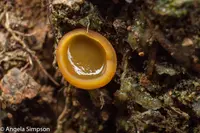
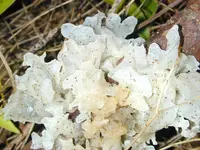
Fleshy cup fungus, Aleurina ferruginea, is a small cup-shaped ascomycete fungus, not a true plant, but often noticed by mushroom enthusiasts and gardeners. It forms shallow, rust-brown cups with smooth inner surfaces and slightly paler, irregular outer edges.
This species usually appears on soil rich in decaying organic matter, often in mixed woodlands and sometimes along paths or disturbed ground. Fruiting bodies tend to grow in scattered groups rather than dense clusters.
It is considered challenging to cultivate deliberately, as it relies on natural decomposition processes and specific microbial conditions. For those who want to learn how to care for fleshy cup fungus, the focus is usually on maintaining a cool, moist, debris-rich habitat rather than treating it like a typical houseplant.

Care Difficulty
Moderate Care

Light Preference
Partial Shade

Water Requirements
Regular Water

Temperature Preference
Warm Climate

Hardiness Zone
Unknown

Soil Texture
Loamy, Silty, Organic-rich

Soil pH
Slightly acidic (6.5–7.0)

Soil Drainage
Moist but well-drained

Fertilization
Minimal (feed rarely)
Scan your plant to receive care tips personalized for your specific plant
Available on iOS and Android
This cup fungus prefers cool, gentle light typical of shaded woodland edges.
This fungus requires consistently moist, but not waterlogged, substrate to fruit well.
This species fruits best in cool to mild conditions typical of temperate forests.
This species forms outdoor cup-like fruiting bodies and does not require managed air humidity.
This fungus fruits best in moist, organic-rich, well-aerated ground rather than a formulated potting mix.
This species is not well suited to container growing beyond short-term observation or study.
Aleurina ferruginea is a wild cup fungus that usually does not need intentional fertilization in garden or woodland settings.
Pruning is generally not applicable for Aleurina ferruginea, which behaves as a short-lived fungal fruiting body rather than a structural plant.
Transplanting Aleurina ferruginea is rarely practical, as the visible cups are only the fruiting bodies of a larger, hidden fungal network.
Propagation of Aleurina ferruginea in home settings is unreliable and not commonly attempted, as it depends on complex spore dispersal and soil relationships.
Specific winter care is not required for Aleurina ferruginea, which persists mainly as soil mycelium and fruits only in suitable seasons.

Plant Health Check
Not sure what's wrong with your plant? Check your plant's health inside the app.
This fungus forms shallow, cup-shaped fruiting bodies with a distinctive rusty to cinnamon-brown inner surface, a color produced by dense masses of pigmented spore-bearing cells on the hymenium, the fertile inner layer of the cup.
It typically appears on bare or disturbed soil rich in decaying organic matter, often along paths, banks, and forest edges, where it helps break down leaf litter and other plant debris as a saprotroph, an organism that feeds on dead organic material.
In temperate regions it often fruits in cool to mild conditions of spring or autumn rather than in peak summer, taking advantage of moist soils and reduced competition from heat-favoring fungi.
This fungus develops relatively quickly once conditions are right. Small cups can appear within days after steady moisture and cool to mild temperatures, then expand over 1–3 weeks before gradually aging, flattening, and decaying.
Keep your plants happy and healthy with plant identification, disease detection, and easy care guidance.